

The first time-out is a big day in a toddler household, and often it is harder on the parent than on the child. One mom decided it was time, sat her little girl in an armchair and talked her through it, and the conversation did not go quite the way she expected.

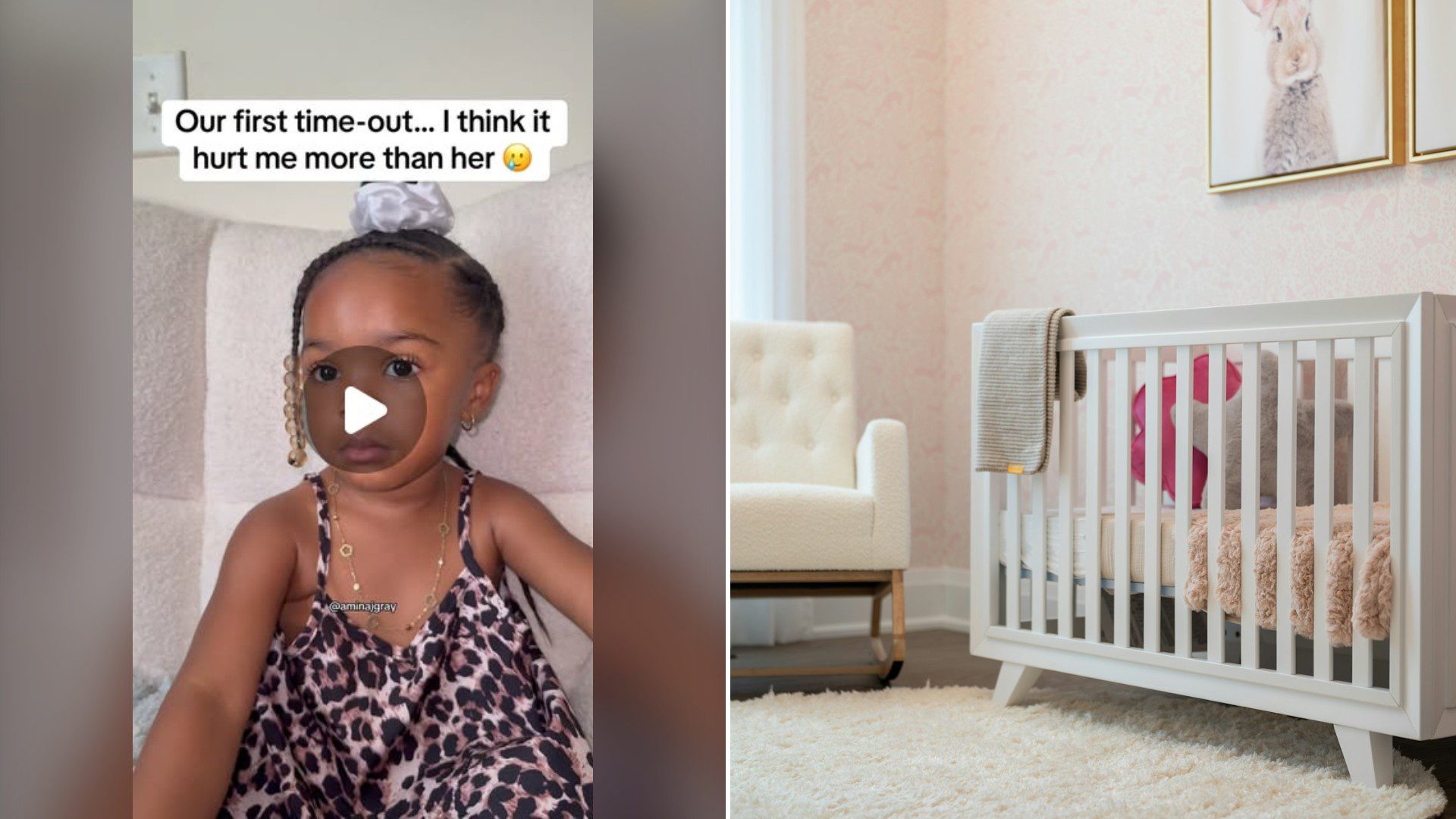
Mom and creator @aminajgray0310 shares the whole first time-out, from the explanation to the cheerful goodbye at the end.
Setting up the time-out
The on screen text sets the tone: “Our first time-out… I think it hurt me more than her.” A little girl with braided hair and a leopard print dress sits in a big white armchair, fidgeting with her pearl bracelet. Mom, speaking from off camera, keeps her voice calm and steady.
She explains that Amina has to sit for a little while and think about what she did. Amina has her own idea. “I want see Daddy,” she says. Mom holds the line. They are not going to talk about Daddy right now, because Mommy did not like what happened and it is time to think about her actions.
The twist nobody planned for
Mom asks a simple question: “Do we hit Mommy?” Amina answers, “No.” Mom asks the obvious follow up, “So why did you hit Mommy?” The toddler thinks for a moment and tries a clever dodge: “Mommy, you hit me too.”
Mom does not take the bait and does not raise her voice. She tells her daughter, “No, I did not. I was sitting eating my food. We do not tell stories in Mommy’s house.” She reminds Amina that she had come over and hit her in the face, and she asks her to say when Mommy ever hit her. The toddler cannot come up with anything. “So stop telling stories,” Mom says. “Okay, mama,” Amina answers, sounding a little sulky and a little sorry.
A happy goodbye
Mom finishes with clear instructions. Hitting is not okay, she says, and she does not know where the behavior came from. She will come back to check on her in a little bit, and Amina is not to get up. Amina says “Okay” twice. Then, as soon as the lecture is over, she relaxes, smiles and calls out a very cheerful “Bye, Mommy! Mommy, bye!”
It is a funny ending to a serious moment, and it shows how quickly toddlers bounce back. The calm, consistent way Mom handled the conversation is a good model for any parent facing a first time-out.
Why toddlers hit and blame others
Hitting is very common between ages one and three. Toddlers have big feelings and not many words yet, and their impulse control is still developing. They are also learning what happens when they act on their feelings, so they test the limits. Children this age often say untrue things, too, sometimes out of confusion and sometimes to avoid trouble. That is part of normal development, and it calls for patient correction, not panic.
Tips for a first time-out
- Stay calm. A quiet, even voice shows your child that you are in charge and that the rule is not up for debate.
- Keep it short. A common guideline is about one minute for each year of your child’s age.
- Explain in simple words. Say what happened and why it was not okay, in a sentence or two a toddler can follow.
- Pick a boring spot. A chair or a step away from toys and screens works well.
- Be consistent. Use the same response every time the same behavior happens.
- Reconnect afterward. When the time-out ends, give a hug and move on without lingering on the incident.
Common questions about time-outs
What age can I start using time-outs? Many pediatric groups say they work best from around age two, when children can start to link the consequence to the behavior. Younger toddlers usually respond better to redirection and a firm, simple “no hitting.”
What if my child will not stay put? Calmly return her to the spot without a long conversation. It may take several tries, especially the first few times.
Is it normal to feel awful afterward? Absolutely. Many parents feel as the creator did, that it hurt them more than their child. Setting a limit with love is part of the job, and a quick hug at the end helps both of you.
The takeaway
Amina’s first time-out had a little bit of everything: a request for Daddy, a creative defense and a sweet wave goodbye. What stands out is her mom’s steady approach. She stayed calm, named the behavior and kept the rule clear even when her daughter tried to change the subject.
Credit for the original post goes to @aminajgray0310 on Instagram.