

Some craft ideas look great in theory. One mom decided to make a giant batch of slime right on the living room floor with her two kids. The aftermath tells you how it went.

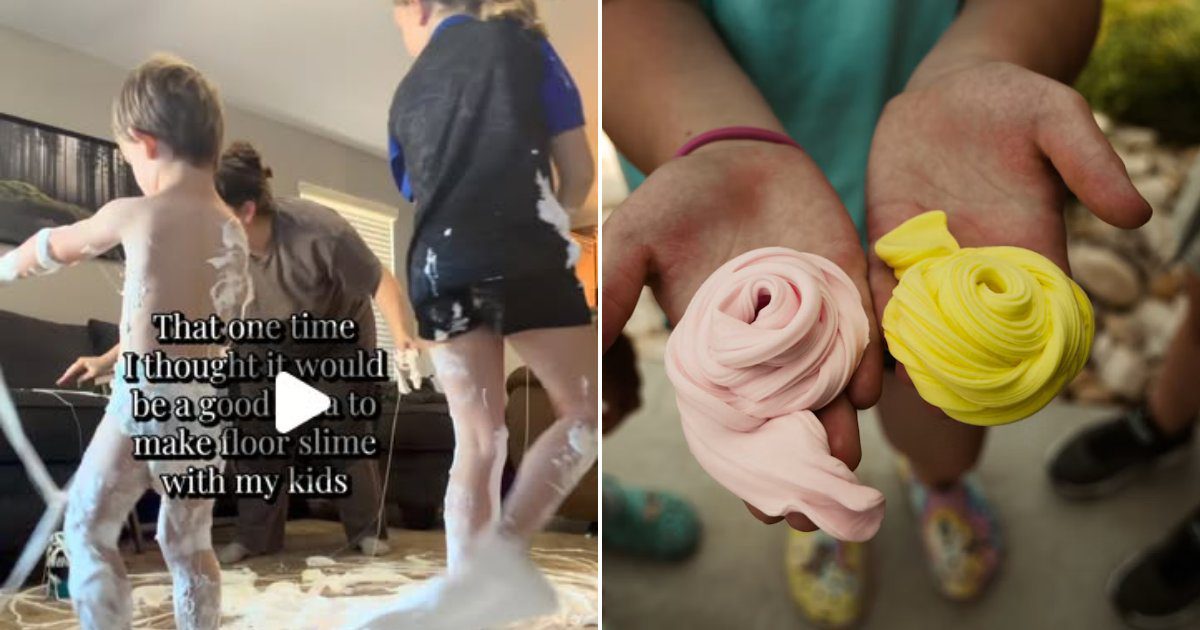
The post from @mrs.bagel_ is captioned, “That one time I thought it would be a good idea to make floor slime with my kids.”
The aftermath
The video opens on the chaos. On the left, a toddler boy in only a diaper stands coated from neck to toe in thick, stringy white slime. On the right, his older sister has slime up to her thighs and is pulling long strands upward. In the middle, mom kneels on the tile holding bottles of ingredients and staring at the sticky web connecting her hands to the floor.
A narrator on the soundtrack asks how she ended up in this situation, and a quick flashback shows the calm start: mom and both kids sitting on the tile, mixing a flat puddle of white goo.
Then it escalates. The toddler crawls through the puddle until his back and arms are covered, and his big sister cheerfully peels huge sheets of slime off him as he rolls around. The clip ends at the peak of the mess, with no cleanup shown.
Lessons from the slime floor
Messy play has real benefits for young children, from sensory development to creativity, and plenty of parents are glad they tried it. But a few lessons from this one are worth passing along.
- Contain the mess. A large plastic tablecloth, shower curtain or a play outside can save your floors.
- Dress for it. Swimsuits or old clothes make cleanup easier.
- Keep wipes and towels close. Slime sticks to everything, so have supplies ready before you start.
- Check ingredients with little ones. Many slime recipes include activators and glues that are not meant to be swallowed, so supervise closely with toddlers.
- Plan the cleanup. Warm, soapy water and patience work better than scrubbing.
Why messy play is worth it
Child development specialists often point out that messy, sensory play gives young children chances to explore textures, practice using their hands and try out cause and effect. Squishing, stretching and pouring also make room for imagination. The mess is part of the learning, even when it takes a bit more effort for the grown-ups.
Common questions about slime and young kids
Is slime safe for toddlers? It depends on the recipe and on supervision. Slime is not food, and toddlers tend to put things in their mouths. Many recipes use ingredients that are not meant to be swallowed, so always read labels and keep a close eye on young children. Wash hands well afterward, and stop if a child’s skin looks irritated.
What if my child is too young for slime? There are gentler options for little ones. Cornstarch mixed with water makes a goopy, stretchy mixture often called oobleck, and it is made from simple kitchen ingredients. Even so, keep supervision close and do not pour large amounts down the drain, since it can clog pipes.
How do I get slime out of clothes and carpet? Let it dry a little and lift off what you can. Many parents find that warm water and white vinegar help loosen glue-based slime from fabric. Always test a hidden spot first, and follow the care label on clothes.
Try this at home: set up a mess-friendly zone
- Choose a space that cleans easily, such as a patio, a kitchen floor or a bathtub.
- Spread an old shower curtain, a drop cloth or a few towels beneath the activity.
- Dress everyone in swimsuits or clothes you do not mind ruining.
- Gather supplies first: wipes, a bucket of warm water, towels and a change of clothes.
- Set a time limit and a clear plan for what happens when the activity ends.
Cleanup tips from parents who have been there
- Do the first cleanup outside or in the tub, so most of the mess never enters the house.
- Rinse tools in a bucket, not the sink, to protect your pipes.
- Let children help with age-appropriate tasks, like dropping towels in the laundry basket.
- Keep a towel by the door for the walk to the bath.
If the activity is not a hit, do not worry. Some children love squishy textures and others prefer drier play, and both are perfectly normal. Offer a few options and follow your child’s interest.
Not every craft goes to plan, and that is part of family life. A little preparation can help the next experiment feel more fun and less like a disaster, and the stories that come out of it tend to be the ones everyone remembers.
Credit for the original post goes to @mrs.bagel_ on Instagram.