Every family has that one child who has had enough of waiting. In one kitchen, a mom was using a gentle approach to get her youngest to wash the dishes. Then the oldest sibling stepped in with a very different style, and the whole scene became a lesson in chores, patience, and family dynamics.
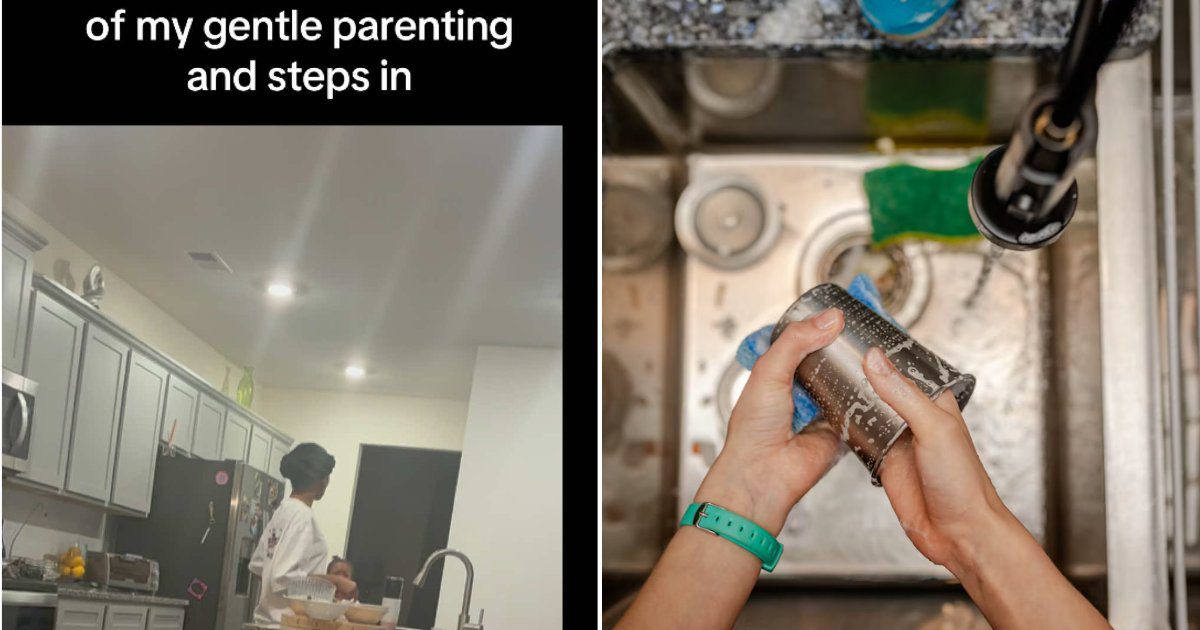
The mom shares the moment at @kita_c1, and it plays out in real time in the kitchen.
@kita_c1
The oldest takes over
The kitchen is busy. A dishwasher rack stands open, and a kitchen island sits in the middle. At the sink, the oldest sibling is guiding a younger girl through washing the dishes, step by step.
The directions come quickly. “Put that in there.” “Stand up straight.” “Now rinse the bowls.” The oldest counts the bowls, telling the little one that she has four and one spoon, and tells her to grab her first bowl.
The younger girl pushes back. She says one of the bowls is not hers. She notices her mom is filming and says so. And when the oldest says to wash the spoon, the little one says she already did that, and adds that she is trying.
One spoon at a time
While this goes on, other kids move through the room. A boy in pajama pants and a bonnet walks through the kitchen and out again. A teenager comes in sweeping the floor with a broom. The whole family is in motion.
The voice from behind the camera offers a gentle suggestion: do one spoon at a time. It is the same patient tone that the on screen text calls gentle parenting, and the contrast with the oldest sibling’s brisk coaching is what makes the scene so funny.
What the scene shows about chores
Kids can do far more around the house than we sometimes expect. A young girl at the sink is learning a real life skill, and the older sibling is learning how to teach it. Both are growing.
At the same time, there is a lesson about tone, because the whole scene is delivered at top speed. Directions work best when they are clear and kind. A long string of commands can overwhelm a child, while one step at a time helps her stay on task.
How to get kids to help with dishes
- Break the job into small steps and give one step at a time, like rinsing, scrubbing, and placing in the rack.
- Show them first. Let a child watch you do a bowl and then try one.
- Make sure they can reach the sink comfortably, with a sturdy step stool if needed.
- Start with unbreakable items, like plastic bowls and spoons.
- Stay close when children are washing anything with sharp edges, or keep those jobs for adults.
- Praise effort and thoroughness, not speed.
When an older sibling takes charge
Older siblings often step into a helper role. It can be a real gift, since children sometimes listen to a brother or sister in a different way than to a parent. It can also get bossy.
If you want to encourage helpfulness without conflict, give the older child a specific job, such as showing the younger one how to rinse a bowl. Remind them that the goal is to teach, not to boss. Praise them when they are patient, and thank them for taking the load off you.
And remember that the younger child needs a say too. Letting her try in her own way, even if it takes longer, builds ownership.
Gentle does not mean permissive
Gentle parenting is often misunderstood. It does not mean that children never have to do anything hard. It means that expectations are set with respect and without harshness. A parent can be warm and still expect a child to finish the dishes.
Some families find that a mix works best: a warm tone, clear expectations, and consistent follow through. When the child sees that the expectations do not change, the chore gets easier over time.
Questions parents ask about kids and chores
At what age can children wash dishes? Many young children can rinse and wipe unbreakable items with supervision, and skills grow from there. Match the task to the child’s size and coordination.
Should kids be paid for chores? Families differ. Some treat chores as part of belonging to the household, while others tie extra jobs to an allowance. Choose what fits your values and keep it consistent.
What if the work is not done well? Show them the spot they missed in a friendly way, and let them try again. Perfection is not the goal, and practice is how skills improve.
A kitchen full of life
In the end, this is just a regular evening with kids doing chores, a little grumbling, and a mom behind the camera who enjoys the show. It is not perfect. It is real. Many parents will see their own kitchens in this one.
If your home is full of voices, bowls, and brooms, take heart. Everyone is learning how to work together, one spoon at a time.
Credit for the original post goes to @kita_c1 on TikTok.