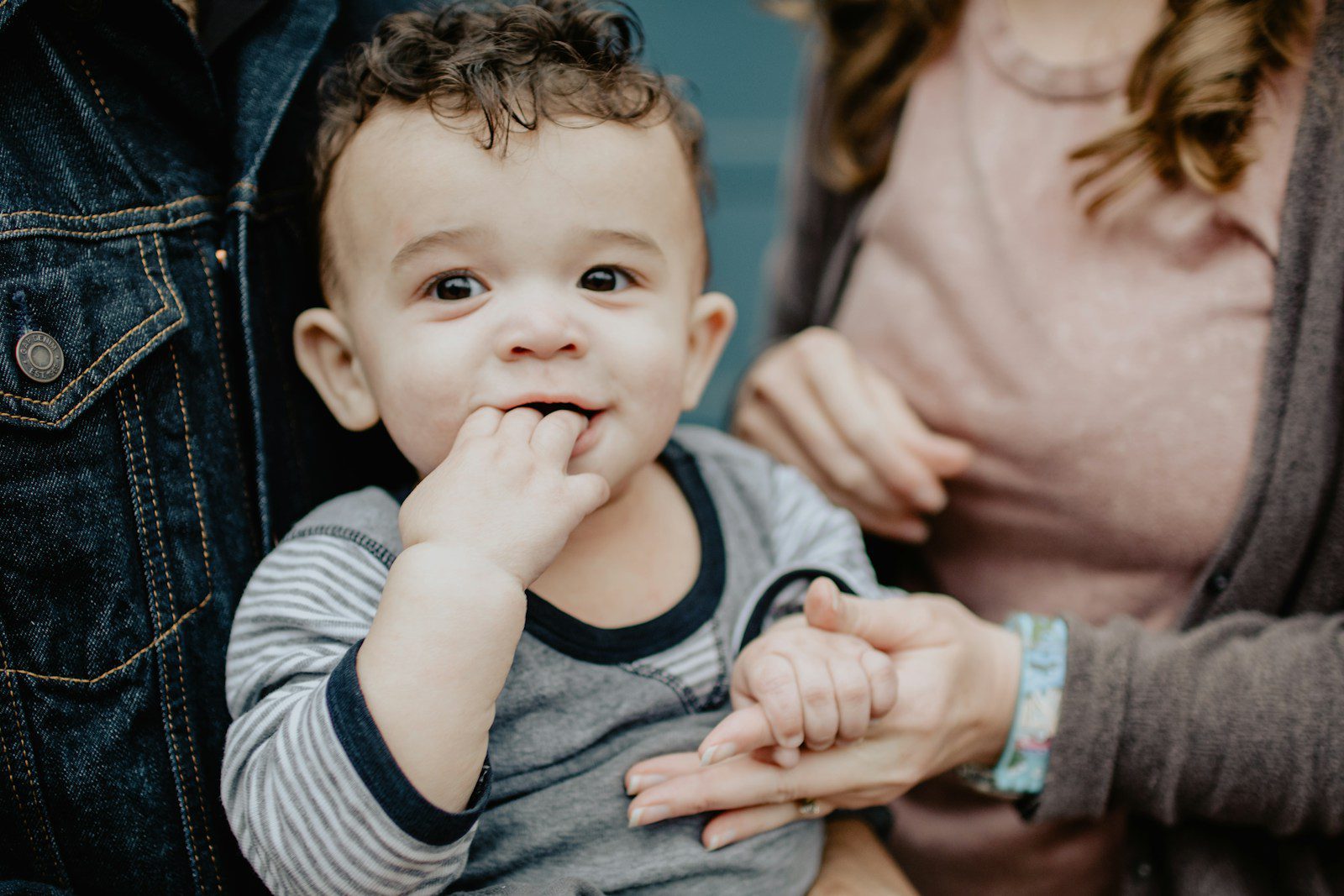
One mom recently found herself watching her mother-in-law behave in a way that left her completely unsettled. During a family visit, her mother-in-law leaned in close to her two-year-old son, yelling “NANA NANA NANA” with the kind of intensity that made everyone in the room pause. It wasn’t a joyful call; it felt more like an act of desperation for attention. The sight was jarring, as the child seemed deeply uninterested in the display, more focused on the toys scattered around the room.
The mom had been aware of her in-laws’ awkwardness, especially her mother-in-law’s, when it came to interacting with children. The more the child grew, the more the discrepancies in engagement became apparent. Her mother-in-law was fixated on getting the little one’s undivided attention but didn’t seem to know how. Instead of playing with him or even trying to connect in ways that he would enjoy, she resorted to repeating his name over and over, as if sheer volume could bridge the gap between them.

It was a puzzling approach, really. Each time her son did look up, he was met not with conversation or playful banter, but simply a wide smile that faded quickly when he turned away. The mother noted that her in-laws rarely spoke to him like a normal person would. Their method consisted of yelling their grandparent names in hopes that he would miraculously respond. So far, her son had shown no inclination to call them anything at all, which only seemed to frustrate them more.
The mom speculated that her son’s lack of interest in addressing his grandparents might be directly related to how they interacted with him. She stated plainly that if someone were to yell repetitively in her face, she wouldn’t want to engage either. It became a practical solution for her to simply take her son away from the situation whenever the yelling began. This led to an increasing tension during family gatherings, especially since her son was enthusiastic about the attention he received from her own parents, who actively involved themselves in his playtime.
The dynamic was stark. Her parents engaged in activities that caught his interest, while her in-laws resorted to an almost frantic display of affection that did nothing but push him away. Despite her mother-in-law’s frequent declarations of love for her grandchildren, the reality didn’t seem to align with those words. Many listeners agreed that it was essential for connections to be built on mutual interest and interaction.
People had very different reactions to her story on Reddit. Some understood the struggle and pointed out that it takes effort to build relationships, especially with young children who thrive on engagement. Others speculated that her in-laws weren’t being malicious; they simply didn’t know any better. A few suggested that the mother could gently guide her in-laws, offering them tips on how to interact more positively with her son. However, the mom’s frustrations eschewed any desire to be a mediator in what she viewed as a fundamental disconnect in understanding child behavior.
As the conversation unfolded, commenters emphasized the importance of adapting to a child’s needs rather than expecting them to conform to adult expectations. Some even shared their experiences with similar family dynamics, suggesting that it might be helpful to set clear boundaries regarding visits and interactions, focusing instead on those moments that genuinely foster a connection.
In the end, this mother’s experiences opened up a broader discussion about the sometimes uncomfortable reality of family dynamics, especially when it comes to children. How does one navigate the relationship between a child and a grandparent who simply doesn’t seem to know how to relate? With her son adoring her own parents and remaining indifferent towards his father’s side, there’s a puzzling void that neither side seems able to bridge. It raises the question of how much effort should be put into building those familial connections when they seem unreciprocated.
More from Decluttering Mom: