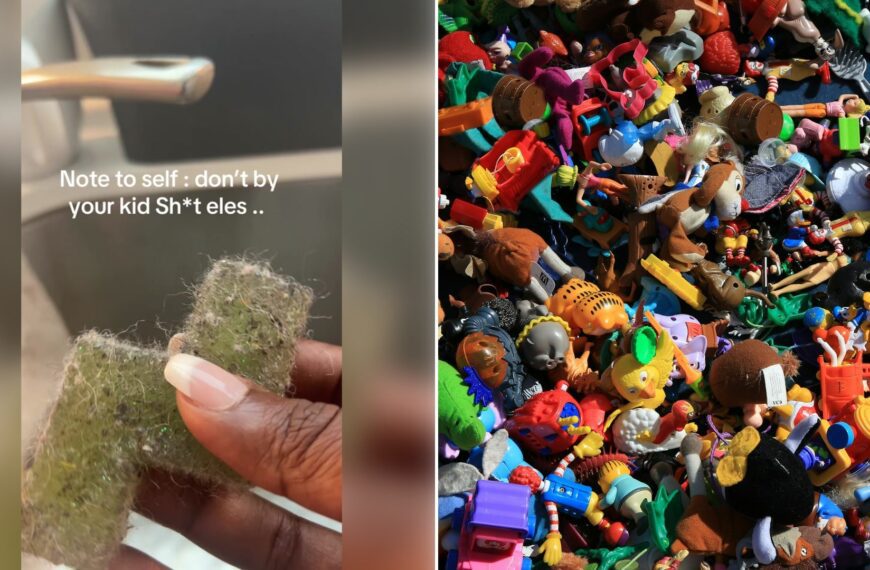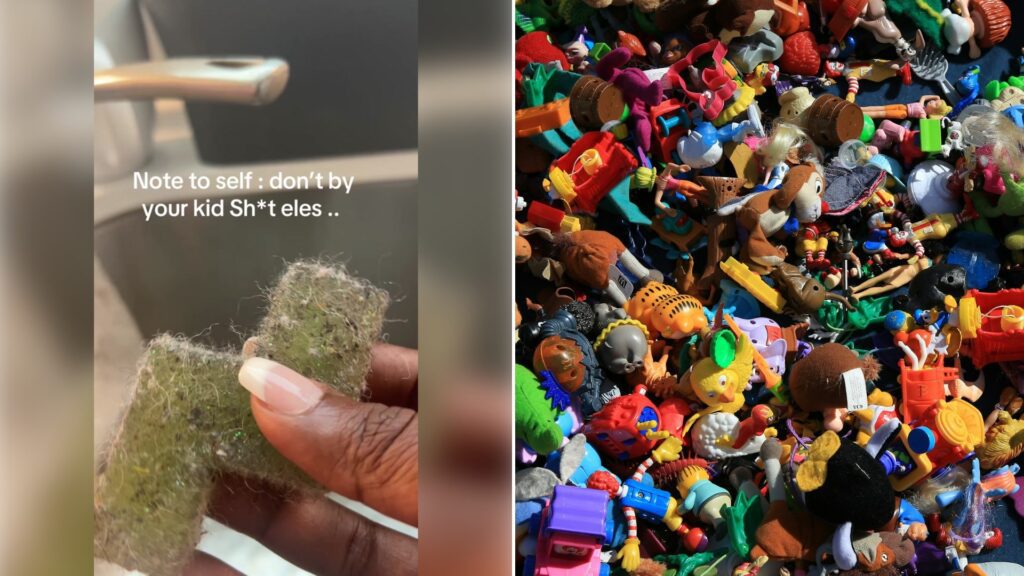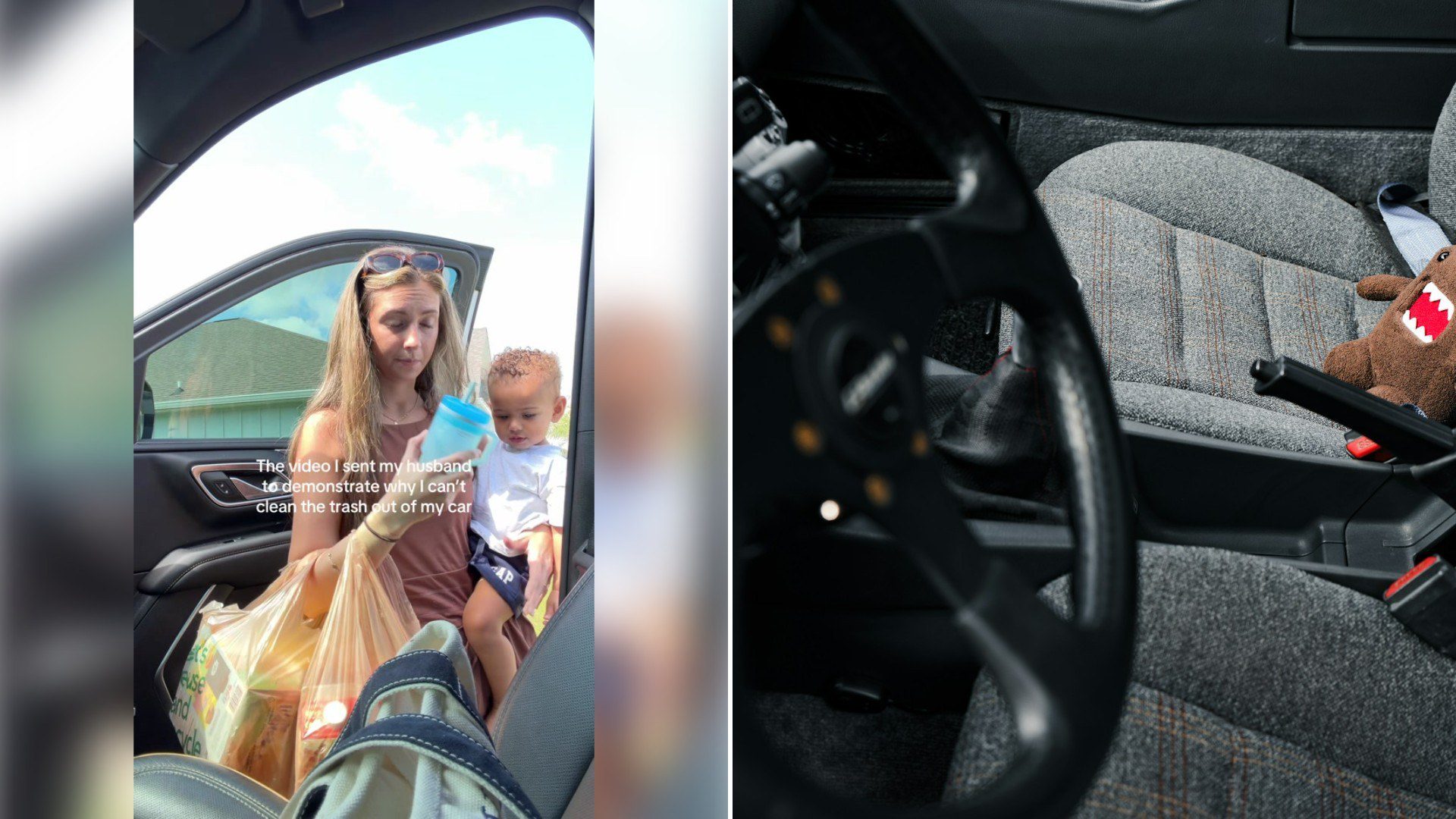
Multitasking as a parent often means attempting two physically incompatible tasks at once, and a mother posting under the handle miabkuykendall recently captured a perfect example of exactly that struggle. Her video shows her trying to clean out her car while simultaneously holding her squirming, uncooperative toddler — a combination that turns a simple errand into something closer to a full-body workout.
The footage plays out with real comedic honesty: every attempt to wipe down a surface or clear out clutter gets complicated by a toddler actively resisting being held still, twisting and squirming in exactly the way small children do when they’d rather be doing literally anything else. Her caption sums up the exhausted humor of the moment perfectly, joking that she needs twenty hands to actually get the job done.
@miabkuykendall Need 20 hand 🤷🏼♀️
The video resonated widely beyond her usual audience, pulling in approximately 2.2 million views from an account with about 337,700 followers — a meaningful jump in reach that suggests this particular flavor of one-handed, one-armed parenting chaos is instantly recognizable to a huge swath of caregivers.
There’s a specific, underappreciated physical toll to parenting a toddler that rarely gets discussed outside of moments like this one: the sheer amount of everyday tasks that end up being completed one-handed, with a squirming child balanced on a hip or braced against a shoulder. Car cleanup, cooking, folding laundry, even getting dressed — an enormous number of routine household tasks get quietly transformed into feats of balance and improvisation once a toddler enters the equation and refuses to be set down.
What makes this kind of video so relatable is the universal recognition of that specific kind of exhaustion — not the emotional exhaustion parenting content usually focuses on, but the literal, physical fatigue of holding a wriggling twenty-five-pound child while trying to accomplish something that would take a fraction of the time and effort without them. It’s a form of tiredness that’s easy to underestimate until you’re actually living it, one errand at a time.
For parents facing the same one-handed multitasking challenge, a few small adjustments can make a genuine difference: babywearing carriers free up both hands for tasks like this one far more effectively than simply holding a toddler on a hip, and accepting that some tasks are simply better left for nap time or a moment when a second adult is available tends to save both energy and patience compared to attempting everything solo in the moment.
In the end, the appeal of miabkuykendall’s video isn’t really about car cleaning at all — it’s about the shared, almost universal recognition among parents that toddlers have an uncanny ability to turn even the simplest task into an unplanned physical challenge, and that surviving it with a sense of humor intact is its own small daily victory.
Occupational and physical therapists who work with new parents have started paying closer attention to exactly this kind of repetitive strain, noting that the constant one-armed carrying and holding involved in toddler parenting can contribute to real, measurable wrist, shoulder, and back fatigue over time, even though it rarely gets discussed with the same seriousness as other physical health topics.
That physical reality is part of why babywearing has grown so dramatically in popularity over the past decade, moving from a niche parenting choice to a mainstream recommendation, largely because it redistributes a toddler’s weight across a parent’s body more evenly than holding them on a hip, freeing up both hands for tasks exactly like the one in this video.
For parents navigating their own one-handed errands, breaking tasks into smaller, more frequent sessions — rather than attempting one long uninterrupted cleanup — tends to be more sustainable than pushing through discomfort in a single marathon session, particularly for tasks like car cleaning that don’t come with a hard deadline and can reasonably be spread across several shorter attempts.
It’s also worth noting that toddlers’ resistance to being held still during errands often has less to do with defiance and more to do with a developmentally normal drive toward independence and movement at that age. Understanding that the squirming isn’t personal, but simply where a toddler is developmentally, can make moments like the one in this video feel a little less exasperating and a little more like an expected, temporary phase to push through with a sense of humor intact.
There’s also a reminder here that asking for help during a physically demanding errand isn’t a failure of independence but a reasonable response to an objectively difficult situation. A second set of hands, even briefly, can turn a task like this one from a full-body workout into a manageable few minutes, and there’s no real downside to simply asking when one is available.
In the meantime, most parents simply learn to laugh through the awkward, physically demanding stretch of toddlerhood, trusting that the squirming, resistant phase won’t last nearly as long as it feels like it will in the moment.
And for anyone tempted to feel like they’re the only one struggling to get a simple errand done with a toddler in tow, this video is proof otherwise: even a creator with hundreds of thousands of followers is out there wrestling a squirming kid one-armed, camera rolling, same as everyone else.