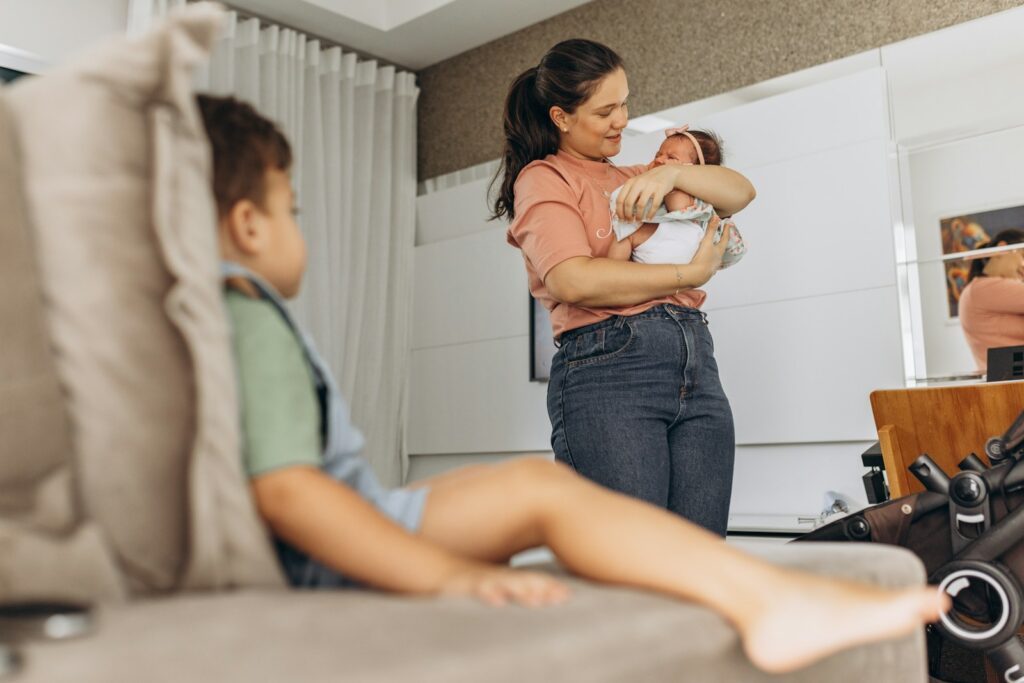
A mother’s complaint about being left to sit on the floor of a Delta plane while cradling her baby taps into a familiar kind of travel outrage, even if the specific details of her case are not documented in the public reporting available here. What is clear is that parents flying with infants are repeatedly finding themselves squeezed, shuffled, or ignored in cabins that were never really designed with babies in mind. The anger aimed at Delta in this latest story fits into a broader pattern of passengers feeling that basic comfort and safety fall through the cracks once the doors close.
Her criticism lands in a moment when airlines are already under a microscope for how they treat families, from seating policies to how crews respond when something goes wrong. Across social media and in formal complaints, parents describe being forced into awkward, sometimes risky positions just to keep their children close and calm. The floor, in that sense, is not just a literal place but a metaphor for how low the bar can feel when customer care collides with tight schedules and tighter cabins.
When Cabin Design Collides With Parenting Reality
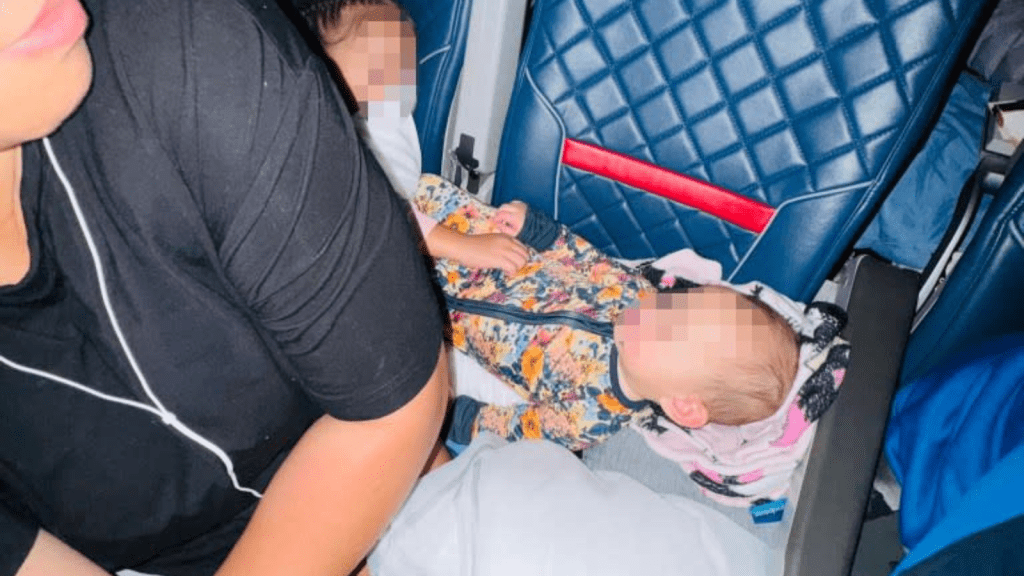
The core of the mother’s frustration is simple: she expected a seat, not a patch of carpet, and she expected her baby’s safety to be treated as a priority, not an afterthought. While the exact circumstances of her Delta flight are Unverified based on available sources, the scenario she describes mirrors a wider tension between airline efficiency and the messy reality of traveling with small children. Parents are often told to improvise in cramped rows, balancing diaper bags, bottles, and a squirming infant in spaces that barely fit an adult.
That tension becomes more serious when safety enters the picture. In a crash landing involving a Delta Air Lines flight in Toronto, the aircraft flipped, and experts pointed out how turbulence or sudden impacts can make holding onto a baby extremely difficult. That kind of incident underscores why leaving a parent to manage an infant without a proper seat or restraint is not just uncomfortable, it can be dangerous. Even in routine operations, a nose wheel coming off a Boeing 757, as Delta Air Lines confirmed in a separate incident, is a reminder that unexpected jolts are part of flying, and cabin setups should assume that reality for the smallest passengers too.
Parents, Passengers, And The Battle For Space
Even when flights are uneventful, the way space is used in the cabin can turn into a flashpoint. One mother holding her baby daughter in her lap was stunned when the passenger in front of her fully reclined, pushing the seatback into their limited bubble of space and leaving her to juggle the child in an even tighter spot, a moment captured in a widely shared post. A more detailed account of that same flight described how she tried to keep her baby in a normal economy airplane seat while the person ahead insisted on reclining anyway, a clash that highlighted how little room there is for compromise when every inch is contested in a crowded cabin, as later explained in an exclusive NEED and KNOW breakdown.
Other passengers, famous or not, have found themselves in the middle of similar disputes over seats and treatment. Porsha Williams was involved in a confrontation on a Delta Airlines flight while traveling from Las Vega back to Atlanta, later being cleared of wrongdoing after questions about her behavior on board. In another viral moment, a TikTok user named @thefloraldame described how she could not reach her assigned window seat because a man was already sitting in the middle and refused to move, leaving her to climb over him in a clip that drew over 40,000 views and sparked debate about whether Delta owed her a refund. These stories do not involve babies on the floor, but they echo the same frustration: passengers feel trapped by both the physical layout and the social rules of the cabin.
Airline Policies, Crew Discretion, And What Families Can Expect
What makes the floor-sitting mother’s allegation so combustible is the sense that crew members had options and chose not to use them. Flight attendants often have wide discretion to reseat passengers, ask for volunteers to swap, or escalate problems to gate agents, yet parents say those tools are not always used when children are involved. On another carrier, a parent recounted how flight attendants tried every angle to convince them to give up their child’s seat for another traveler, promising that if they just moved, staff would fix the problem later, a plea detailed in a frustrated post. That kind of pressure makes it easier to understand why a parent might feel railroaded into sitting somewhere unsafe or unreasonable, even if the exact Delta case here cannot be independently confirmed.
At the same time, airlines are juggling their own mix of safety rules, tight schedules, and full flights, which can turn any disruption into a chain reaction. Delta, like its competitors, has been dealing with everything from mechanical issues to high-profile passenger conflicts, and each new story adds to the perception that the system is stretched thin. When a mother says she ended up on the floor with her baby, it lands on top of a stack of incidents that already have travelers on edge, from hardware failures to celebrity dustups. The result is a trust gap: parents board hoping for a basic level of care, and when that expectation is not met, their anger is not just about one flight, it is about an industry that often seems to treat families as an afterthought.
More from Decluttering Mom: