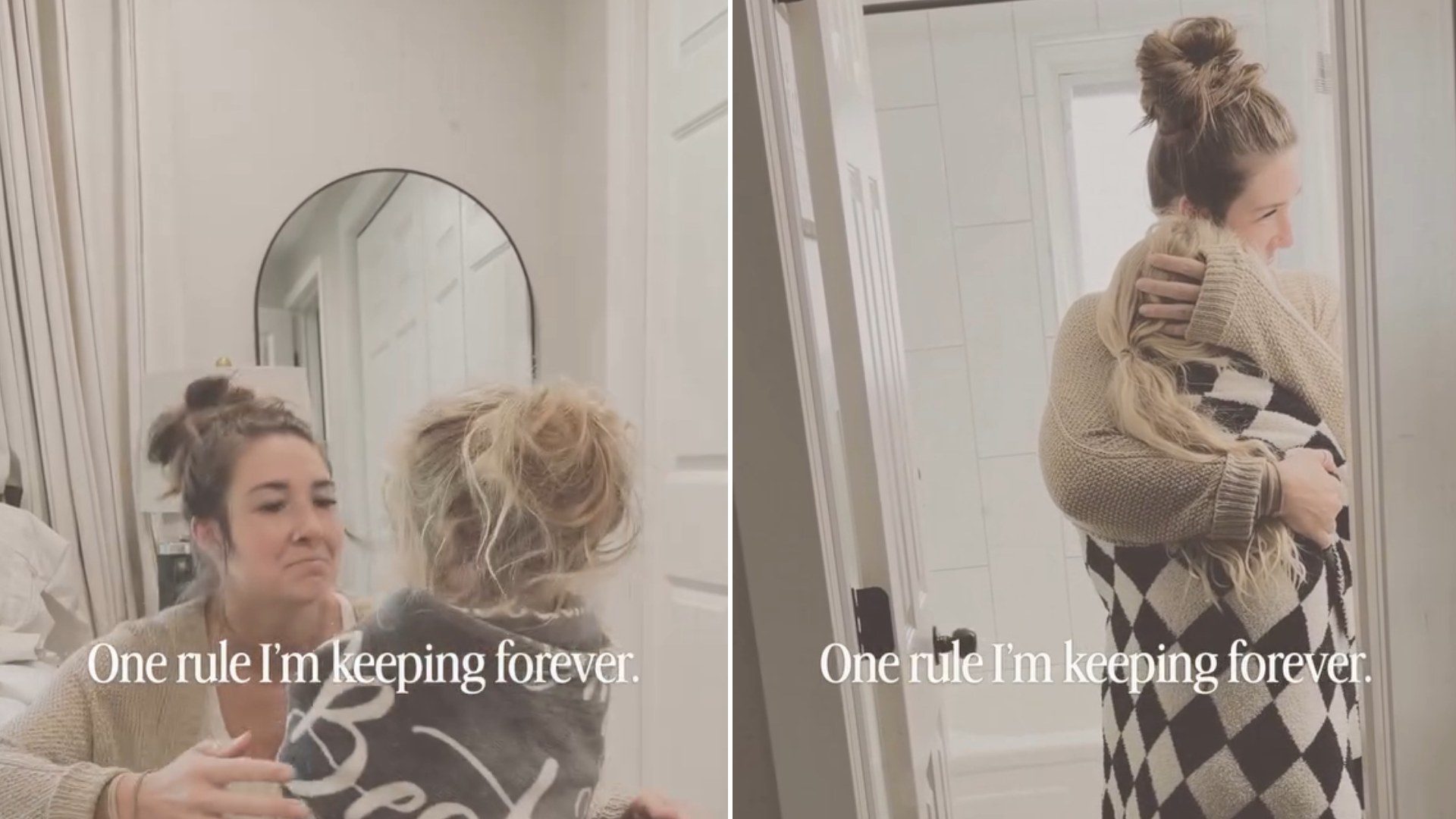
A mother on Instagram is sharing a simple parenting philosophy that has resonated widely with other parents online: what she calls her “last-to-let-go” rule. In her post, she describes a small but deliberate daily practice, letting her children decide when their morning hugs end rather than pulling away first herself, and explains why she considers these fleeting moments worth protecting.
“My last-to-let-go rule,” she wrote in her caption, alongside an emoji peeking through fingers, as if even she can’t quite believe how much these small moments mean to her. “I never want to forget these first-thing-in-the-morning hugs. Sleepy eyes…” the caption continues, painting a picture familiar to any parent of young children: the bleary, unhurried minutes right after waking, before the day’s obligations, school drop-offs, and to-do lists take over.
The rule itself is straightforward. Rather than initiating the end of a hug, as many busy parents instinctively do when there’s a lunch to pack or a bus to catch, this mother makes a point of letting her children set the pace. If a child wants to hold on a few extra seconds, she stays in the embrace until they’re the one who lets go first. It’s a small inversion of the usual parent-child dynamic, where adults often unconsciously control the timing of affection because they’re the ones managing the schedule, and it puts the child, however briefly, in charge of how long that connection lasts.
What comes through in her caption is an awareness of how quickly these moments pass. Morning hugs with a sleepy, pajama-clad toddler or young child are the kind of thing that feels endless in the moment and vanishes seemingly overnight as kids grow older, become more independent, and start pulling away, sometimes literally, sometimes emotionally, as part of normal development. Her decision to name the practice, to turn it into an intentional “rule” rather than an occasional habit, reflects a broader instinct many parents share: the desire to be more deliberate about presence during a stage of childhood that parents often only recognize as precious in hindsight.
The video’s popularity, nearing 800,000 views, suggests the sentiment landed with a wide audience. There’s a particular strain of parenting content that has found traction recently, one less focused on techniques, discipline strategies, or developmental milestones, and more focused on the emotional texture of everyday family life, the sensory, fleeting details that don’t show up in a parenting book but that parents often say they’d give anything to relive once their kids are grown.
By naming her habit the “last-to-let-go” rule, the mother has also given other parents a framework they can adopt directly, a concrete, low-effort practice rather than an abstract call to “be present” or “cherish every moment,” phrases so common in parenting culture that they’ve become almost meaningless through repetition. Her version is specific enough to actually try tomorrow morning: don’t be the one who pulls away first.
There’s also something quietly poignant in the framing. She isn’t claiming the rule solves anything or transforms her parenting. She’s simply protecting a window of time, the first few minutes of the day, from the rush that inevitably follows, and trusting her children to tell her, without words, when they’re ready to move on.
Making Room for Small Moments of Connection
Simple, repeatable rituals like a morning hug can offer real value beyond the emotional warmth of the moment itself. Child development specialists often point out that predictable physical affection helps children feel secure, and that letting a child set the pace of that affection, rather than always dictating it, can reinforce their sense of agency in small, healthy ways. Building a ritual like this doesn’t require a major schedule overhaul; even a minute or two of unhurried connection at a consistent point in the day, morning hugs, a bedtime check-in, a few minutes of undivided attention after school, can anchor a child’s day and a parent’s relationship with them. As kids get older and physical affection naturally becomes less frequent, having established these small rituals early can make it easier to keep some version of that connection alive, even as it evolves.