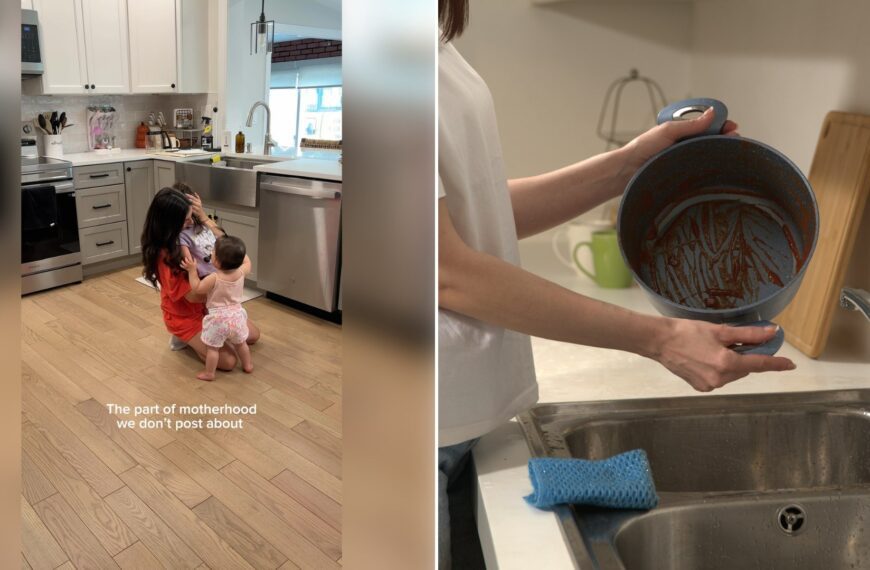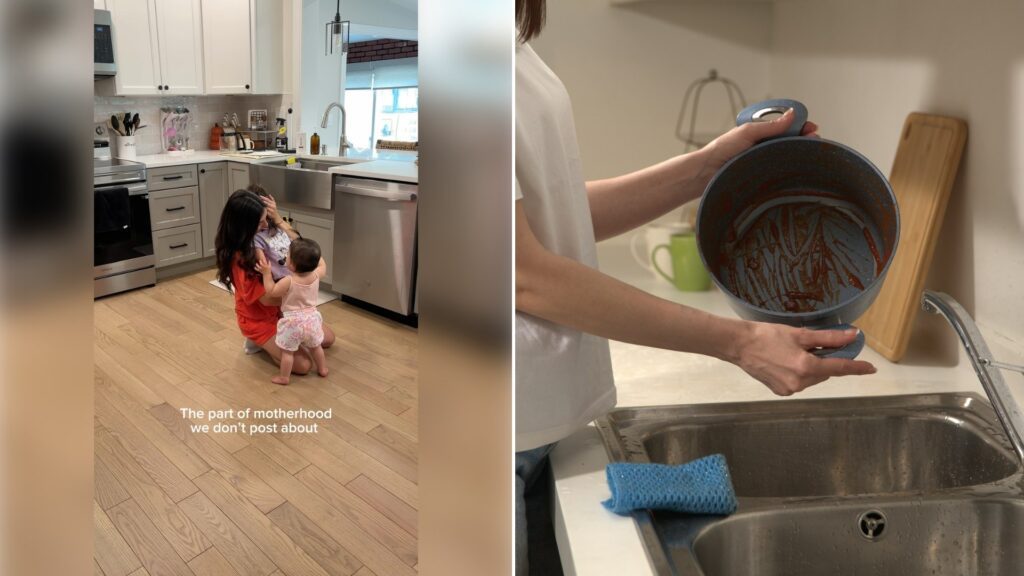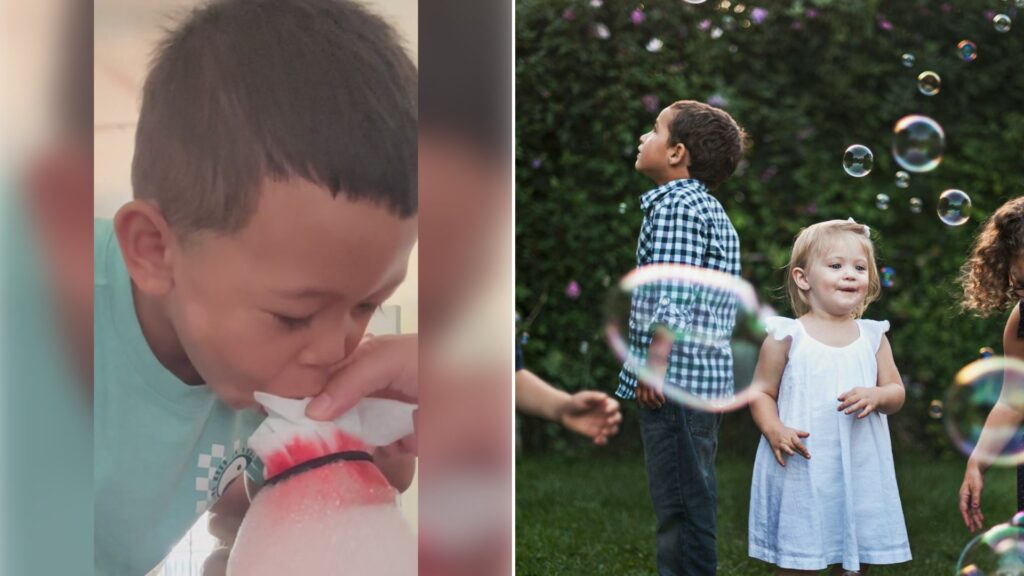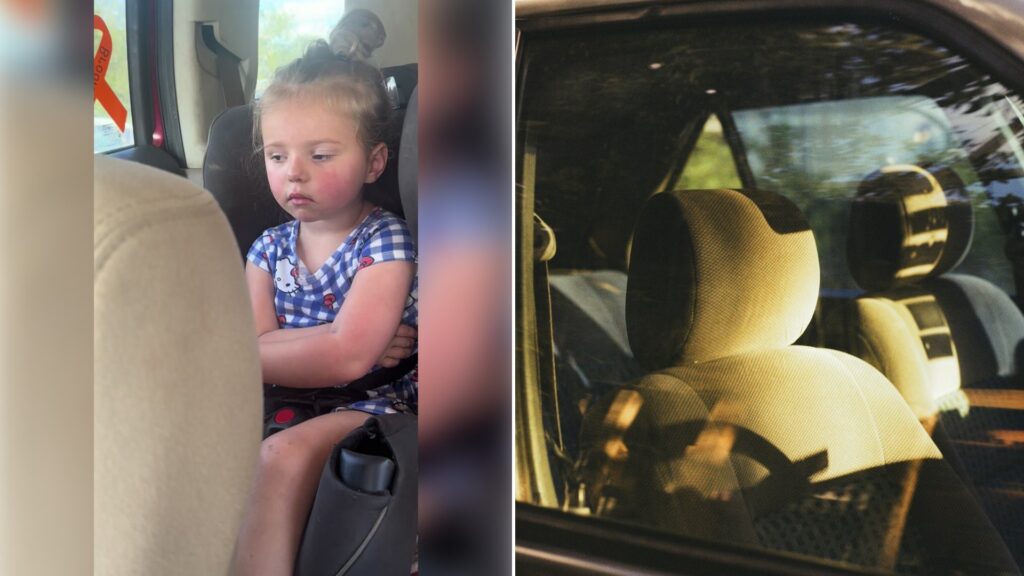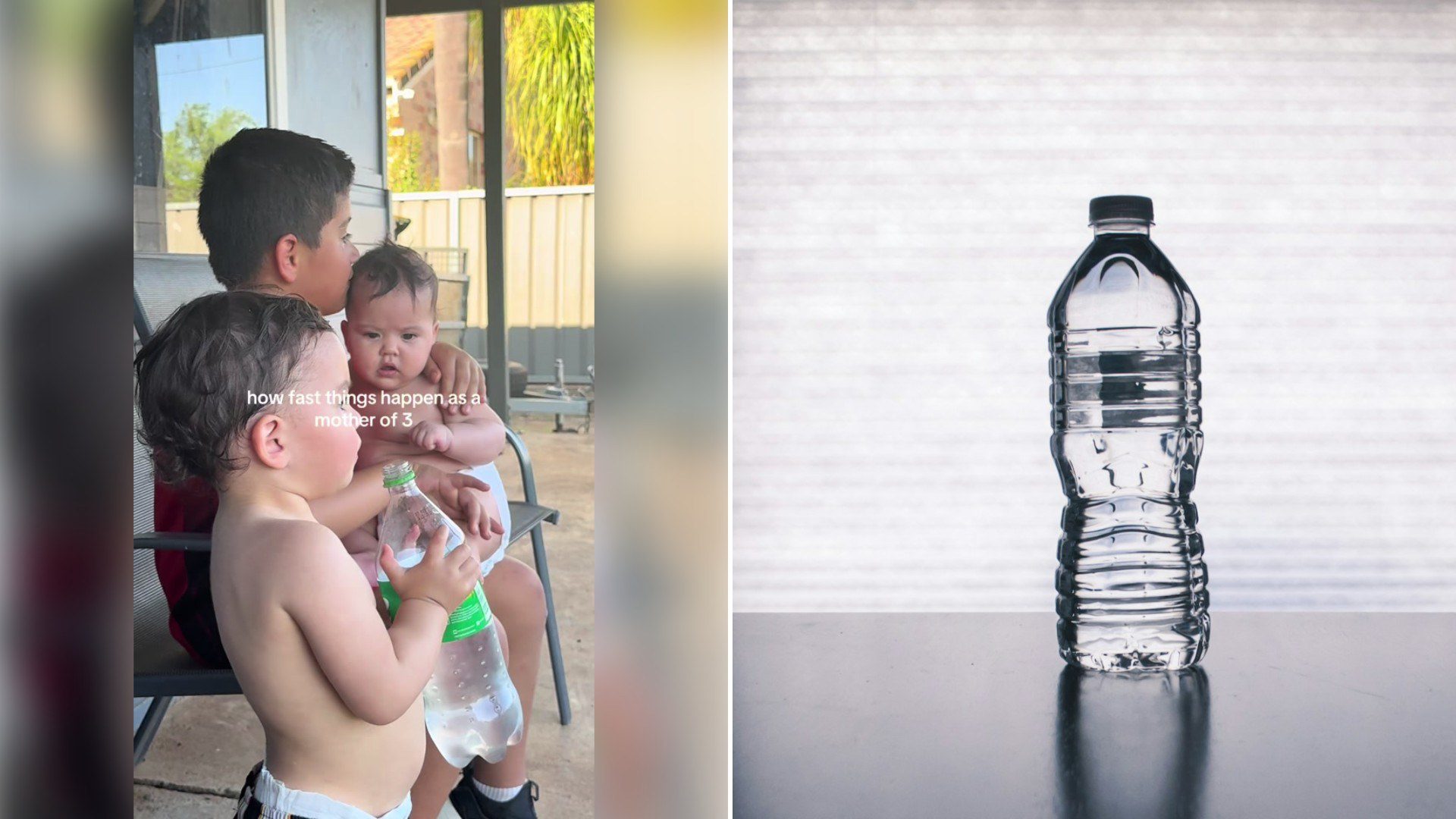
A creator posting under the handle taila.jadee captured a real, candid moment with her three young children that starts small — a spilled water bottle — and snowballs into minor chaos within seconds, exactly the kind of escalation that happens fast and often with multiple kids in the same space.
@taila.jadee such chaos, so quick lmaoo #mumlife
The caption reflects on just how quickly ordinary moments spiral once there’s more than one kid reacting to, responding to, and feeding off each other’s reactions to the same small event. A single spill that would barely register with one child on their own becomes an entirely different situation with three kids amplifying it simultaneously.
Parents of multiple kids will recognize that particular physics immediately: it’s rarely the size of the original incident that determines how big the moment becomes, but how many kids are present to react to it, argue about whose fault it was, and generally turn a thirty-second cleanup into a much longer ordeal.
There’s no tidy lesson at the end, and the video doesn’t really need one — it’s raw, unstaged footage of an ordinary household moment escalating exactly the way it does in real life, which is precisely why it resonates with any parent juggling more than one kid at a time.
There’s a specific kind of math that only becomes obvious once a household crosses from one kid to multiple, and it has nothing to do with simple addition. Adding a second or third child doesn’t just double or triple the potential for chaos — it multiplies it, since each kid isn’t just an independent source of mess or noise but also an audience and participant reacting to everyone else’s reactions in real time. A spilled water bottle with one child present is a minor inconvenience; the same spill with three kids present becomes a small ecosystem of reactions, each one feeding the next.
What makes this particular flavor of chaos so recognizable to parents of multiple kids is the speed of the escalation rather than its severity. Nobody got hurt, nothing irreplaceable was damaged — it’s water on a floor, objectively one of the most minor messes a household can produce. And yet within seconds it had generated noise, reaction, and probably at least one round of blame-assigning among siblings, all from an incident that would have taken thirty seconds to clean up in complete silence if only one kid had been present.
Sibling dynamics play an outsized role in this kind of rapid escalation, since kids tend to perform their reactions for each other almost as much as for a parent watching. A spill witnessed by a sibling becomes an opportunity for someone to point out whose fault it was, for someone else to overreact for attention, and for a third kid to get pulled into the commotion purely because commotion is happening nearby. None of that requires any actual malice or bad behavior — it’s simply what happens when multiple young kids share a space and something, anything, disrupts the baseline quiet.
There’s also a resource-competition element buried in even the most mundane multi-kid chaos. A spilled water bottle means someone’s drink is now gone, which can trigger a request for a replacement, which might prompt a sibling to point out they haven’t finished their own drink yet, which somehow becomes its own small grievance layered on top of the original spill. What looks like chaos from the outside is often just several overlapping, low-stakes negotiations happening simultaneously, each one completely reasonable in isolation and completely overwhelming in combination.
For a parent managing this in real time, there’s rarely room to address each thread individually the way a calmer, one-on-one moment might allow. Multiple kids reacting at once means triaging in real time — who needs an actual response right now, what can wait, what’s just noise that will resolve itself the moment the spill is wiped up and everyone moves on to the next thing. That triage skill, built entirely through repetition, is arguably one of the more underrated competencies that comes with raising more than one kid close in age.
What makes footage like this worth sharing, without any tidy resolution or lesson tacked onto the end, is exactly how unresolved and real it feels. Most parenting content eventually circles back to some kind of takeaway or silver lining; this one just shows the chaos escalating, lets it sit there in all its unglamorous noise, and trusts other parents to recognize the exact rhythm of it without needing anything spelled out.
By the time the clip ends, the water has presumably been wiped up, the immediate uproar has died down, and life has moved on to whatever comes next in a household with three kids — because it always does. That fast resolution, as much as the fast escalation, is part of what makes moments like this so relatable: the chaos feels enormous for about ninety seconds and then, just as quickly as it arrived, it’s already behind everyone, replaced by the next small thing waiting to happen.
There’s also something worth saying about why this kind of unfiltered footage tends to perform so well compared to more polished parenting content. A staged, aspirational clip of a calm, orderly household with three kids would ring false to most viewers, simply because it doesn’t match their own lived experience. A genuine thirty-second spiral over spilled water, filmed exactly as it happened with no cleanup of the narrative afterward, reads as trustworthy precisely because it doesn’t try to look impressive — it just looks familiar.