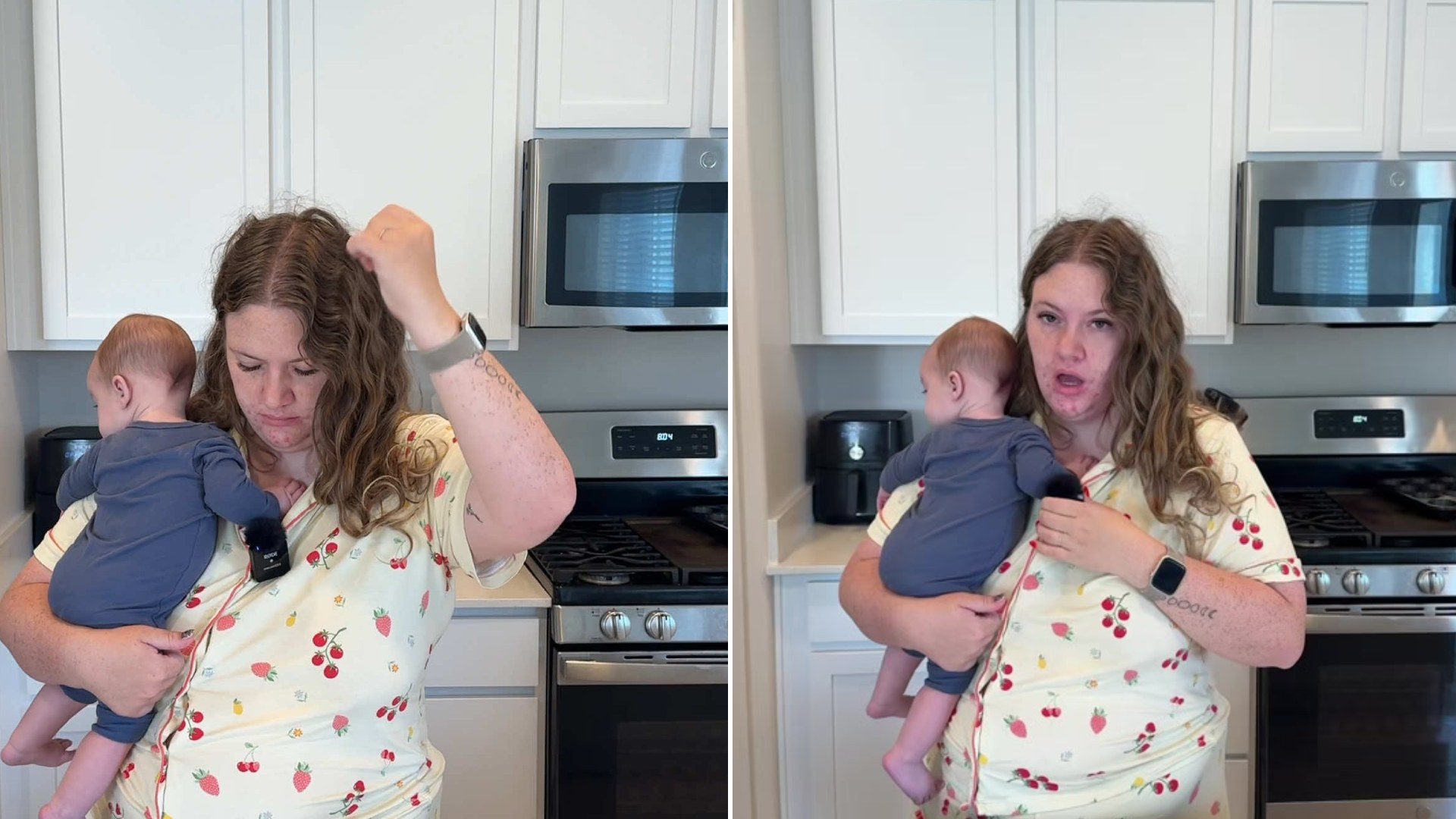
A mother on TikTok is giving followers an unusually intimate look at what an average morning actually sounds like in a household with two young kids, by wearing a wireless microphone to capture the candid, unfiltered dialogue of her routine. The resulting video is less a polished vlog than a raw audio-and-video snapshot of real family life, one she frames honestly against the backdrop of a brutal four-month sleep regression that’s left her running on fumes.
“Energy is rather low these days with the 4 month sleep regression,” she wrote in her caption, alongside a nervous laugh and crying-laughing emoji combination that says as much as the words themselves. The hashtags accompanying the post, including #momtok, #postpartumjourney, #toddlermom, #sleepregression, and #babysleep, situate the video squarely within a genre of parenting content built on transparency: showing followers not the highlight reel, but the actual texture of a morning spent parenting two young children while deeply sleep-deprived.
The wireless microphone format itself has become a popular technique among parenting creators precisely because it captures something video alone often misses: the constant, overlapping stream of small talk, requests, negotiations, and asides that fill a typical morning with young kids. It’s one thing to watch footage of a mother getting two children ready. It’s another to actually hear the real-time back-and-forth, the toddler’s questions, the baby’s fussing, the mother’s own tired but patient responses, layered together in a way that captures the sensory reality of the routine far more vividly than silent or voiceover footage would.
Four-month sleep regressions are a well-documented, if dreaded, stage in infant development, a period when a baby’s sleep patterns shift and often deteriorate as their brain and sleep cycles mature, frequently resulting in more frequent night waking and shorter stretches of rest for both baby and parents. For a mother already managing a toddler alongside a baby going through this stage, the compounding exhaustion is significant: not just interrupted nights, but the need to still show up fully present and functional for an older child’s needs come morning, homeschool routines, breakfast, getting dressed, all the small logistics of a household morning, regardless of how little sleep was actually had the night before.
That contrast, between the low energy she describes feeling and the fact that the morning routine still has to happen anyway, is really the emotional core of the video. It’s not a complaint so much as an honest acknowledgment of what that particular stretch of early parenthood actually feels like: functioning, and even finding moments of warmth and humor with your kids, while simultaneously running on a serious sleep deficit.
The video’s substantial reach, over 2 million views, reflects how deeply this specific experience resonates with parents, particularly those currently in the thick of the same stage. Sleep regressions are notoriously isolating in the moment, since they tend to hit at a time when a parent is already stretched thin, and seeing another mother document the reality of it, unfiltered mic and all, offers a kind of solidarity that generic advice about “sleep when the baby sleeps” rarely provides.
By choosing to show the routine as it actually happened, rather than editing around the exhaustion, the mother offers a version of parenting content that trades polish for honesty, and judging by the response, that honesty is exactly what a lot of her audience wanted to see.
Surviving a Sleep Regression With Multiple Kids
Sleep regressions, particularly around the four-month mark, are a normal part of infant development, tied to genuine changes in how a baby’s sleep cycles mature, and they typically pass with time even when they feel endless in the moment. Pediatric sleep specialists generally recommend keeping consistent, calming routines around naps and bedtime during a regression, since predictability can help a baby’s sleep stabilize even when regression makes nights rougher in the short term. For parents managing a regression alongside an older child’s needs, lowering expectations for the household during that stretch, simplifying meals, leaning on help where available, and giving yourself grace for a messier morning routine, can make the exhaustion more survivable. It’s also worth remembering that a regression is temporary, and that showing up tired but present for your kids, even imperfectly, still counts as showing up.