
By the spring of their sophomore year, most college students have mastered the rhythm: attend class, study, work a shift, sleep too little, repeat. But for a growing number of undergraduates, that rhythm has started to feel less like progress and more like a treadmill bolted to the floor. The question “Why does college feel so pointless?” is not a sign of laziness. According to recent national data, it reflects a structural collision between rising academic demands, financial pressure, and a loneliness epidemic that universities have been slow to address.
The American College Health Association’s National College Health Assessment, last conducted in fall 2024, found that more than 40 percent of undergraduates reported feeling so depressed it was difficult to function at some point during the prior year, and roughly one in three described overwhelming anxiety on a near-constant basis. A separate 2024 Gallup-Lumina report found that 41 percent of bachelor’s degree students had considered stopping out in the previous six months, with emotional stress and mental health cited as leading reasons. These are not fringe experiences. They describe the norm on many campuses as of early 2026.
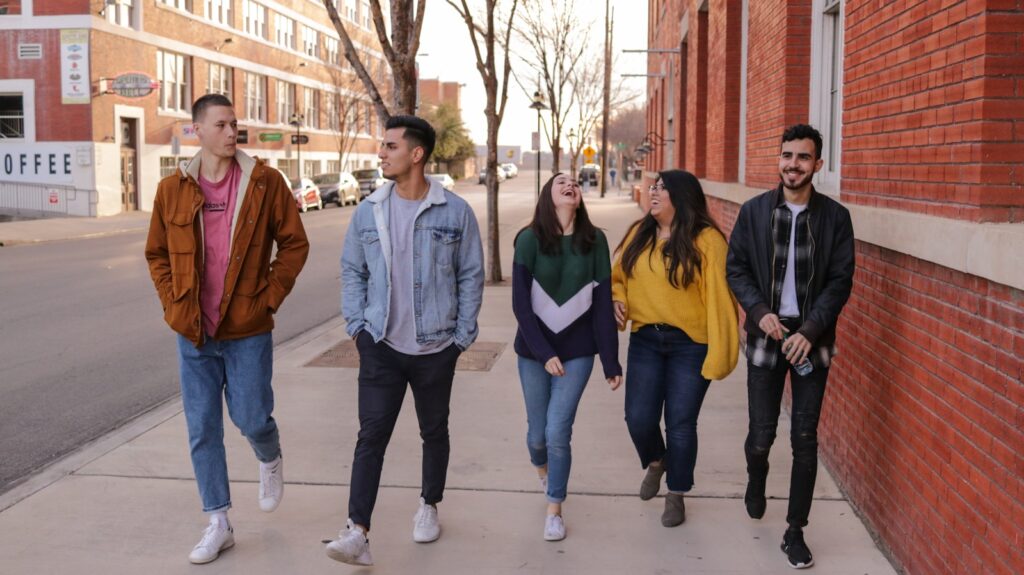
When achievement becomes its own trap
College culture rewards relentless forward motion. Finish one exam, start the next paper. Land an internship, immediately worry about the one after it. Psychologists have a term for what happens when this cycle runs unchecked: “achievement fatigue,” a state in which every accomplishment resets the bar rather than providing satisfaction.
Lisa Damour, a clinical psychologist and author of The Emotional Lives of Teenagers, has written extensively about how young people learn to equate self-worth with productivity long before they arrive on campus. For students who internalized that script in high school, college does not offer relief. It intensifies the pattern. The result is a student who looks successful on paper but privately feels hollow, unable to articulate why checking every box has not produced the fulfillment they were promised.
Campus marketing can sharpen the sting. University social media feeds routinely frame higher education as a total identity transformation, promising not just a degree but “the version of yourself you didn’t know existed” and “your people.” When the daily reality is long nights alone in the library and grades that feel more like judgment than feedback, the gap between that promise and lived experience can deepen a sense of personal failure. Instead of recognizing exhaustion as a signal that the system is asking too much, students often internalize it as proof that they are not enough.
Surrounded by people, still alone
One of the sharpest contradictions of college life is feeling isolated in a place specifically designed for community. A student can share a dorm room, sit in a 200-person lecture hall, and attend club meetings every week while still feeling profoundly unseen.
The U.S. Surgeon General’s 2023 advisory on the epidemic of loneliness and isolation identified young adults ages 15 to 24 as the demographic reporting the steepest decline in time spent with friends, down nearly 70 percent over two decades. On college campuses, that trend plays out as packed schedules that leave no room for the slow, unstructured time that genuine friendships require. Students may have dozens of contacts but few relationships where they feel safe being honest about how they are actually doing.
Research on loneliness consistently shows that perceived isolation, not the raw number of social contacts, is what drives emotional distress. A 2024 study published in the Journal of American College Health found that students who reported high loneliness were significantly more likely to also report academic disengagement, even after controlling for depression and anxiety. In other words, loneliness does not just feel bad. It actively undermines the ability to care about schoolwork, which can look from the outside like apathy or lack of motivation.
When burnout shuts the system down
Sustained pressure and isolation do not simply make students tired. They can trigger a neurological protective response that clinicians increasingly distinguish from ordinary fatigue. The World Health Organization classifies burnout in its International Classification of Diseases (ICD-11) as a syndrome resulting from “chronic workplace stress that has not been successfully managed,” characterized by exhaustion, mental distance from one’s obligations, and reduced effectiveness. While the WHO definition targets occupational settings, researchers have argued persuasively that the academic environment functions as a workplace for students, and the symptom profile maps closely.
In practice, college burnout can look like a student who once cared deeply about their major suddenly going blank in front of a problem set, or someone who stops attending club meetings not because they have lost interest but because every additional commitment feels physically impossible. The brain is not being lazy. It is pulling the emergency brake.
For autistic students, the picture can be even more acute. A 2020 study by Raymaker et al., published in the journal Autism in Adulthood (DOI: 10.1089/aut.2019.0079), defined autistic burnout as a distinct condition involving “chronic exhaustion, loss of skills, and reduced tolerance to stimulus,” driven by prolonged masking and unmet support needs. The researchers stressed that this state is not laziness or a lack of effort. It can mimic depression and anxiety while actually reflecting a chronic mismatch between a person’s sensory, social, and executive functioning needs and the environment around them. When universities fail to recognize this pattern, the consequences can include withdrawal from programs that might have been sustainable with better accommodations.
Rebuilding meaning instead of just pushing harder
When survival mode becomes the default, generic advice to “manage your time better” can feel insulting. But there are evidence-backed approaches that go beyond productivity hacks to address the underlying loss of purpose.
The first step, according to counseling psychologists who work with college populations, is often the simplest and the hardest: identifying whose expectations you are actually chasing. Many students arrive on campus carrying inherited anxieties about financial security, family reputation, or social mobility that make it feel dangerous to slow down, change majors, or admit that a chosen path is not working. Naming those pressures out loud, whether in therapy, journaling, or honest conversation with a trusted person, can begin to separate “I want this” from “I was taught to need this.”
Structural changes matter too. Research on academic motivation, including work by Edward Deci and Richard Ryan on self-determination theory, consistently finds that students perform better and report greater well-being when they experience autonomy (some control over what and how they learn), competence (a sense that effort leads to growth), and relatedness (meaningful connection to others). A student who feels pointless in college is often missing one or more of these three ingredients.
Practically, that can translate into concrete actions: dropping a course that exists on the schedule only because of parental expectation, joining a smaller study group where real conversation is possible, or visiting a campus counseling center not in crisis but as a preventive measure. The Active Minds network, which operates chapters on more than 1,000 campuses as of early 2026, offers peer-led mental health programming that lowers the barrier to seeking support.
Turning toward connection instead of disappearing
Loneliness in college does not resolve by forcing yourself into more social situations when you are already depleted. It resolves by finding even one context where you feel genuinely known.
Health educators at institutions like Lakehead University have promoted the idea of “body doubling,” studying alongside others not for conversation but for the quiet comfort of shared presence, as a low-energy way to combat isolation during high-stress periods like midterms. The approach requires almost nothing socially but can interrupt the cycle of withdrawal that makes loneliness self-reinforcing.
For students who have the capacity for more active connection, research supports prioritizing depth over breadth. A 2023 study in the Journal of Personality and Social Psychology found that people consistently underestimate how much others appreciate deep, meaningful conversation and overestimate the awkwardness of moving beyond small talk. In a college setting, that might mean asking a classmate how they are really doing rather than defaulting to complaints about the workload.
None of this erases the structural problems: the cost of tuition, the understaffing of counseling centers, the academic cultures that treat exhaustion as a badge of honor. But recognizing that “this feels pointless” is diagnostic information, not a character flaw, is the starting point for making college livable again. The question is not whether you are strong enough to endure the grind. The question is whether the grind, as currently designed, deserves your unquestioning endurance.
More from Decluttering Mom: