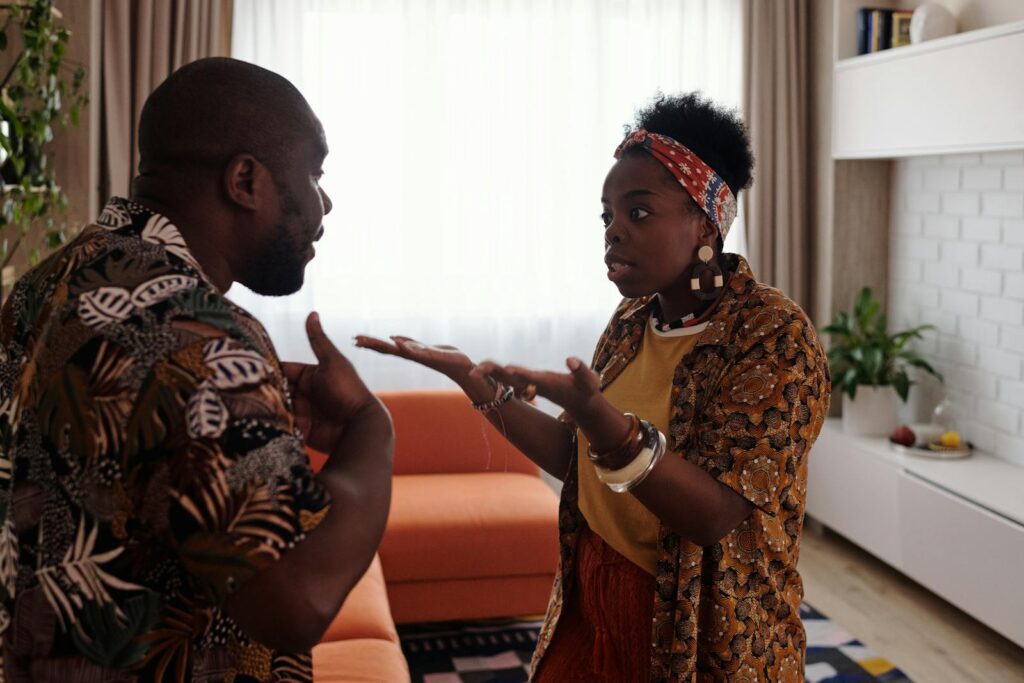
Losing a father is one of the most disorienting experiences in adult life. Most people expect their partner to be the person who steadies them through it. So when that partner responds to visible grief not with comfort but with screaming, criticism, or cold indifference, the shock can feel almost as destabilizing as the death itself.
That collision between raw mourning and a partner’s hostility forces questions most people never wanted to ask: Is this relationship emotionally safe? Is this a one-time failure under stress, or a pattern I have been excusing for years? For a growing number of people sharing their experiences in therapy offices and online support communities, the answer reshapes everything.

What grief actually demands from a partner
Grief does not follow a schedule. The American Psychological Association notes that mourning a close family member can involve intense sadness, difficulty concentrating, sleep disruption, and waves of emotion that surface unpredictably for months or longer. In 2022, the DSM-5-TR formally recognized prolonged grief disorder as a diagnosis, acknowledging that for some people, acute grief persists well beyond the timeframes others consider “normal.”
Against that backdrop, leaning on a romantic partner is not weakness. It is one of the most well-documented responses to loss. Researchers Margaret Stroebe and Henk Schut, whose Dual Process Model of coping with bereavement has shaped grief counseling for decades, found that bereaved people oscillate between confronting their loss and seeking restoration through daily life. A supportive partner plays a critical role in both modes, offering space to grieve and helping maintain a sense of stability.
When a partner instead responds with comments like “you should be over this by now” or “you’re making everything about yourself,” they are not just being insensitive. They are rejecting a need that bereavement researchers consider fundamental. As one grief support community discussion put it bluntly: if someone dismisses your grief or demands you be “over it,” that reaction itself becomes a reason to question the relationship.
When screaming crosses the line into emotional abuse
There is a difference between a partner who snaps once under pressure and one who routinely raises their voice to shut down someone else’s emotions. Licensed clinical psychologist Dr. Ramani Durvasula, who specializes in narcissistic personality dynamics, has described how some individuals respond to a partner’s vulnerability with rage because they experience another person’s pain as a threat to their own emotional equilibrium. Rather than tolerating discomfort, they escalate, turning the grieving person into the problem.
The National Domestic Violence Hotline identifies repeated yelling, name-calling, and belittling as forms of emotional abuse, regardless of whether physical violence is also present. In the context of bereavement, this behavior can be especially damaging because the grieving person is already in a state of heightened vulnerability. Being screamed at while mourning a parent does not just hurt. It teaches the grieving person that their pain is dangerous to express, which can delay healthy processing of the loss and create lasting psychological harm.
Therapists who work with couples in crisis note that a single explosive reaction during an extraordinarily stressful period does not automatically define a relationship. But when the pattern repeats, when the screaming partner refuses to acknowledge the impact of their behavior or rejects the idea of professional help, the situation moves from a rough patch into something more concerning.
What a lack of empathy actually reveals
Moments of crisis tend to expose a partner’s real capacity for empathy, not the version they perform during calm, comfortable times. Dr. John Gottman, whose research at the University of Washington has tracked thousands of couples over decades, found that how partners respond to each other’s bids for emotional connection is one of the strongest predictors of relationship survival. Turning toward a partner’s distress strengthens the bond. Turning away, or turning against it with contempt, erodes it.
Grief is one of the most intense bids for connection a person can make. When someone watches their partner shattered by the death of a father and chooses to respond with accusations, complaints about “drama,” or stony silence, they are revealing something about their emotional architecture that no amount of good behavior during easier times can offset.
This does not mean a supportive partner must have experienced the same kind of loss. Empathy does not require identical experience. It requires the willingness to sit with someone’s pain without trying to fix it, minimize it, or make it about yourself. When that willingness is consistently absent, the problem is not a communication gap. It is a fundamental mismatch in emotional capacity.
Why grief surfaces at the worst possible times
Grief rarely respects calendars. People frequently find themselves blindsided by waves of sadness during a wedding, a promotion, a holiday meal, or an ordinary Tuesday. An NBC News report on navigating grief during major life events noted that people tend to rely heavily on their partners during these collisions of joy and sorrow, and that this reliance is healthy as long as both people communicate honestly about their needs. The same report emphasized that the supporting partner may need outside resources of their own to avoid burnout, including therapy, support groups, or trusted friends.
When a partner meets those unexpected grief surges with patience, the relationship often deepens. When they meet them with fury or mockery, the contrast is impossible to ignore. That gap between what a grieving person needs and what their partner is willing to give becomes the central tension of the relationship, sometimes permanently.
Figuring out what comes next
When a partner screams at someone who is mourning a parent, the path forward depends on context. Some people choose to name the behavior directly, set firm boundaries, and pursue couples counseling. Others recognize the screaming as part of a longer pattern of volatility or contempt and conclude that staying means accepting a life where their pain will never be safe.
Neither choice is simple, and both deserve support. The American Psychological Association recommends that individuals dealing with complicated grief seek individual therapy, particularly approaches such as cognitive behavioral therapy adapted for grief or complicated grief treatment, which have strong evidence behind them. For the relationship itself, a couples therapist trained in emotionally focused therapy (EFT) can help both partners understand the dynamics at play, but only if both are willing to participate honestly.
Safety, emotional and physical, has to come first. If a partner’s screaming escalates, triggers memories of past abuse, or creates a sense of being trapped, outside help is essential. The Crisis Text Line offers free, confidential support around the clock (text HOME to 741741 in the United States to connect with a trained counselor). The National Domestic Violence Hotline (1-800-799-7233) provides guidance for anyone whose partner’s behavior has crossed into abuse.
Losing a parent and being met with hostility instead of love is one of the most clarifying experiences a person can have in a relationship. It shows, with painful precision, who is capable of loving someone at their most broken and who is not. That knowledge is brutal to acquire, but once it is there, it is very hard to unsee.
More from Decluttering Mom: