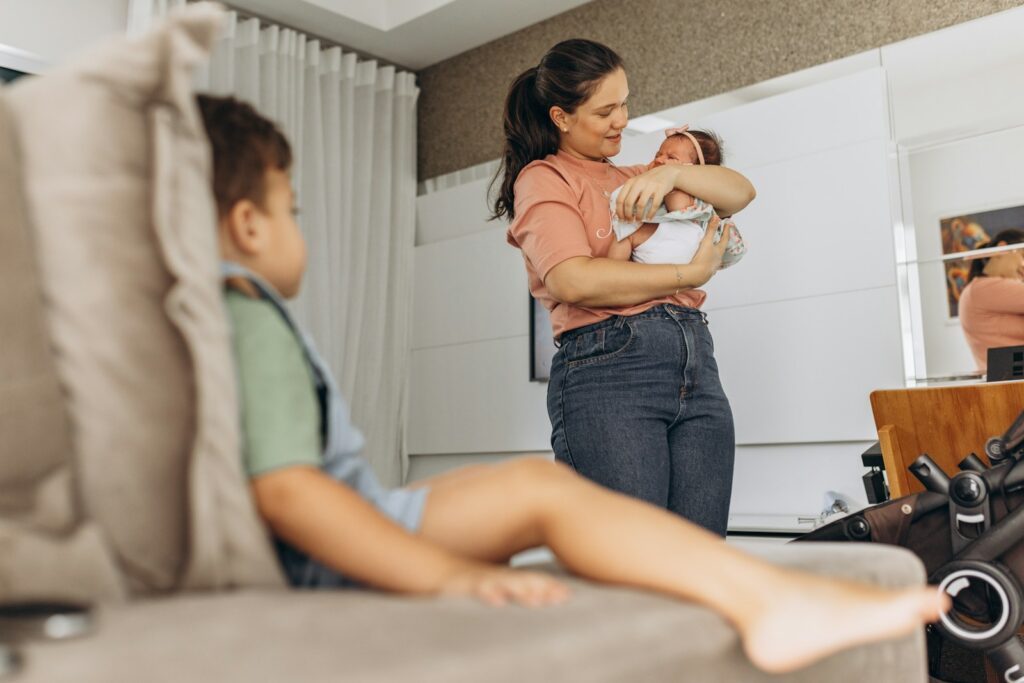
Your four-year-old shoves the baby off a play mat, then turns and hits you when you intervene. The baby screams. You freeze, caught between protecting one child and not wanting to shame the other. If this scene plays out in your house daily, you are not alone, and the behavior, while alarming, is not a sign that something is fundamentally wrong with your child.
Aggression in preschoolers is one of the most common concerns pediatricians hear from parents of young siblings. The American Academy of Pediatrics (AAP) notes that hitting, biting and pushing are typical in children under five, particularly when they lack the language and impulse control to express frustration, jealousy or fear in safer ways. But “typical” does not mean “ignore it.” The behavior needs a clear, consistent response, and the baby needs to be safe while the older child learns.
Here is what child development research and clinical guidance actually recommend, and what experienced parents say works in practice.
Why four-year-olds lash out at baby siblings
The prefrontal cortex, the brain region responsible for impulse control, planning and emotional regulation, is still years away from maturity at age four. According to the AAP’s guidance on aggressive behavior in young children, preschoolers often act out physically when they are overwhelmed because they simply do not yet have the neural wiring to pause, consider consequences and choose a calmer response.
Add a baby sibling to that picture and the triggers multiply. The older child loses uninterrupted access to the adults they depend on. Routines shift. A small, loud newcomer occupies the lap, the arms and the attention that used to belong to them. Clinical psychologist Dr. Laura Markham, writing in Psychology Today, explains that when a new baby enters the family, the older child can experience grief and rage they have no words for. Without regular, deliberate connection from a parent, the child may begin to see the baby as the source of their loss.
That does not make the child a bully. It makes them a four-year-old in distress.
Safety comes first, every time
Once a preschooler is strong enough to knock a baby over, push them off a surface or strike hard enough to leave a mark, supervision is not optional. Robyn Gobbel, a therapist specializing in neuroscience-informed parenting, stresses that when a child is in what she calls a “watchdog state,” they physically cannot stop themselves. Adults must prioritize physical safety first: separate bodies, block contact, then address emotions once everyone is safe.
In practical terms, that means:
- Never leave the two children alone together unsupervised until the older child has demonstrated a sustained pattern of gentle behavior. Treat this the same way you would treat a pool or a busy street.
- Position yourself between them during play. If you need to leave the room, take the baby with you or place the baby in a safe, enclosed space like a crib or playpen.
- Watch for escalation cues. A clenched jaw, a stiffened body or a sudden grab for a toy near the baby are signals to intervene before contact happens.
Trust is earned through repeated safe interactions, not assumed because the older child “seems fine today.”
Setting firm limits without making it worse
The instinct to yell or punish harshly is understandable when you watch your child hurt a baby. But research consistently shows that aggressive discipline, including yelling, spanking or shaming, tends to increase aggression in young children rather than reduce it. The AAP’s clinical guidance advises caregivers to stay calm, use brief and consistent consequences, and model the self-regulation they want the child to learn.
Parenting educator Janet Lansbury, whose work on respectful discipline is widely cited by pediatric professionals, recommends a three-step response in her guide to preschooler hitting:
- Block the hit physically. Catch the hand or move your body between the children. Do not wait for a second strike.
- Name the behavior and the boundary, briefly. “You hit the baby. I won’t let you do that. Hitting hurts.”
- Follow through with separation. Move the child (or yourself and the baby) to a different space. No long lectures. No negotiation in the moment.
Pairing the limit with a short acknowledgment of the child’s emotion can help them feel understood without excusing the behavior: “You’re angry that I was feeding the baby. You can be angry. You still cannot hit.”
Repairing the relationship, not labeling the child
Calling a four-year-old “mean” or a “bully” risks turning a temporary behavioral phase into part of their identity. Dr. Markham’s sibling aggression research emphasizes that the most effective long-term strategy is building connection with the older child so they no longer perceive the baby as a rival. That means:
- Dedicated one-on-one time. Even 10 to 15 minutes a day of undivided attention, with the baby elsewhere, can reduce jealousy-driven aggression noticeably within weeks.
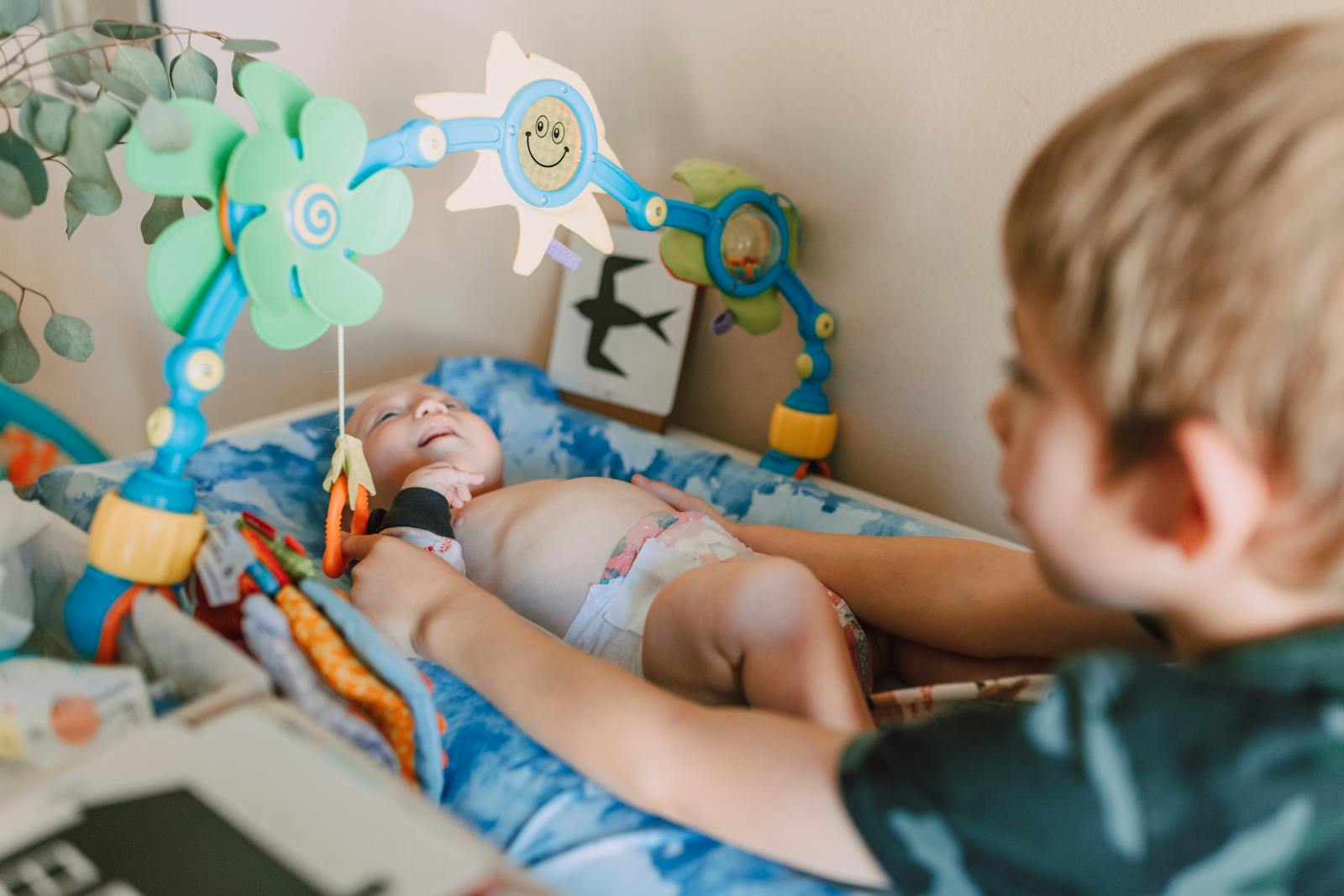
- Inviting the older child into caregiving. Letting them fetch a diaper, sing to the baby or choose the baby’s outfit gives them a role that is not “displaced child.” Greenwood Pediatrics’ newborn sibling rivalry guide recommends encouraging small helping tasks and avoiding criticism if the child is clumsy.
- Narrating the baby’s responses positively. “Look, she smiled when you talked to her. She really likes your voice.” This helps the older child see the baby as a person who values them, not just a competitor.
- Praising gentle moments specifically. “You touched her hand so softly. That was really kind.” Specific praise reinforces the exact behavior you want repeated.
When to call your pediatrician
Most preschool-age aggression toward siblings improves with consistent limits, increased connection and time. But the AAP recommends seeking professional evaluation if:
- The aggression persists for more than a few weeks despite consistent intervention.
- The child injures the baby or another child seriously enough to require medical attention.
- The child shows aggression across multiple settings (home, daycare, playdates) and with multiple people, not just the sibling.
- The behavior escalates in intensity or frequency rather than gradually improving.
- The child does not show remorse or concern after hurting someone, even with gentle prompting.
A pediatrician can screen for sensory processing issues, anxiety, developmental delays or other factors that may be fueling the aggression beyond normal sibling rivalry. Early intervention, often through a child psychologist or occupational therapist, tends to be more effective than waiting to see if the child “grows out of it.”
What parents say is actually working
Families dealing with this in March 2026 describe combining several of these strategies at once. In parenting communities, caregivers consistently report that the turning point came not from a single technique but from a shift in approach: moving from reactive punishment to proactive structure.
Common threads in what parents describe as effective include:
- Quiet separation without a lecture. Removing the older child to a calm space immediately after a hit, with no talking, so the consequence is clear but does not add fuel to the child’s emotional overload.
- Acknowledging the emotion after the child is calm. Returning once the child has settled and saying, “You were really frustrated. Let’s talk about what you can do next time instead of hitting.”
- Environmental changes. Baby gates, separate play zones and staggered nap schedules that give each child space reduce the number of flashpoints in a day.
- Lowering expectations temporarily. Accepting that the older child needs more supervision than they did before the baby arrived, rather than treating their regression as a failure.
None of this is fast. Parents who have been through it describe weeks or months of repetition before the older child consistently chooses words or walks away instead of hitting. But the pattern does shift, and the sibling relationship that emerges on the other side is often stronger for the work that went into it.