You face a familiar nightly scene: his uniform hits the floor, piles up, and eventually becomes your problem. You wonder whether stopping is petty or necessary, and whether his anger makes you the bad guy.
You’re not the bad person for setting a boundary around your time, energy, and household expectations. This piece will unpack reasons he leaves uniforms on the floor, what his reaction reveals about responsibility and communication, and how to decide who should handle the laundry without escalating tension.
Keep this question in mind as you go on: what pattern is really playing out — a habit, entitlement, or a breakdown in shared expectations — and which fixes actually change behavior instead of just masking it?
Why Husbands Leave Dirty Uniforms on the Floor
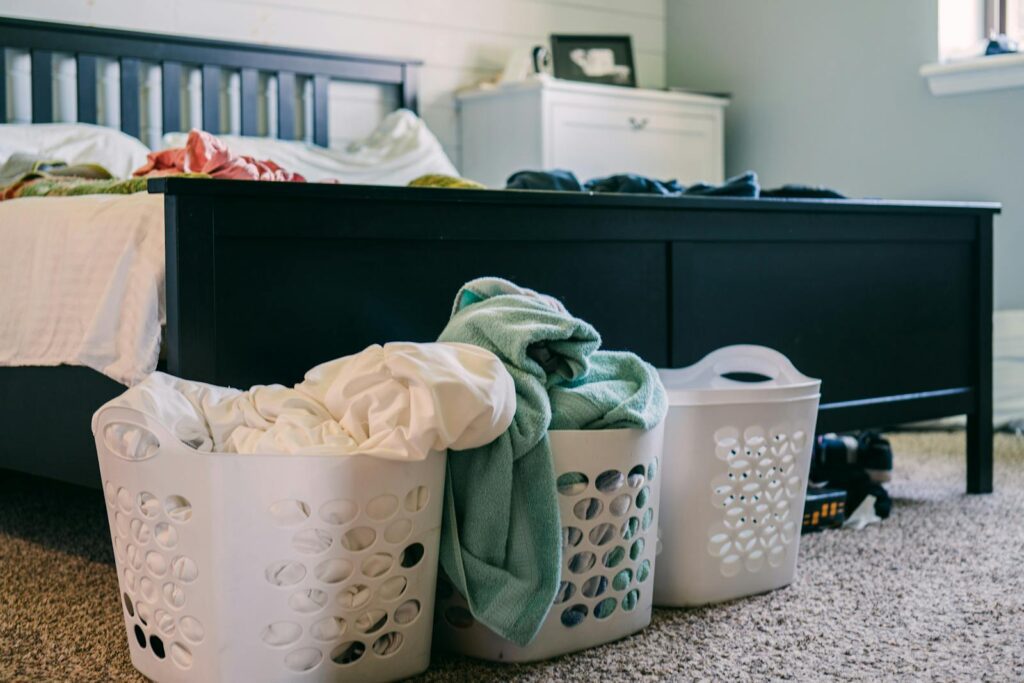
Leaving a uniform on the floor often comes from habit, stress, or unclear expectations. Small decisions—where to drop the kit, who handles laundry, and how urgent cleaning feels—drive the pattern.
Understanding Habits and Chores in Relationships
Habits form from routines and convenience. After a long shift, he may strip the uniform at the door and leave it where he undresses because that became the quickest option. If the dirty laundry basket sits farther away or the laundry system requires sorting pre-wash, he chooses the easier surface instead.
Repeated behavior becomes automatic. If a partner has previously picked up the clothes, he learns that leaving them is low-consequence. That reinforces the pile-up and turns one uniform into a visible habit, not a conscious choice.
Practical fixes include relocating the hamper closer to the entry, labeling a bin “uniforms,” or setting a simple one-step routine like “hang, then basket.” These concrete changes change the habit pathway without moralizing.
The Role of Communication and Expectations
Conflicts often stem from mismatched assumptions about chores. He may assume she will wash the uniform because that’s been the pattern; she may assume he will because it’s his work clothing. Neither explicitly agreed on responsibility.
Clear, specific requests work better than vague complaints. Saying “Put uniforms in the labeled hamper by the door after each shift” sets a measurable expectation. Agreeing on consequences—who launders uniforms and when—avoids recurring resentment.
Tracking small agreements for a few weeks helps. If he still resists, a short practical compromise (she handles laundering twice weekly; he deposits uniforms immediately) reduces friction and keeps the hygiene issue addressed.
Gender Norms and Household Responsibilities
Traditional roles can shape who feels responsible for housework. If she previously handled most household chores, he might default to relying on her help with dirty laundry, including uniforms, without recognizing the load it creates.
Calling behavior “lazy” or “narcissistic” often escalates defensiveness. Instead, addressing the task distribution directly—listing chores and splitting them—makes expectations tangible. Use a checklist or a simple calendar showing who does laundry, changing the dynamic from implicit gendered labor to explicit shared tasks.
When uniforms require special handling (heavy soil, deodorizing, industrial laundry), clarify that in the plan so he doesn’t leave items out of habit. Practical clarity reduces the chance that a uniform ends up in a pile because he thought it wasn’t his responsibility.
When Stopping the Laundry Leads to Conflict: Who’s Really at Fault?
Stopping laundry can expose boundary gaps, buried resentments, and practical problems like overflowing hampers and uniforms piling on the floor. Each reaction—anger, guilt, relief—says something about expectations, communication, and who actually owns each task.
Setting Boundaries Around Chores
She can set a clear, specific rule: uniforms go in the dirty laundry basket immediately after use and remain there until laundry day. He needs to know which days she will wash work clothes and which days he must handle his own, with consequences for repeated noncompliance (e.g., he launders his next load himself).
Write the rule down and pin it someplace visible, like on the laundry room door. Use a short checklist: put uniforms in basket, empty pockets, start wash by Saturday. Agree on a reasonable timeline for correcting lapses—three reminders before the noncompliant partner takes responsibility for their clothes.
Managing Resentment and Emotional Toll
When she stops doing his laundry, anger often masks longer-term resentment about unequal labor. He may feel attacked; she may feel taken for granted. Each should name the emotion without accusing—“I feel resentful when I wash your uniforms every week” rather than “You never help.”
Schedule a calm conversation after a neutral activity, not amid a laundry standoff. Keep comments specific and recent: cite the last three instances with dates rather than sweeping statements. If feelings stay high, pause and revisit with a mediator or therapist. Small rituals of appreciation—thanking the partner when they follow the new rule—help repair the emotional ledger.
Finding Solutions Together
List practical options and pick one to trial for two weeks: split laundry by garment type, alternate weeks, or have him handle his uniforms on weekday evenings. Use a shared calendar or a chore app to track who washed what; a visible check mark reduces ambiguity.
If uniforms need faster turnaround, consider a small hack: keep a second hamper in the garage for uniforms only, or set a one-item-per-day expectation when basket capacity is low. Reassess regularly and tweak the plan until both notice fewer piles on the floor and less tension around the dirty laundry basket.
More from Decluttering Mom: