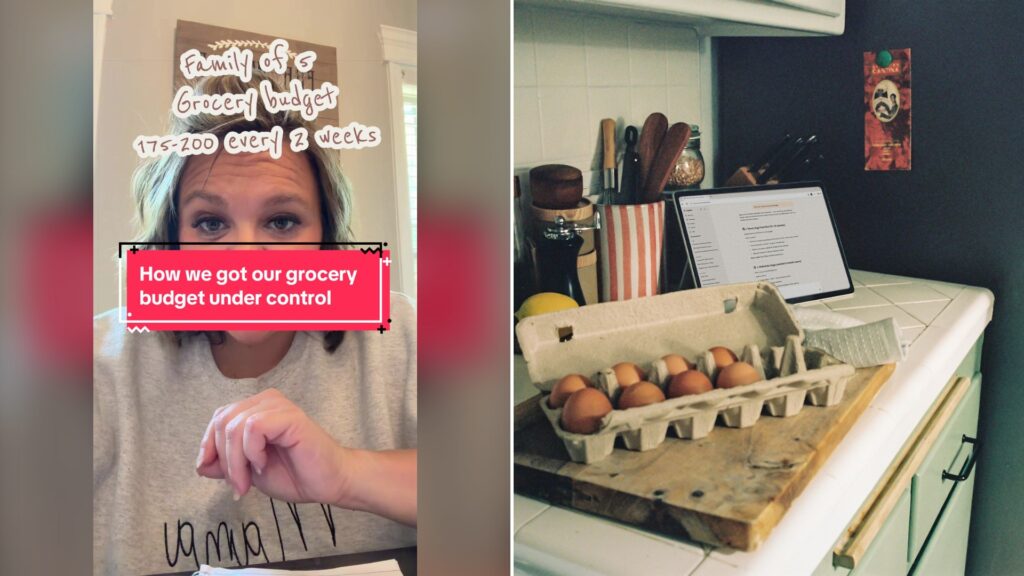
When a partner walks out, the shock is not just emotional, it is brutally practical. One day there is a shared grocery list and a predictable paycheck, and the next there is a quiet kitchen, a half-empty fridge, and a parent trying to stretch the last box of pasta into three meals. The story of a woman whose husband left, leaving her a single mom staring at bare shelves, is not a rare plot twist, it is a pattern playing out in different corners of the internet and in real neighborhoods.
Her pantry might be empty, but she is not alone. Across community groups, local features, and social feeds, other parents are describing the same whiplash: a partner gone, bills still due, kids still hungry. Their posts and videos sketch out the same arc, from panic to problem-solving, and show how survival slowly turns into something that looks a lot like leadership.
The day everything breaks, and the first scramble to feed everyone
In one local profile, a woman describes how her husband left and, almost overnight, she was a single mom with nothing but an empty pantry and a knot in her stomach. Two months earlier, life had felt ordinary, the routines of school drop-offs and shared dinners still intact. Then the departure hit, and she was suddenly counting every can and every dollar, trying to figure out how to keep her kids fed while her own appetite was swallowed by stress, a shift captured in the simple contrast between the words Two and Now. That kind of before-and-after is not just about heartbreak, it is about logistics: who pays the rent, who buys the cereal, who keeps the lights on when the person who used to handle the bills is suddenly a ghost.
Another version of the same story shows up in a lifestyle hub that promises to be a one-stop place for living like a local. Buried among restaurant tips and neighborhood events is a familiar confession from a woman whose husband walked out, leaving her to juggle single motherhood and bare cupboards. The platform brands itself as Your guide to the city, but for her, the real navigation problem is figuring out which food bank is open late enough after her shift and how to stretch a bag of rice into a week of dinners. The contrast between glossy local hype and the gritty reality of an abandoned family is sharp, and it underlines how invisible this kind of crisis can be until someone spells it out.
From private crisis to public plea, and the quiet power of asking for help
Once the initial shock wears off, many parents move from silent panic to public asking, and that shift is its own kind of courage. In one Facebook group, a post describes a young father who is suddenly gone, leaving a mother to carry everything alone for three little girls. The writer spells out the emotional wreckage and the practical fallout, from the grief to the rent, and calls the financial pressure and fear unimaginable. That word lands hard, because it captures what so many single parents are trying to explain when they finally go public: this is not just about missing a partner, it is about being one unexpected bill away from losing the roof over their kids’ heads.
Another mother, Selena Rahman, spells things out even more bluntly. In a community post, she writes that she is now a single mom with 3 children after her husband abandoned the family to move out of state, and that he had been the provider, leaving her no time to get on her feet. She introduces herself by name, “Hi, I am Selena Rahman,” and explains that any help would be greatly appreciated, a straightforward plea that turns a private disaster into a public request for support. Her description of being left with three kids and no income is anchored in the simple phrase with 3 children, a reminder that every adult crisis is multiplied by the number of small people depending on them.
Rebuilding from the bottom, and why sharing the story matters
Not every parent who is left behind wants to ask for help right away. Some, like the TikTok creator known as Asantewaaaaa, try to handle the fallout alone at first. In a video about being duped and left in a financial mess, she talks about how hard it was to admit she needed support and how she initially tried to carry the whole load herself. Despite the difficulties, she now looks back with gratitude at the people who stepped in, and that pivot from isolation to community is a pattern that shows up again and again in these stories.
For the mom whose husband walked out and left her pantry bare, that same arc is starting to take shape. Her experience echoes the mother of three little girls facing an unimaginable load and the woman introducing herself as Selena Rahman, suddenly responsible for three children and every bill. It also mirrors the resilience of Asantewaaaaa, who turned a financial ambush into a story of rebuilding. When these parents speak up, whether in a neighborhood feature, a Facebook group, or a TikTok clip, they are doing more than venting. They are mapping out a survival guide for the next mom who finds herself staring at empty shelves, realizing that the person who promised to stay has already left, and that the only way forward is to ask, to share, and to slowly restock both the pantry and her sense of what she can handle.
More from Decluttering Mom: