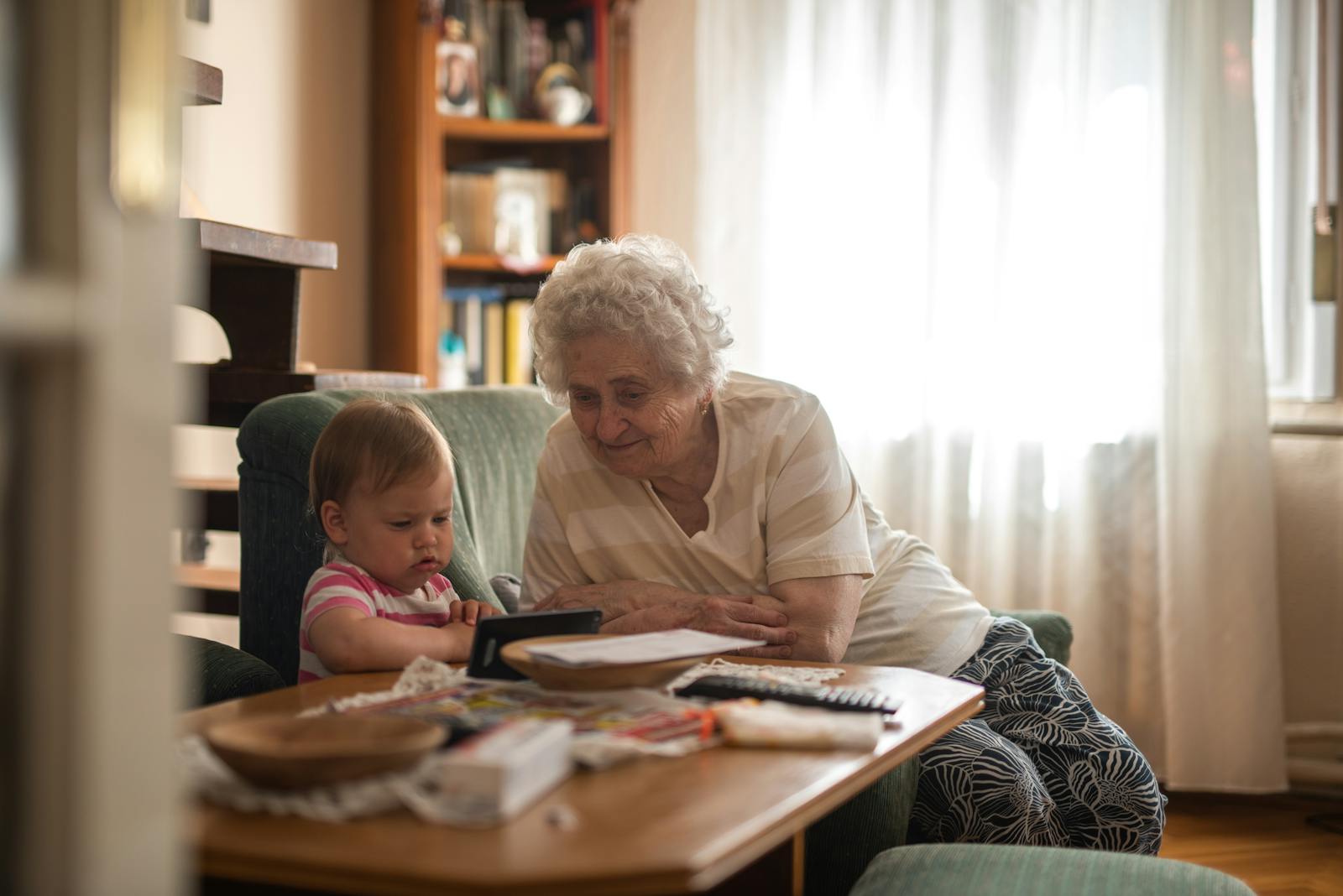
A few months after her daughter was born, one mother posted a question to a parenting forum that thousands of other parents immediately recognized as their own dilemma: her mother-in-law kept asking to take the baby overnight, the baby was barely four months old, and every time she said no, the tension at family dinners got worse. “The more she pushes, the more I pull back,” she wrote.
That tug-of-war is playing out in living rooms and group chats across the country. As of early 2026, conversations about grandparent boundaries remain among the most active topics on parenting forums, and family therapists say the underlying conflict is not really about babysitting. It is about control, safety, and whether new parents get to define the terms of their own household.

Why requests for “alone time” set off alarm bells
To a grandparent, asking for a few solo hours with a grandchild may feel like a natural extension of family love. To a new parent, particularly a mother still in the fog of postpartum recovery, the same request can land as a demand to hand over the one person she is biologically wired to protect.
There is science behind that instinct. Attachment research dating back to psychologist John Bowlby’s foundational work in the 1950s and expanded by Mary Ainsworth’s “Strange Situation” studies shows that infants in the first year of life are actively building what developmental psychologists call a secure base with their primary caregivers. Disrupting that process by forcing separations the parent is not comfortable with does not serve the baby’s development. It serves the adult who is asking.
That distinction matters. In a widely discussed Reddit thread about grandparents “constantly requesting alone time,” parents overwhelmingly agreed on one point: the baby’s comfort and the parents’ judgment come first, and framing access as a grandparent’s right rather than a privilege granted by the parents inverts the actual hierarchy of responsibility.
When “help” creates more work
New parents hear the same advice from every direction: accept help when it is offered. But many quickly learn that not all help is equal.
A common scenario, described in a parenting guide on in-law relationships, goes like this: relatives arrive announcing they are there to help, then spend the visit holding the baby while the exhausted parent ends up cooking, cleaning, and playing host. The guide labels this “Help That Isn’t Helpful,” and the phrase has become shorthand in parenting communities for visits that leave new mothers more drained than before the doorbell rang.
Licensed marriage and family therapist Dr. Sheryl Ziegler, author of Mommy Burnout, has noted in interviews that genuine postpartum support looks like doing laundry, preparing meals, or watching the baby so the parent can sleep, not holding the baby while the parent serves you coffee. When grandparents resist those practical roles and insist on cuddling the newborn instead, parents are right to question whose needs are actually being met.
In one forum discussion about in-laws who “only want to help by holding,” multiple commenters pointed out that the real failure often belongs to the partner who does not step in. “This is a husband problem,” one parent wrote, arguing that when one spouse allows their parents to monopolize the baby while the other spouse struggles, the marriage itself starts to fracture.
How family gatherings become minefields
Once the battle lines are drawn over solo access, the fallout rarely stays contained to that single issue. Sunday dinners, holiday meals, and even casual drop-ins can start to feel like loyalty tests.
One new mother described being called “rude and inconsiderate” by her mother-in-law after a Sunday dinner did not align with the baby’s unpredictable feeding and nap schedule. Other parents in the thread reassured her: babies do not operate on a social calendar, and prioritizing an infant’s needs over an adult’s expectations is not rude. It is parenting.
Holidays amplify the pressure. Extended family members who see the baby only a few times a year may feel their window is limited, which can make their requests more urgent and harder to refuse gracefully. Parenting educator resources on boundary-setting recommend that parents prepare a calm script in advance, something as simple as, “We’re keeping visits short today to protect nap time,” so they are not caught off guard by a request they are not ready to grant.
The shift here is cultural as much as personal. A generation ago, many families operated on the assumption that grandparents had an automatic seat at the caregiving table. Today, more parents view that access as something earned through respect for their boundaries, not guaranteed by bloodline. For grandparents who expected deference, that change can feel like rejection, and the resentment tends to surface at exactly the gatherings that are supposed to bring the family together.
Setting boundaries without severing the relationship
Family therapists are nearly unanimous on one point: boundaries work best when they are set early, stated clearly, and framed around the baby’s needs rather than the grandparent’s shortcomings.
A counseling resource on in-law dynamics recommends describing the specific behavior, explaining its impact, and then offering a concrete alternative. Instead of a flat “no,” that might sound like: “We’re not ready for solo babysitting yet, but we’d love for you to come to dinner on Saturday so you can spend time with the baby while we’re all together.”
Language matters more than most people expect. The same parenting guide that coined “Help That Isn’t Helpful” advises replacing defensive phrasing (“Don’t show up unannounced”) with positive framing (“We want to be dressed and ready when you visit, so please text first”). Small wording changes do not eliminate conflict, but they lower the temperature enough to keep the conversation going.
Couples therapists stress that none of this works unless both partners are aligned. Guidance from licensed couples counselors consistently advises partners to hash out their comfort levels in private before responding to any request from in-laws. When one parent caves under pressure while the other holds firm, the grandparents learn to exploit the gap, and the marriage pays the price.
Protecting the baby’s needs and the parents’ wellbeing
Behind every one of these disputes is an infant who has no opinion about family politics and no ability to advocate for their own comfort. That is the parents’ job.
In an attachment parenting discussion about whether grandparent alone time is necessary, the consensus was clear: it is not. Grandparents can build meaningful relationships with grandchildren in the presence of the child’s parents. The insistence on privacy, especially with a very young baby, strikes many parents as unusual, and some are blunt about why. When adults demand unsupervised access to a child who cannot speak for themselves, parents are right to ask what purpose that privacy actually serves.
A separate thread about an 8-month-old whose grandparents wanted to take the baby out alone, even though the parents did not need childcare, drew a pointed response: if they are “strictly just wanting to take your child alone” and have no practical reason for it, “it’s odd.”
None of this means grandparents are the enemy. Many are genuinely loving, respectful, and willing to follow the parents’ lead. The friction arises when a grandparent treats access as an entitlement and interprets any limit as an insult. For parents navigating that dynamic in March 2026 or any other month, the principle stays the same: you do not owe anyone unsupervised access to your child, and protecting your family’s boundaries is not a betrayal of the people who raised you. It is the clearest sign that you are ready to raise someone yourself.