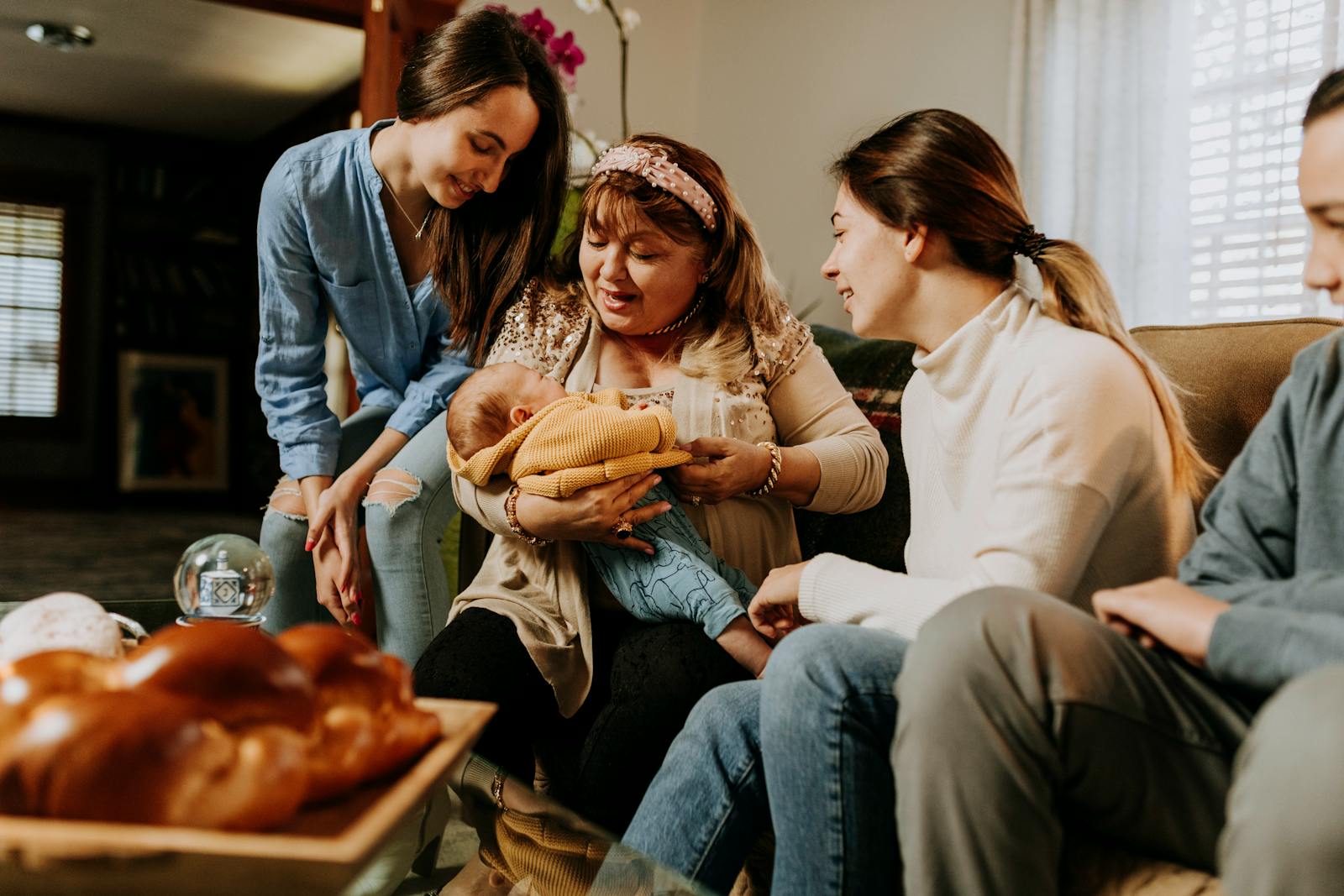
New parents often expect to feel protective, but few anticipate the jolt that comes when a mother-in-law starts referring to herself as “Mama” around the baby. The words may sound small, yet they land right on top of questions about identity, boundaries, and who gets to claim what role in a child’s life. When friends and relatives brush it off as oversensitivity, that sting can deepen into real self doubt.
At the heart of this conflict is not just a nickname, but a clash between generations, cultures, and expectations about what it means to be a mother and a grandmother. The parent who is saying “this feels wrong” is not only reacting to a word, but to a pattern of behavior and a power dynamic that often existed long before the baby arrived.
The Emotional Shock Of Hearing Someone Else Called “Mama”
For many new mothers, the first time a mother-in-law chirps “Come to Mama!” at the baby feels like a record scratch in the middle of an otherwise sweet moment. The word is loaded with months of pregnancy, birth, sleepless nights, and the raw work of keeping a tiny human alive. When someone else casually steps into that title, it can feel like an attempt to step into the relationship itself, even if the speaker insists it is just a habit or a joke.
That jolt is often followed by a wave of guilt. Parents wonder why they feel so angry about a single word, especially when everyone around them insists it is harmless. Yet other mothers describe the same visceral reaction, with one even writing “Omg. This is exactly how I feel and you articulated it SO well” in response to another parent who admitted feeling unexpectedly possessive and mean around her mother-in-law, then wondering if there was some biological science behind that surge of protectiveness, as shared in a post on beyondthebump.
Why This Triggers Such Fierce Protectiveness
The intensity of the reaction is not a sign that a parent is petty, it is a sign that their attachment system is working exactly as designed. Human brains are wired to prioritize the bond between primary caregiver and infant, and language is one of the clearest markers of that bond. When a grandmother uses “Mama” for herself, it can feel like a direct challenge to the parent’s place in the baby’s inner circle, even if the grandmother insists she means no harm.
New parents who describe feeling “possessive” or even “mean” around their mother-in-law are often startled by their own emotions, but they are far from alone. In one discussion, a mother admitted she could not believe how strong the reaction was and wondered if there was a biological explanation for why her hackles rose whenever her mother-in-law got too close, a feeling that other parents on beyondthebump echoed with striking relief. That shared experience suggests the issue is less about individual personality and more about a common, deeply rooted instinct to protect the primary caregiving role.
Why “Mama” Is Different From Other Grandma Nicknames
Families are endlessly creative when it comes to grandparent names, from “Nana” and “Mimi” to regional favorites like “Maw Maw.” Most parents are happy to let grandparents choose something affectionate and unique, as long as it does not blur the line between parent and grandparent. The problem arises when a grandmother gravitates toward names that sound like “Mom,” “Mama,” or “Mommy,” especially in the early language years when babies are still figuring out sounds.
Some parents point out that there is a double standard at play. As one commenter noted, “You never see grandpas going by dad/dada/daddy,” arguing that mothers should not have their title “shucked” either, especially when babies tend to repeat the words they hear most often and may latch onto whatever is easiest to say. That perspective, shared in a conversation about the nickname “Maw Maw” on JUSTNOMIL, underlines why parents see “Mama” as fundamentally different from other cute grandparent titles.
When A Nickname Becomes A Power Struggle
On the surface, a grandmother calling herself “Mama” might be framed as a harmless slip or a cultural habit. Underneath, it often reflects a longer history of blurred boundaries. If a mother-in-law has a pattern of inserting herself into decisions, dismissing the parents’ preferences, or treating the baby as a second chance at parenting, the nickname can feel like the latest move in a quiet tug of war over who is in charge.
Parents who describe their mother-in-law as “weird” about being called “Mom” often report that the older woman talks obsessively about the baby using that title, or resists every attempt to introduce a more appropriate grandma name. In one account, a parent explained that their mother-in-law would not stop talking about the child calling her “mom,” even after the parents tried to redirect, a pattern that other commenters on JUSTNOMIL recognized as less about affection and more about control.
“Everyone Says I’m Overreacting” And The Gaslighting Effect
One of the most painful parts of this conflict is not the nickname itself, but the chorus of voices telling the parent to “let it go.” When partners, relatives, or friends dismiss the discomfort as hormonal, dramatic, or ungrateful, it sends a clear message that the parent’s feelings are less important than keeping the peace. Over time, that can erode confidence and make it harder for the parent to trust their own judgment in other areas of caregiving.
This dynamic can start subtly. A mother might mention that the “Mama” nickname bothers her and be met with eye rolls or jokes about being territorial. If she pushes back, she may be told she is trying to “take away” the grandmother’s joy or that she should be grateful anyone wants to be involved at all. That pattern mirrors what some parents describe in online communities, where they arrive convinced they are the problem, only to find others saying “Omg. This is exactly how I feel,” and validating that the discomfort is real, as seen in the responses on beyondthebump.
Finding A Grandma Name That Honors Everyone
One practical way to defuse the tension is to offer a warm, clearly grandparent-specific nickname that still feels special. Many families find that once a baby consistently uses “Nana,” “Gran,” “Maw Maw,” or another chosen name, the urge to reach for “Mama” fades. The key is that the title signals a distinct role, not a second version of the parent. That clarity helps the child, but it also reassures the mother that her place is not up for negotiation.
Parents who have navigated this successfully often emphasize the importance of choosing a name together, rather than having the grandmother unilaterally declare what she will be called. In one discussion, commenters suggested that if a grandmother is fixated on being called “Mom,” it may help to gently but firmly insist on a different nickname and then use it consistently so the child associates that word with her. As one person put it while advising a parent whose mother-in-law would not stop talking about being called “mom,” giving her a clear grandma name can eventually become “the grandma name for all of you,” a strategy that emerged in the conversation on JUSTNOMIL.
How To Talk To A Mother-in-Law Who Keeps Saying “Mama”
Addressing the issue directly can feel daunting, especially if the relationship with the mother-in-law is already fragile. Still, a calm, specific conversation is often more effective than simmering resentment. Many parents find it helpful to focus on the child’s needs rather than accusations, for example, “We want our baby to have a clear understanding of who is Mom and who is Grandma, so we need to reserve ‘Mama’ for me and choose a special grandma name for you.” That framing centers clarity and attachment, not blame.
It can also help to set expectations with a partner first, so both parents present a united front. If the partner minimizes the concern, the mother may feel doubly undermined, first by the grandmother and then by the person who is supposed to be in her corner. Some parents in online communities describe practicing the wording together, agreeing on consequences if the boundary is ignored, and then following through consistently. When a grandmother continues to use “Mama” despite clear requests, reducing unsupervised time or stepping in with gentle corrections in front of the child can reinforce that the boundary is not optional.
When Cultural Traditions And Personal Boundaries Collide
In some families, older generations use “Mama” or similar titles for grandmothers as a long standing tradition, which can complicate the conversation. A mother-in-law might genuinely see no problem with being called “Mama” because that is what she called her own grandmother, or because in her language the same root word is used for multiple caregiving figures. For the new parent, though, the modern context of blended families, step parents, and complex dynamics can make that overlap feel confusing or even threatening.
Navigating this tension requires both curiosity and firmness. A parent can acknowledge the tradition while still drawing a line, for example, “I understand that in your family grandmothers were called ‘Mama,’ but for our child we need a word that clearly means grandmother so there is no confusion about who is Mom.” That approach respects the past without sacrificing the present parent child bond. It also mirrors the way some commenters talk about nicknames like “Maw Maw,” noting that while regional names are fine, titles that sound too close to “mom” or “daddy” can cause confusion for little ones who repeat what they hear most often, a concern raised in the discussion on JUSTNOMIL.
Trusting Your Instincts Without Letting Resentment Take Over
Ultimately, the question is not whether a mother-in-law “means well,” but whether the parent feels respected in her role. If the “Mama” nickname leaves a knot in the stomach every time it is used, that feeling deserves attention. Parents are allowed to protect the language that defines their bond with their child, even if others roll their eyes or accuse them of making a big deal out of nothing. That instinct is part of the same protective drive that keeps babies safe in countless other ways.
At the same time, it is worth noticing when anger toward a mother-in-law starts to spill into every interaction. Some parents, like the one who confessed to feeling “possessive/mean” around her mother-in-law and wanting to stop, recognize that the intensity of their reaction is wearing them down. In those moments, support from a partner, a therapist, or even a community of other parents who say “Omg, same” can help separate legitimate boundary setting from old wounds that might need their own care, a nuance that surfaces in the shared experiences on beyondthebump. The goal is not to pretend the nickname does not matter, but to handle it in a way that protects both the parent’s role and her peace of mind.
More from Decluttering Mom: