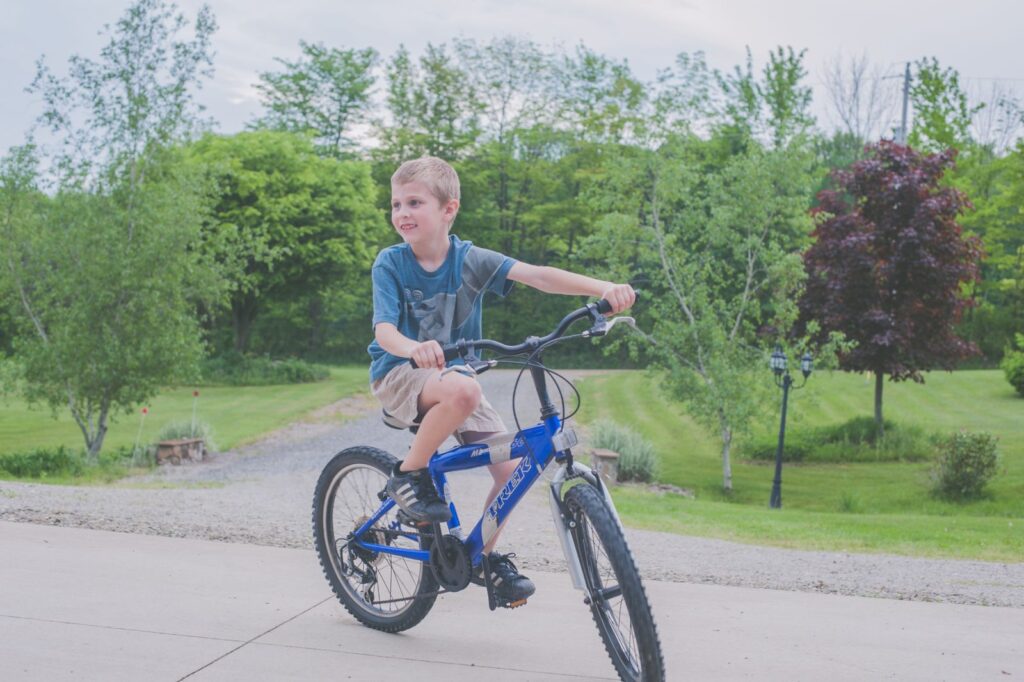
One mom was caught off guard when a furious neighbor confronted her about an innocent act: her 10-year-old son turning his bike around in the man’s driveway. The intensity of the man’s anger was evident; he was visibly shaking as he voiced his complaint. The mom was taken aback, unable to comprehend how a simple bike maneuver could provoke such rage.
Initially, she assumed the neighbor was talking about her older son, who has a license. When she learned it was her younger child on a bike, she couldn’t help but feel confused. A kid riding through a driveway seemed harmless, almost trivial. Yet, the neighbor wasn’t having any of it. He insisted that her son’s actions were unacceptable, labeling her an “asshole” for not seeing the gravity of the situation.
The mom found it strange when the man refused to share his name or the specific driveway he was defending so fiercely. He maintained that all driveways were sacred territory, which only added to the absurdity of the exchange. Rather than backing down, she challenged him to identify which driveway was his, aiming to settle the matter once and for all. She was determined to teach her son to respect boundaries but needed clarity on which boundaries were actually in play.
As she reflected on the bizarre confrontation, the mom wondered how many others would view the situation the same way. Kids often have a different perspective on boundaries. For them, driveways are just passages, not sacred ground. After some thought, she decided to avoid the neighbor’s driveway going forward, even if it felt excessive. She had managed to figure out where he lived and communicated with her son about it, wanting to ensure there were no further clashes.
People had very different reactions to the story when she shared it online. Some thought the neighbor was overreacting, emphasizing that children often play and ride bikes in neighborhoods without issues. Others pointed out that while the man’s reaction seemed extreme, some people do feel strongly about their property—regardless of how trivial the offense might appear to others. It’s easy to dismiss the feelings of someone who seems overly agitated, but can a person’s sense of territory really be discounted so easily?
This blend of opinions sparked an interesting conversation. Some users shared similar experiences, recalling their own run-ins with neighbors over minor disputes. They highlighted how neighborhood dynamics can vary significantly. One user noted that sometimes, personal frustrations get projected onto innocent interactions, leading to outrage where none is warranted. Another pointed out that it might be worthwhile to have a friendly conversation with the neighbor in the future to clear the air, though that suggestion seemed daunting considering the current tension.
In the middle of all this chaos, one thing became clear: everyone has different thresholds for what they consider acceptable behavior. What one person sees as innocent childhood fun, another might perceive as a blatant disregard for their property. It raises the question of how to navigate these kinds of interactions in a community where everyone’s standards differ.
As the mom thought about the scenario, she was left wondering: is there a point where local customs override innocent play? Are some neighbors just hard to please, or is there a valid concern hiding behind extreme reactions? The conversations continue, leaving this mom—and many others—questioning the way communities define and defend their boundaries.
More from Decluttering Mom: