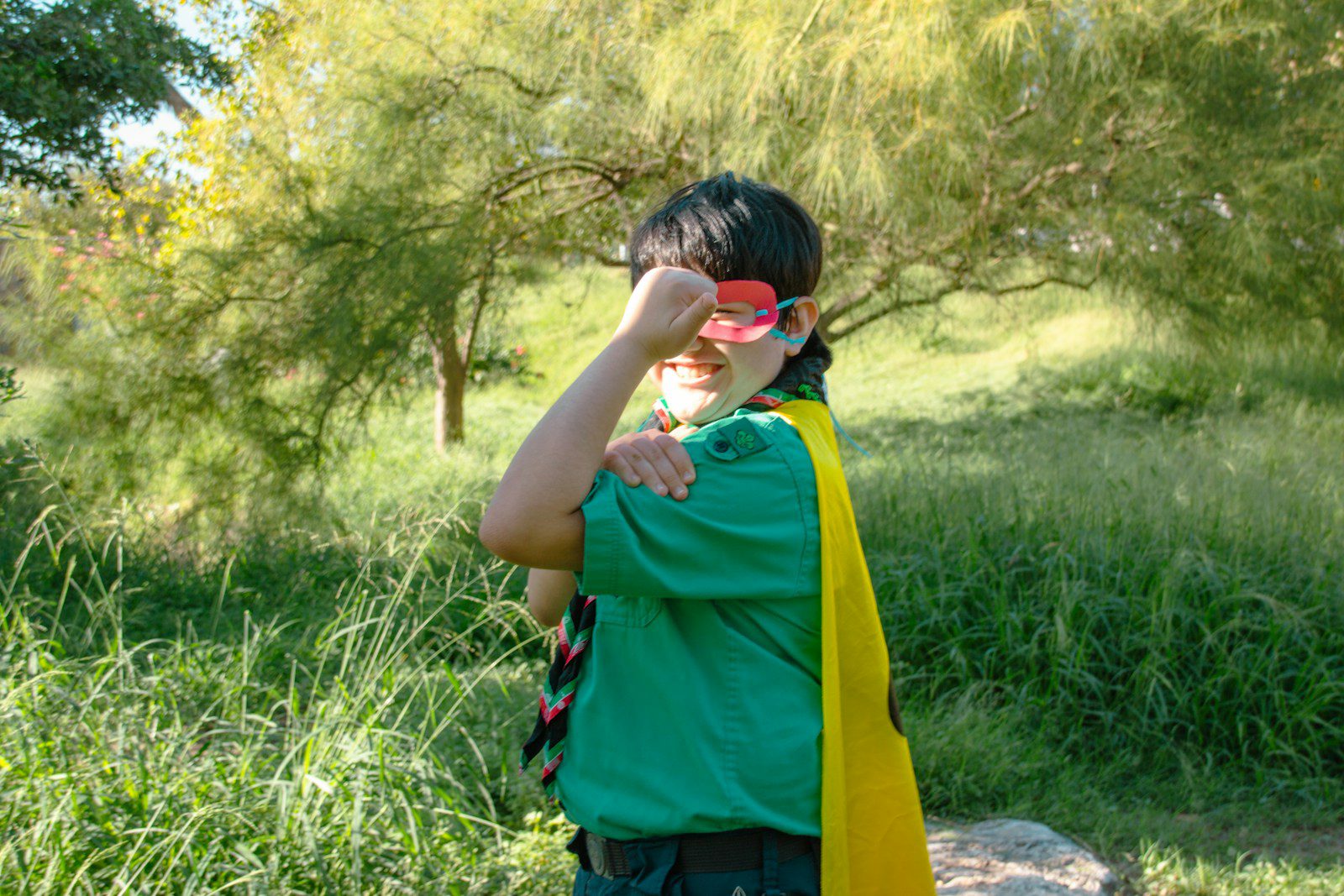
Your four-year-old wraps a towel around her shoulders, narrows her eyes and announces she is “the destroyer of everything.” She cackles. You laugh, then stop laughing, then quietly google whether this is normal. If that sequence sounds familiar, you are not alone. Pediatric psychologists say villain obsession is one of the most common reasons parents of preschoolers reach out with worry, and one of the easiest to misread.
Child development research consistently shows that fascination with bad guys is a routine part of how young children process power, fear and moral reasoning, well before they can articulate any of those concepts. But certain patterns in how a child plays out violent scenarios, or talks about “bad guys” in relation to real life, can signal that something in their world feels threatening or confusing. Knowing the difference matters.
Why preschoolers love the bad guys
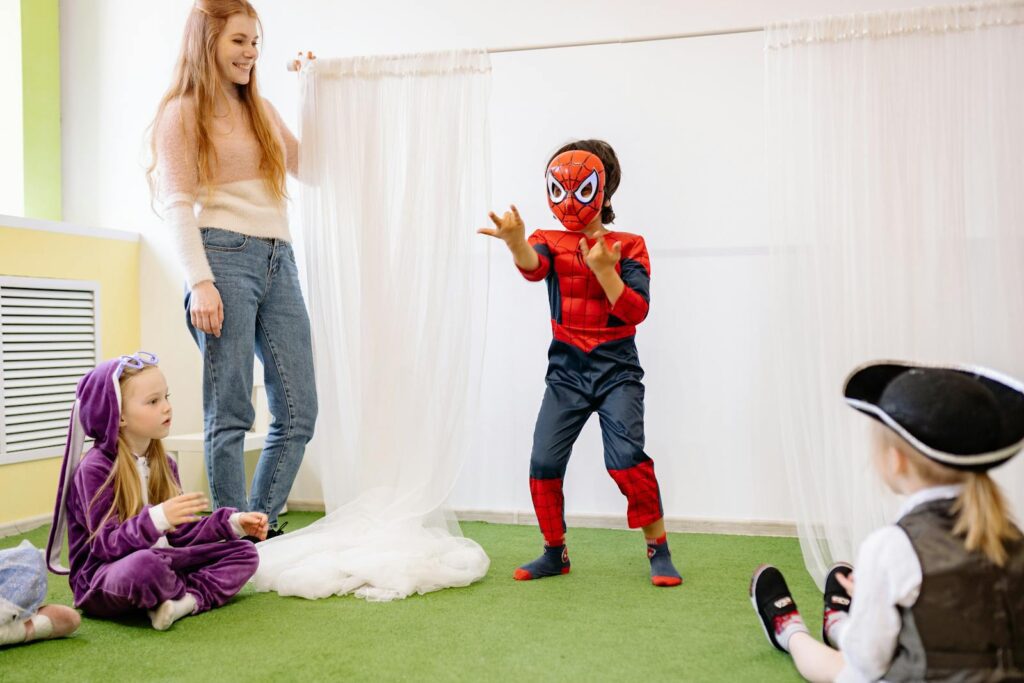
To adults, villains are the problem. To a preschooler, they are often the most compelling character on screen: loud, powerful and unconstrained by rules. Developmental psychologist Michele Borba, author of Thrivers, has written extensively about how “bad guy” play lets children experiment with dominance and rule-breaking from a position of safety. Clinical psychologist Aliza Pressman, co-founding director of the Mount Sinai Parenting Center and host of the Raising Good Humans podcast, describes villain play as a normal developmental exercise in which kids try on bigness in a world where adults control nearly every decision, from when they eat to when they sleep.
The appeal is not about cruelty. When a child shouts “I am Captain Hook” and swings a foam sword, the thrill is agency, not harm. Research on dramatic play from the National Association for the Education of Young Children (NAEYC) confirms that pretend scenarios involving conflict help children practice perspective-taking, emotional regulation and narrative problem-solving. Villains, in this framework, are not role models. They are plot devices that let a small person feel large.
That pattern shows up across households regardless of how much screen time a family allows. Preschool teachers routinely observe children who lock onto the destructive scenes in a story and replay them at recess while skipping the hero’s triumph entirely. According to NAEYC’s research on play-based learning, this kind of selective replay is how young children metabolize experiences that feel overwhelming or exciting. The villain’s power is the part that needs processing, so that is the part they rehearse.
When imagination is healthy, and when it is a flag
Most villain play is benign. The characters are cartoon pirates, comic-book robots or exaggerated movie antagonists, and the stories tend to resolve with a rescue, a capture or a friend stepping in. Pressman has noted that when bad guys surface in pretend play, children are frequently working through fears that began building in toddlerhood: fear of separation, fear of the dark, fear of things they cannot control. Seen this way, villain play is a window into what feels scary, not a rehearsal for real aggression.
Longitudinal research supports that interpretation. A widely cited 2006 study published in the Journal of Applied Developmental Psychology found no meaningful link between violent pretend play in early childhood and aggressive behavior later in life, provided the play remained flexible and imaginative rather than rigid and repetitive.
That flexibility is the key indicator parents should watch. If a four-year-old can switch roles, sometimes playing the hero, sometimes the sidekick, sometimes the villain, and still enjoy the game, that points to healthy imagination. When a child insists on being the villain in every scenario, refuses any storyline that includes kindness or repair, and becomes distressed or aggressive when redirected, the play may be signaling something worth exploring.
Specificity also matters. When a preschooler’s stories shift from cartoonish destruction (“I’m blowing up the moon!”) to realistic violence (“Bad guys are coming to shoot us at night”), that can indicate the child has been exposed to frightening content, whether through news broadcasts, overheard adult conversations or age-inappropriate media. The American Academy of Pediatrics (AAP) recommends that parents of young children limit exposure to news coverage of violence and, when exposure does occur, offer concrete reassurance: name what the adults in the child’s life are doing to keep them safe, and keep explanations short and factual.
When to bring in a professional
Most parents will never need to escalate beyond a conversation. But clinicians say a few patterns warrant a check-in with a pediatrician or child psychologist:
- The child’s play is persistently violent and lacks any narrative arc (no rescue, no resolution, no switching roles) over a period of several weeks.
- The child acts out violence toward other children or animals outside of pretend play.
- The child expresses fear that specific “bad guys” are real and coming for them, and reassurance does not help.
- The violent themes coincide with a major life change, such as a move, a divorce or a loss, and the child seems withdrawn or anxious outside of play.
None of these patterns alone means something is wrong. But taken together, or sustained over time, they can point to anxiety, trauma exposure or sensory processing differences that benefit from professional support. For neurodivergent children, particularly those on the autism spectrum, intense fixation on specific characters (including villains) may reflect a different cognitive pattern rather than an emotional concern, something a developmental specialist can help parents distinguish.
How parents can respond without panicking
For adults who did not grow up staging elaborate battles with action figures, the intensity of preschool villain play can feel alarming. Borba and Pressman both encourage parents to resist the urge to shut it down entirely. Banning villain play tends to drive it underground or make it more appealing. Instead, they suggest three practical moves:
- Set boundaries on actions, not imagination. “We can pretend to blast, but we don’t hit real people” is a limit that respects the fantasy while protecting everyone in the room.
- Widen the cast. Introduce characters who rebuild, comfort or forgive. If the child’s story ends with the villain winning, ask, “What happens next? Does anyone come to help?” This nudges the narrative toward empathy without shaming the child for liking the bad guy.
- Play along, at least sometimes. Joining the game gives parents a front-row seat to what the child is processing and a chance to model how characters make better choices from inside the story.
The underlying principle, supported by decades of developmental research, is that young children’s moral reasoning is still externally guided. Psychologists from Piaget onward have documented that preschoolers rely on caregivers to help them sort right from wrong. Your child does not yet have a fully internalized conscience. You are that conscience. The villain phase is not evidence that the system is broken. It is evidence that the system is working: your child is testing boundaries, and you are there to hold them.
More from Decluttering Mom: