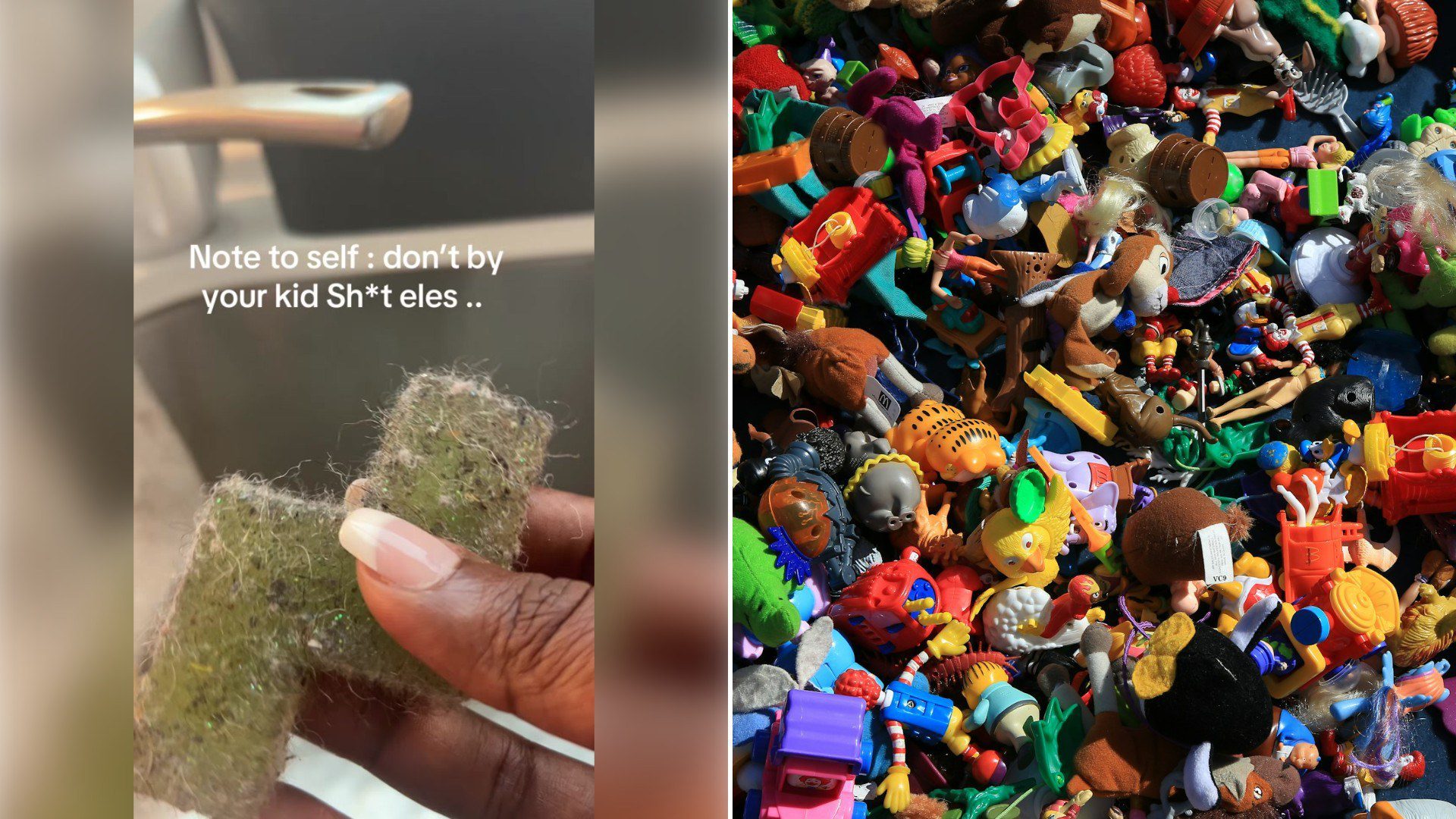
The toy in the hand of the parent posting as __blvkmolasses is supposed to be green. In the 15-second TikTok, filmed over a kitchen sink, it is mostly gray: a small squishy made of connected cube shapes, so thickly coated in hair and lint that it looks more like something pulled out of a vacuum than out of a toy bin.
Text across the screen reads like a memo from a tired parent, a “Note to self” to stop buying the kid things, with one word censored. The camera stays tight on the squishy as the parent turns it over between thumb and fingers, showing fuzz on every face of it. Out loud, the parent asks who would let a squishy get like this, then pleads, “Somebody tell me how to clean this thing off, please!”
@__blvkmolasses
In the second half of the clip the squishy goes under the running tap. Water pours over it, the fuzz mats down and slicks against the surface, and the parent squeezes and rubs at it with wet fingers. When it comes back out of the stream it is a darker, shinier green, and the hair is still there, plastered flat against the sides in the final frames.
The caption fills in the backstory. “I just don’t see how a toy can become this nasty,” it begins, with a laughing emoji. Then comes the list of what has already been tried: corn starch, baby powder and coconut oil. “I’ve tried it all and yet this squishy still gets hairyyyyy,” the parent writes, ending on a direct request: “Any tips?”
That question deserves a real answer, because the problem is built into the toy. Soft, stretchy squishies of this kind are tacky to the touch, and that slight stickiness is part of what makes them satisfying to squeeze. It is also what turns them into a lint roller. Every time one lands on a carpet, a couch cushion, a blanket or the floor of a car, it picks up whatever is there, and hair is the hardest thing to get back off.
The video itself shows why a rinse does not solve it. Plain running water flattens the hair against the surface without lifting it. A better order of operations starts before the tap is turned on. Pull off as much of the dry fuzz as possible by hand first, because wet hair mats and clings. Then wash the toy in warm water with a drop of dish soap, rubbing the surface with fingertips so the soap can get between the hair and the toy, and rinse until nothing is left on it.
Drying matters as much as washing. A freshly washed squishy is at its stickiest, so rubbing it with a bath towel or a paper towel will cover it in new fibers straight away. Setting it on a clean plate or a rack to air dry avoids that.
The powders named in the caption do have a use, and it comes at this point. Once the toy is completely dry, a very light dusting of corn starch or baby powder, rubbed over the whole surface, takes the tackiness away so that hair has less to hold on to. The catch is that the coating wears off as the toy is handled, which fits the parent’s complaint that the squishy “still gets” hairy. It has to be redone after every wash, and probably between washes too. Oil works the other way. It leaves a greasy film that dust and hair stick to, so coconut oil is one to skip.
Where the toy lives between play sessions makes the biggest difference. A squishy tossed loose into a toy bin, a bed or a backpack will be furry again within days. A small lidded container or a zip-top bag keeps it clean, and a house rule that it stays at the table, away from carpet and pets, slows the whole cycle down.
It also helps to know when to stop. If a squishy has torn, is leaking its filling, or still feels grimy after a proper wash, it has reached the end of its life and can go in the trash without guilt.
The on-screen note to self points at the last piece of advice, which applies before the next purchase. Sticky, stretchy toys are cheap and children love them, but they come with upkeep, and it helps to decide at the store whether anyone in the house wants that job.