


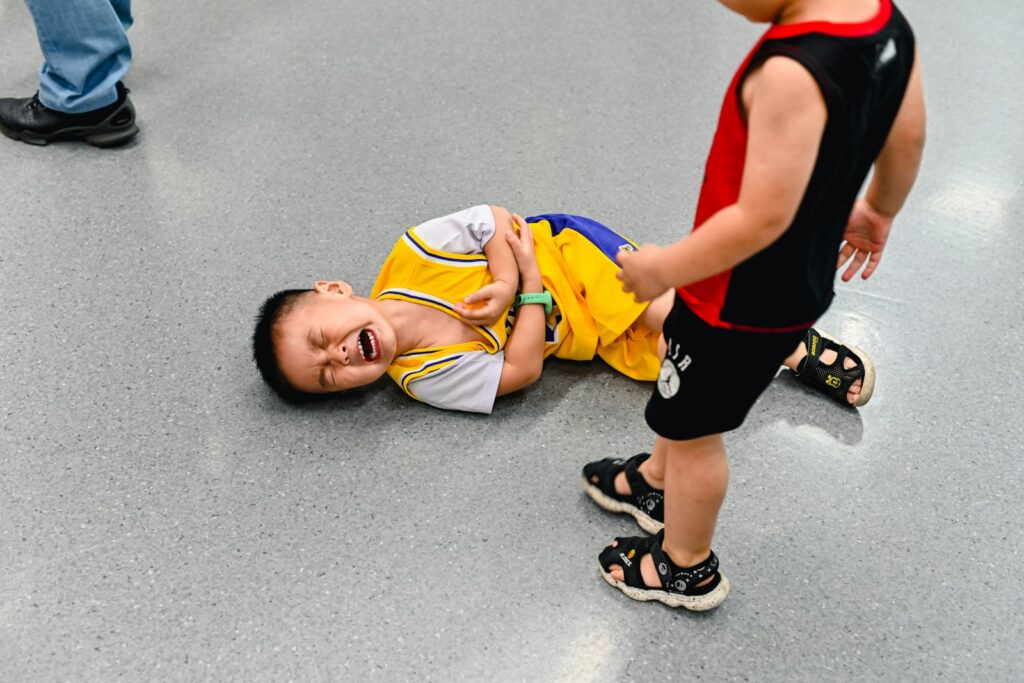
A parent recently reached out for help after their energetic 2-year-old kept shoving and physically ramming into a 14-month-old during playdates, leaving the caregiver feeling frustrated and unsure how to handle the situation. The older toddler’s rough physical interactions had become a pattern, creating tension during what should have been enjoyable social time for both children.
While toddler aggression like pushing and shoving is developmentally normal between 18 months and 3 years old, managing these behaviors when there’s an age gap between playmates presents unique challenges. The parent’s concern centers on keeping the younger child safe while not overreacting to what might be typical toddler boundary-testing.
The situation highlights what many families experience when toddlers at different developmental stages interact. Understanding why the 2-year-old behaves this way and what responses might actually help has become urgent for this parent trying to navigate early childhood social dynamics.
Understanding Aggressive Play in Young Children


Physical behaviors like shoving and ramming between toddlers reflect their limited communication skills and underdeveloped impulse control. These actions typically peak around age two when children experience intense emotions but lack the verbal tools to express them.
Why Toddlers Engage in Pushing, Shoving, and Ramming
Between 18 months and 3 years, toddlers discover they’re separate individuals from their caregivers. This realization drives them to assert independence and test boundaries through physical actions. When a 2-year-old repeatedly rams into a younger child, they’re often exploring cause and effect rather than intentionally causing harm.
Toddlers rely heavily on actions to communicate because their language development lags behind their emotional intensity. Aggressive behavior in toddlers usually peaks around age two, when they have strong feelings but can’t yet use words effectively. A child who shoves another during play might be saying “that’s mine” or “you’re too close” without having those actual words available.
The 2-year-old’s brain is still building self-regulation skills. They can’t yet pause between feeling an impulse and acting on it. Physical energy also plays a role—some children are naturally more intense and physical in how they interact with their environment and other people.
Normal Developmental Behaviors vs. Problematic Patterns
Most physical aggression between toddlers falls within normal developmental ranges. Occasional pushing, grabbing toys, or hitting during moments of frustration are expected behaviors as children learn social rules. The frequency, intensity, and context matter when distinguishing typical behavior from concerning patterns.
Parents should notice where and when the behavior happens. If a child only acts aggressively in overwhelming environments—like crowded playrooms or during transitions—the behavior likely stems from sensory overload rather than a behavioral issue. Similarly, aggression that surfaces right before naptime or when hungry often signals the child needs basic care rather than intervention.
Red flags emerge when physical aggression interferes with a child’s ability to connect with peers or happens constantly across all settings. Toddlers struggling to relate to other children or causing repeated disruptions may need additional support. Biting that continues past age three or hitting that increases in severity over time also warrants closer attention.
Common Triggers: Frustration, Impulse, and Communication Gaps
Toddler tantrums and physical outbursts often trace back to specific triggers. Frustration tops the list—when a 2-year-old can’t make a toy work or another child takes something they want, physical action becomes their default response. The energetic child who keeps ramming the 14-month-old might feel frustrated that the younger baby can’t keep up with their play style.
Impulse control remains underdeveloped at this age. Even when toddlers know the rules, their emotions override their thinking skills almost every time. A child might understand that pushing is wrong but still shove when excited or overwhelmed. Their brain simply hasn’t developed the pause button between urge and action.
Communication gaps fuel much of the physical behavior between young children. Toddlers want to say “let’s play chase” or “I need space” but lack the vocabulary. Instead, they use their bodies to send messages. Meltdowns happen when these communication attempts fail repeatedly, leaving the child feeling unheard and increasingly desperate to express themselves.
Practical Strategies for Managing Rough Toddler Interactions
Parents dealing with physical aggression between toddlers need immediate responses that stop the behavior while teaching both children appropriate ways to interact. The challenge involves protecting the younger child while helping the older toddler understand boundaries.
Immediate Responses to Shoving and Aggression During Playdates
When a 2-year-old shoves or rams into a younger child, parents report the most success with quick, neutral interventions. Rather than over-talking or showing big emotional reactions, experts suggest moving between the children and using brief, direct language like “I won’t let you push.”
Physical blocking works better than lengthy explanations. One parent can position themselves as a barrier while calmly stating what behavior they expect to see instead. The key is staying unfazed rather than raising voices or showing frustration, which can actually make the behavior more exciting for the child doing the pushing.
Some parents have found success immediately ending the interaction for a few minutes when rough behavior happens. This isn’t a traditional time-out but rather a natural consequence where the 2-year-old loses access to playing with their friend. The parent might say “pushing hurts” and then redirect their child to a different activity for a brief period.
Setting Boundaries and Teaching Empathy to Toddlers
Two-year-olds don’t automatically understand why they need to stop doing something they find fun. Parents on platforms like BabyCenter report that focusing on empathy helps more than punishment alone.
Specific phrases work better than abstract concepts:
- “When you push her, it hurts her body”
- “Look at his face—he’s crying because that scared him”
- “She wants to play, but pushing makes her not want to be near you”
Consistency matters more than intensity. Parents need to respond the same way each time the shoving happens, even when it feels repetitive. Mixed signals—allowing rough play sometimes but not others—confuse toddlers who are still learning cause and effect.
Teaching gentle touch through demonstration gives the 2-year-old an alternative. Parents can model soft touches on stuffed animals or show how to pat instead of shove. Praising any moment of gentle interaction reinforces what parents want to see more of.
Supporting the Younger Child in Joint Play
The 14-month-old needs protection but also opportunities to learn from peer interaction. Parents report success when they stay physically close during playdates, ready to intervene before shoving escalates.
Some strategies parents use include:
- Positioning themselves between the children during active play
- Providing duplicate toys so sharing conflicts don’t trigger aggression
- Keeping playdates shorter to prevent overtiredness that leads to poor impulse control
- Scheduling playdates during the 2-year-old’s best behavior windows, typically earlier in the day
The younger child’s parent should feel comfortable stepping in to shield their baby without worrying about offending the other family. Most parents of energetic toddlers appreciate the help managing their child’s behavior.
Creating separate play spaces within the same room gives both children autonomy while maintaining supervision. The 14-month-old can explore age-appropriate toys while the 2-year-old plays nearby with different activities.
When to Seek Additional Help or Professional Guidance
Most parents wonder whether aggressive behavior falls within normal toddler development or signals a deeper issue. Physical play that consistently hurts other children despite repeated interventions may need outside support.
Red flags include aggression that happens across multiple settings with different children, behavior that seems to get worse rather than better over several months, or a child who shows no response to consistent boundary-setting. The CDC’s parenting resources offer guidance on what behaviors warrant professional attention.
Pediatricians can assess whether developmental delays or sensory processing issues contribute to rough behavior. Some 2-year-olds have difficulty regulating their energy levels or reading social cues from other children.
Parents dealing with persistent tantrums alongside physical aggression might benefit from consulting with child behavior specialists. These professionals can observe the specific dynamics during play and suggest tailored strategies.
More from Decluttering Mom: