


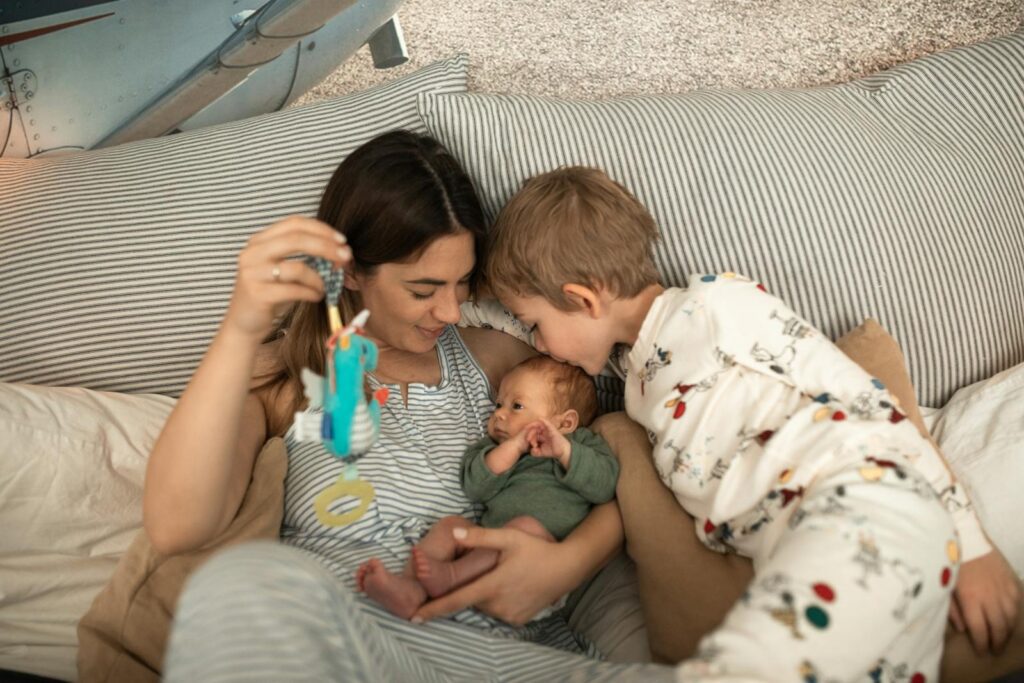
The question of whether one parent can manage both a newborn and a toddler alone has sparked heated discussions across parenting forums and social media platforms. Some parents insist they’ve successfully navigated the chaos solo, while others argue that attempting it without backup is a recipe for burnout and constant overwhelm.
The reality is that one adult can technically handle a newborn and toddler alone, but the experience ranges from manageable to extraordinarily difficult depending on factors like the toddler’s age, temperament, available support systems, and whether the parent has help during critical hours. Parents who’ve lived through this phase describe everything from smooth transitions to feeling like they were barely keeping their heads above water.
The debate reveals a divide between those who view solo parenting of two young children as a normal challenge and those who consider it an unsustainable situation without regular assistance. Parents share their real experiences managing competing needs, along with the practical strategies that helped them survive the most demanding months of juggling life with a newborn and toddler.

Can One Adult Handle a Newborn and a Toddler Alone?
The question of whether one person can manage both a newborn and toddler without backup has parents split, with some insisting it’s absolutely doable while others say the math just doesn’t work when two kids need you simultaneously.
Practical Realities of Solo Parenting Two Young Kids
Parents who’ve attempted managing a toddler and newborn alone report that the logistics become nearly impossible during certain moments. When the baby needs feeding at the exact moment the toddler has a bathroom emergency, one adult simply can’t be in two places at once.
Many solo parents say they’ve gotten through these situations by prioritizing immediate safety over everything else. The toddler might watch more television than usual. The house stays messier than before.
Working from home adds another layer of complexity that some parents find unmanageable. One parent described their situation as difficult but manageable with just their toddler in daycare, then expressed serious anxiety about adding a newborn to that equation.
The early days pose the biggest challenge according to parents who’ve been through it. Sleep deprivation compounds everything when one person handles all night wakings while still needing to function during toddler daytime hours.
Key Strategies for Multitasking With a Newborn and Toddler
Parents handling life with a newborn and toddler alone have developed specific tactics to survive the chaos. Babywearing becomes essential rather than optional, allowing them to keep the baby close while their hands stay free for toddler needs.
The bathtub emerges as a surprisingly effective containment strategy. Parents fill it with toys and let their toddler play there for extended periods while they handle the baby nearby.
Many solo parents set up self-service snack stations at toddler height so their older child can grab food independently when hunger strikes during baby feeding times.
Screen time limits often go out the window temporarily. Parents who normally restrict television find themselves relying heavily on shows to keep toddlers occupied during critical moments with the newborn.
Some parents maintain their toddler’s daycare schedule specifically to get one-on-one time with the baby, recognizing that managing both kids simultaneously all day exceeds their capacity.
Self-Care and Mental Health When Parenting Alone
Parents managing both a baby and toddler without a partner report that their own needs drop to the bottom of the priority list. Showering becomes a luxury rather than a given. Some switch to evening showers after both kids sleep just to guarantee it happens.
The mental load weighs heavily on solo parents. They describe feeling constantly overwhelmed and wondering if they’ve even brushed their teeth that day.
Regular check-ins from friends or family become crucial for parents handling everything alone. Having someone ask how they’re really doing sometimes provides the only opportunity to admit they’re struggling.
Parents emphasize that accepting help isn’t optional when solo parenting two young kids. They’ve learned to say yes when people offer to bring meals, watch the toddler, or handle household tasks.
The isolation hits harder than expected. Adult conversation becomes scarce when one person spends all day meeting the competing demands of two small children who can’t yet hold meaningful conversations themselves.
Essential Tips and Survival Tactics for Managing Two Kids
Parents who’ve survived the trenches of managing both a newborn and toddler simultaneously have developed practical strategies that address the constant juggling act. These battle-tested approaches focus on creating predictable patterns, leveraging the toddler’s natural curiosity about the baby, keeping hands free while soothing infants, and carving out precious moments with each child.
Establishing Routines to Juggle Both Children
Many parents report that syncing up schedules between a newborn and toddler provides significant relief during those chaotic early months. When both kids nap simultaneously, parents finally get a breather or can tackle urgent tasks.
Creating feeding stations throughout the house helps parents respond quickly when both children need attention at once. Some keep diaper-changing supplies in multiple rooms alongside healthy snacks for toddlers who inevitably get hungry during baby feeding times.
The routine doesn’t need to be rigid. Parents find that having a general flow to the day—morning snack time, afternoon park visit, early dinner—helps toddlers know what to expect while allowing flexibility for the newborn’s unpredictable needs.
Setting up these patterns takes time. Most parents need several weeks before any semblance of rhythm emerges from the chaos of managing a newborn and toddler together.
Involving Toddlers in Baby Care to Foster Bonding
Rather than keeping toddlers at arm’s length during baby care, parents who encourage involvement often see less jealousy. Toddlers can fetch diapers, pick out baby’s outfit, or gently pat the newborn during tummy time.
This approach transforms the toddler from a potential rival into a helpful “big kid.” One parent shared that her 23-month-old felt important bringing wipes during diaper changes, even though it sometimes slowed things down.
Simple tasks that make toddlers feel included:
- Choosing which book to read to baby
- Singing songs together during feeding time
- Helping push the stroller during walks
- Picking out stuffed animals for the nursery
The involvement needs supervision, naturally. Parents stay close to ensure gentle hands and appropriate interactions while their toddler explores this new relationship with their sibling.
The Power of Babywearing and Hands-Free Parenting
Babywearing becomes a survival tool rather than just a parenting preference when juggling a toddler and newborn. Strapping the infant in a carrier frees up both hands to help the toddler with urgent needs like potty training accidents or preventing dangerous situations.
Parents racing to get everyone out the door find that keeping the baby in a carrier while managing toddler logistics makes trips actually feasible. The newborn stays content against a parent’s chest while the toddler gets buckled into the car seat.
Many parents keep their carriers on for hours at home. The baby naps peacefully while they read books with their toddler, prepare meals, or supervise outdoor play. Some even breastfeed in carriers once they get the hang of positioning.
Different carriers work for different families—wraps, structured carriers, or ring slings. Parents often try several types before finding what works for their specific situation.
Making Time for Individual Attention and Connection
Despite the constant demands, experts emphasize that one-on-one time prevents acting out from toddlers who feel displaced. Even 15 minutes of focused attention can make a noticeable difference in a toddler’s behavior throughout the day.
Some parents wake up earlier to have breakfast alone with their toddler before the baby wakes. Others designate certain activities as special big-kid time, like helping in the kitchen or choosing the bedtime story.
During baby’s naps, parents resist the urge to immediately start chores. Instead, they sit with their toddler for puzzles, coloring, or just talking about their day. These moments reassure the older child that the new baby hasn’t erased their importance.
Partners can divide and conquer, with one parent taking the toddler for a park trip while the other stays home with the sleeping newborn. This gives the toddler undivided attention and a break from the constant baby-centered household activity.
More from Decluttering Mom: