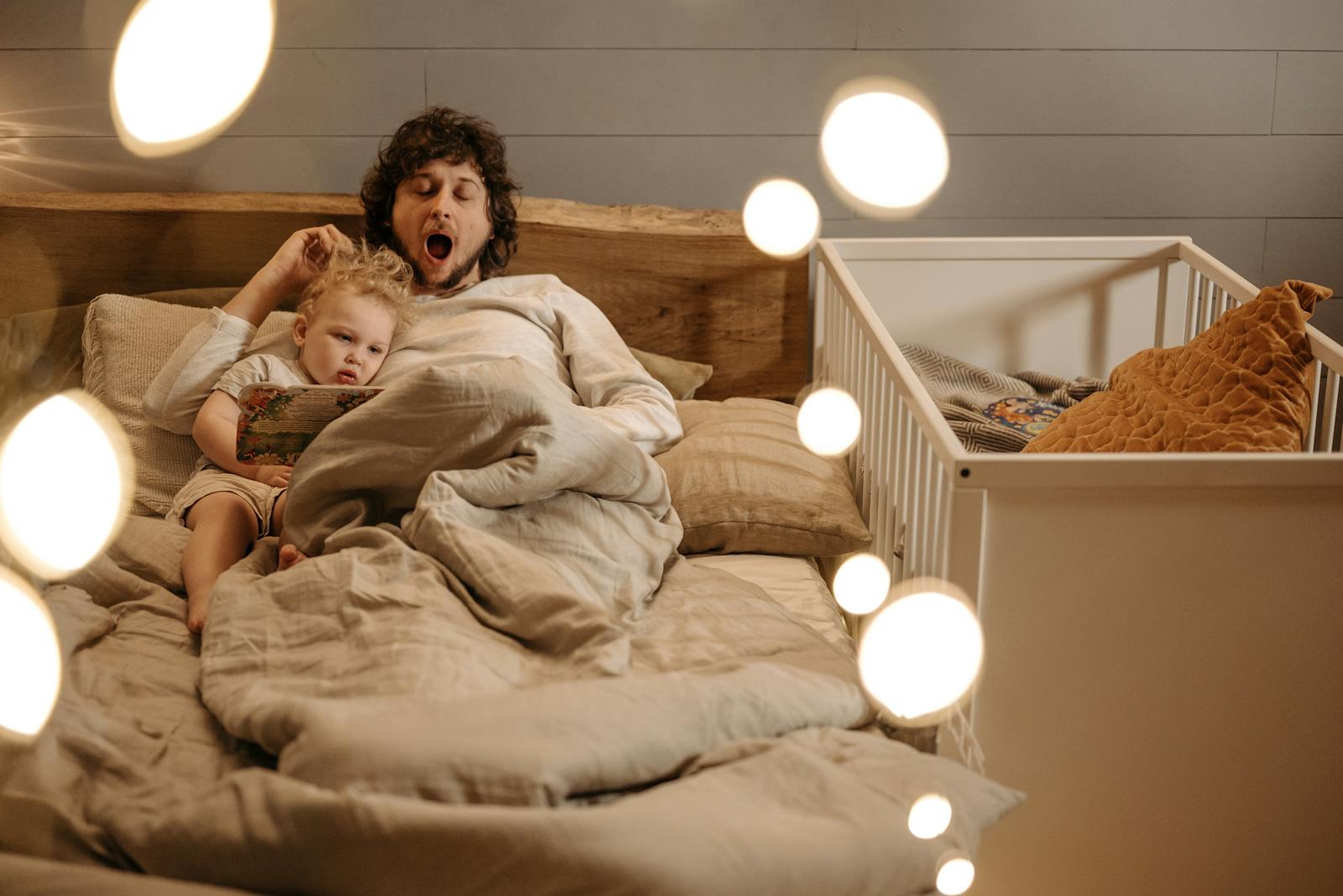
It starts around 7:45 p.m. in homes with young children: a parent announces bedtime, and within seconds the negotiation begins. One more episode. One more snack. A sudden, urgent need to find a specific stuffed animal. For some families, what follows is 10 minutes of mild protest. For others, it is a full hour of tears, yelling, and slammed doors that leaves everyone in the house worse off than before the pajamas came out.
Pediatric sleep researchers have been documenting this pattern for years. A landmark study led by Jodi Mindell at the Children’s Hospital of Philadelphia found that 20 to 30 percent of young children experience significant bedtime resistance, making it one of the most common behavioral sleep problems in early childhood. Updated guidance from the American Academy of Pediatrics has only sharpened the concern, noting that evening screen exposure can delay melatonin release and make the transition to sleep harder, a factor that was less prevalent when Mindell’s early work was published in 2006.
As of spring 2026, parents are navigating these battles with more information available than ever but not necessarily more support. The advice below draws on peer-reviewed sleep research, clinical guidance from children’s hospitals, and developmental psychology to explain why bedtime goes sideways and what actually helps.
Why bedtime turns into a power struggle

Young children are not being defiant for sport. Developmental psychologists point out that toddlers and preschoolers have a limited capacity for what researchers call “effortful control,” the ability to stop a rewarding activity and shift to a less appealing one on command. Asking a three-year-old to leave block towers for tooth-brushing is, neurologically, a big ask. Sleep educator Rachel Mitchell of My Sweet Sleeper compares it to an adult being told to shut off a gripping movie and lie in a dark room immediately. The analogy is imperfect, but it captures why stalling tactics like “one more glass of water” are less about manipulation and more about a child’s clumsy attempt to hold on to connection and stimulation.
There is also a physiological layer. Children who seem to get more wired as bedtime approaches are not faking it. Their sympathetic nervous system can spike when a transition feels abrupt, producing the hyperactivity or clinginess that parents often misread as willful resistance. Occupational therapists who specialize in sensory processing note that some children need a deliberate “bridge” of calming movement, such as slow rocking, deep-pressure hugs, or quiet organizing tasks, before their bodies can shift into a sleep-ready state. Skipping that bridge and jumping straight to “lights off” can trigger a fight-or-flight response that makes settling down even harder.
Big life disruptions amplify the problem. A new sibling, a household move, or a change in childcare can rattle a young child’s sense of predictability. Taking Cara Babies, a widely followed sleep education program, warns that toddlers going through major transitions often fight bedtime harder because the end of the day is when uncertainty feels most acute. The child is not choosing chaos; they are reacting to a world that suddenly feels less stable.
What works when nightly arguments become the default
When bedtime battles escalate, many parents respond by tightening control: stricter countdowns, louder warnings, consequences stacked on consequences. Research suggests that approach often backfires. A more effective strategy, supported by behavioral sleep medicine, involves pairing firm limits with small, genuine choices.
The concept is simple but counterintuitive for a frustrated parent. Instead of dictating every step, offer two acceptable options: “Do you want the blue pajamas or the green ones?” or “Should we read Goodnight Moon or Llama Llama Red Pajama?” Mitchell’s clinical guidance describes this as a way to shift the power dynamic without surrendering structure. The child feels a measure of autonomy; the parent still controls the timeline. In families where every request currently sparks a confrontation, that small pressure valve can lower the emotional temperature noticeably.
Consistency matters more than creativity. The sleep disorders program at Nationwide Children’s Hospital advises parents to set a clear bedtime routine and then hold the line: ignore drawn-out protests, return a child to bed with minimal conversation, and resist the urge to renegotiate. The guidance is blunt. Complaints after the routine is complete should be treated as background noise, not as an invitation to restart the discussion. Applied behavior analysis practitioners echo this: each time a parent calmly and silently walks a child back to bed, the child learns that bedtime means sleep, not debate.
The adult’s emotional state is part of the equation, too. Maryam Ibrahim, a pediatric psychologist at University Hospitals, stresses that children read parental anxiety “like a billboard.” A parent who walks into the bedroom already bracing for a fight will, through tone and body language, signal to the child that conflict is expected. Ibrahim’s recommendation: commit to a predictable sequence of calming steps (bath, pajamas, story, lights out), deliver it in the same order every night, and when frustration rises, pause, breathe, and reset before responding. The goal is not robotic calm but steady-enough composure that the child’s nervous system can borrow some of it.
Building a routine that holds up over time
For families deep in the cycle, the fix rarely starts at bedtime itself. Therapists at Family Connections Therapy in San Diego recommend beginning the wind-down 30 to 45 minutes before lights-out. That means repeated, low-key warnings (“We have two more books, then we start getting ready”), screens off well before the routine begins, and quiet activities like coloring or looking at picture books while the house gets progressively dimmer and quieter.
The AAP’s guidance on media use reinforces this timeline. For children ages two to five, the academy recommends no screens in the hour before bed, a boundary that many families acknowledge setting but few enforce consistently. Replacing that screen time with a tactile, low-stimulation activity gives the child’s melatonin production a chance to ramp up naturally, making the physical act of falling asleep less of a battle.
One detail that often gets overlooked: bedtime resistance that persists despite a solid routine, consistent limits, and a calm environment may signal something beyond a behavioral phase. Pediatricians flag chronic bedtime struggles as a reason to screen for anxiety disorders, attention-deficit/hyperactivity disorder, restless leg syndrome, or obstructive sleep apnea, all of which can masquerade as garden-variety defiance. If a child’s resistance is accompanied by frequent night waking, snoring, leg discomfort, or daytime behavioral changes, a conversation with a pediatrician is worth scheduling sooner rather than later.
No single strategy will silence every “but I’m not tired” protest. But the research is consistent on the fundamentals: start winding down early, offer choices within firm boundaries, keep screens out of the pre-bed window, stay as calm as you can manage, and repeat the same sequence every night until it becomes as automatic as brushing teeth. For most families, the nightly standoff does not require a dramatic intervention. It requires a boring, predictable routine delivered by a parent who has decided, quietly, to stop negotiating.
More from Decluttering Mom: