

Every parent has a suspicion about who their baby loves more in a given moment. One couple decided to test it right on the living room couch, and the result was clear.

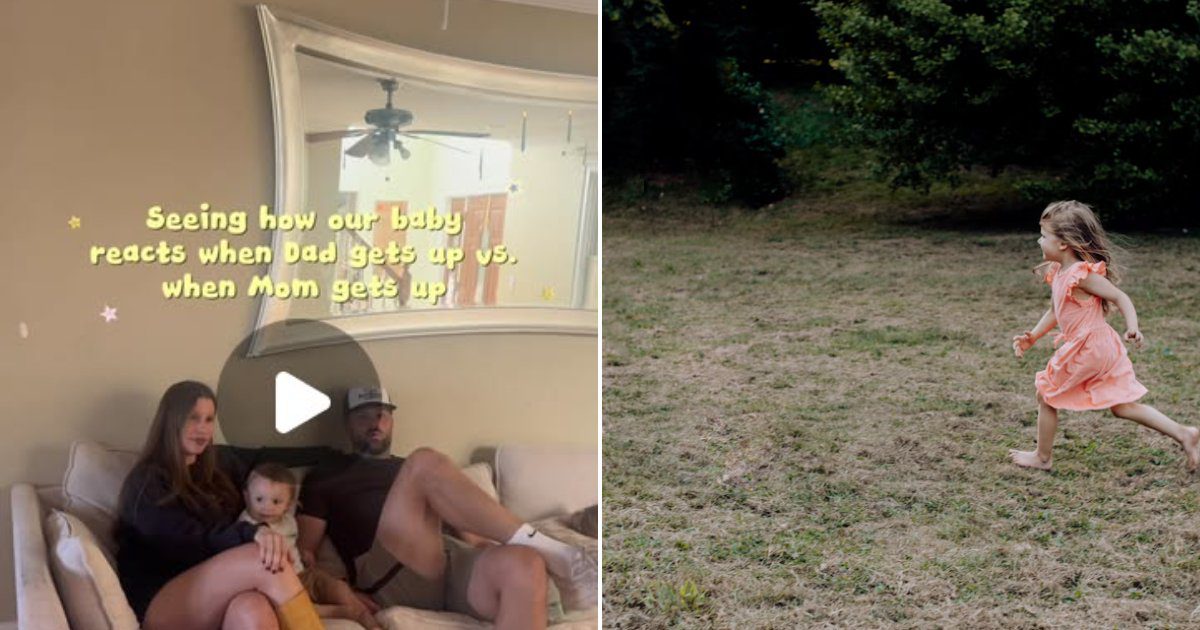
The clip from @janellemcaloon is captioned: “Seeing how our baby reacts when Dad gets up vs. when Mom gets up.”
Round one: dad leaves
Mom, dad and their toddler are on the couch. Dad, in a trucker hat and black t-shirt, stands up and walks away. The toddler does not even look. Instead, the little one turns toward mom, smiles and climbs into her arms for a cuddle.
Round two: mom leaves
Dad comes back and sits down. Then it is mom’s turn. She stands and heads for the entryway. The reaction is completely different. The toddler scrambles down off the couch, runs across the carpet calling out “Mommy!” and reaches up with both arms to be picked up.
The camera swings back to dad, who is laughing and throwing up his hands in playful disbelief. In the mirror above him you can see mom holding the baby.
What is going on with the baby?
Child development experts note that babies and toddlers often have a favorite person at a given stage, and it can shift week to week. Separation anxiety tends to show up in the second half of the first year and can last well into the toddler years. A child who is fine with one parent leaving may protest loudly when the other does, often because that parent is the main source of comfort in that moment.
It is almost always temporary, and it does not mean the other parent is loved less. For parents on the losing end of the test, a few tips can help:
- Take over a routine, like bath time or breakfast, so your child builds their own pattern with you.
- Keep goodbyes short and cheerful.
- Do not take it personally. It usually passes.
- Laugh about it, as this dad clearly does.
Understanding the parent preference phase
It is common for young children to go through stretches where they strongly favor one parent. It can flip without warning, and it is rarely about who does more or who is more loved. Toddlers cling to whoever feels most predictable and comforting in the moment, and that person can be different from one week to the next.
Separation anxiety is also a normal part of development. As babies learn that people exist even when they are out of sight, they sometimes protest when someone they trust leaves the room. It is a sign of a healthy attachment, even if it feels like a rejection to the parent who is being left behind.
Common questions parents ask
Does a strong preference mean something is wrong? No. Preferences come and go as children grow, and they usually fade as your child gets older and more confident. If you are worried about your child’s development or behavior, your pediatrician is the best person to ask.
Should the favored parent step back? Not necessarily, but it helps when both parents share the everyday care. The more a child sees both parents handle comfort, meals and bedtime, the more likely they are to feel safe with either one.
How do I handle tears when I leave the room? Stay calm, say a quick, warm goodbye and return when you said you would. Children learn to trust that you come back by seeing it happen again and again.
Try this at home: build your own bond
- Choose a daily moment that is yours alone, such as the morning diaper change, the walk to the mailbox or a bedtime song.
- Get down on the floor at your child’s level and follow their lead in play.
- Use games like peekaboo to show that people who disappear come right back.
- Create a short goodbye ritual, like a wave and a special phrase, and use it every time.
- Be patient. Consistency, rather than any single moment, builds trust.
Making handoffs smoother
Handing a fussy child from one parent to another can be tricky. It often helps to hand over slowly, with the first parent staying nearby for a minute so the child can settle. Offering a favorite toy or snack can ease the shift. If a child cries, comfort them warmly instead of rushing to fix it, and try again another day.
It also helps to remember that every stage of childhood passes. The parent who is chased today may be the one who gets the comfort request tomorrow, and a child who feels secure with both parents grows into a more confident kid.
Humor helps, too. Parenting is full of small, funny setbacks, and a shared laugh keeps the focus on what matters most: a child who feels loved by everyone in the room.
Credit for the original post goes to @janellemcaloon on Instagram.