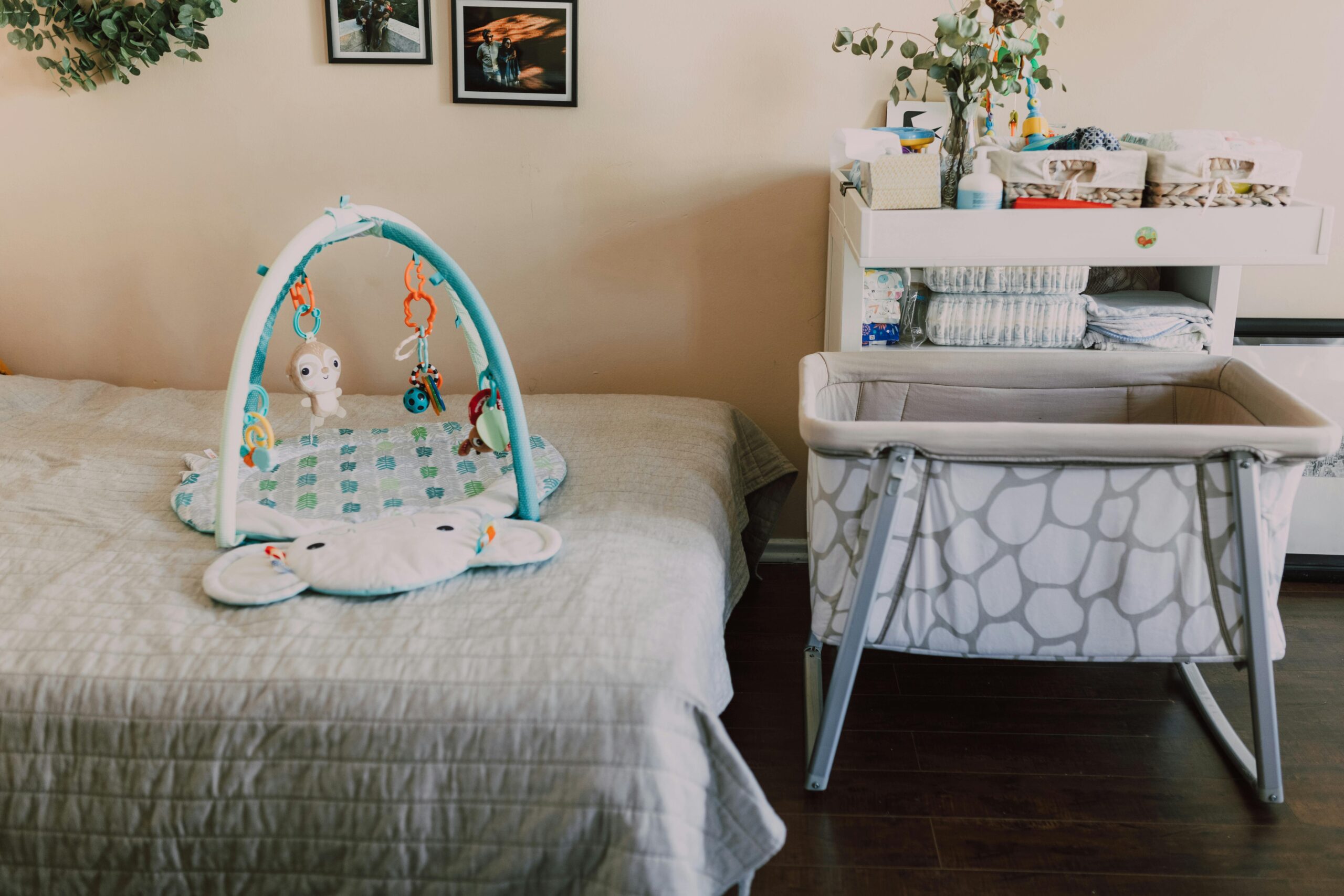
Planning a nursery sounds straightforward until parents realize they need to share their own bedroom with a baby for the first six months to a year. What seems like a simple furniture arrangement quickly becomes a puzzle of conflicting needs, space constraints, and safety concerns that no one warns you about beforehand.
When parents start shopping for cribs, bassinets, and co-sleepers, they discover each option solves one problem while creating three others they never anticipated. The crib that fits perfectly blocks access to the closet. The bassinet at the ideal height makes it impossible to open dresser drawers. The bedside sleeper attachment works great until they realize there’s nowhere to put their bedside table.
These families thought they were just picking furniture, but they ended up navigating a complex web of decisions about room sharing arrangements, sleep safety, and how their bedroom would function as both an adult space and a nursery. Every solution they considered came with trade-offs that affected everything from their morning routine to where they could charge their phones at night.
Every Bed Option Has Its Own Hidden Challenges
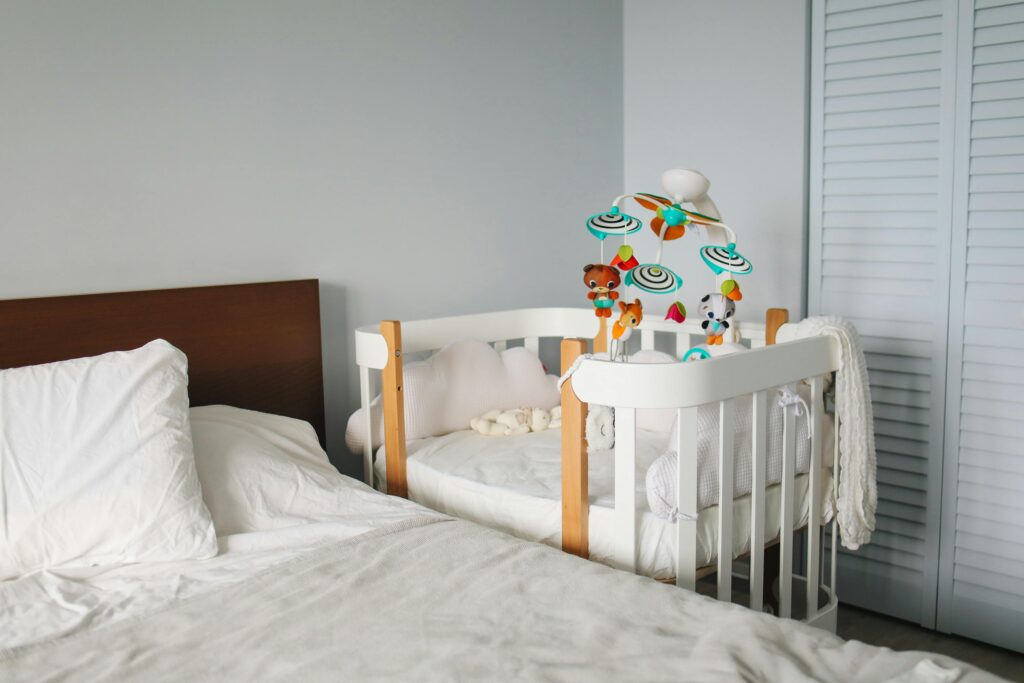
Parents quickly discover that furnishing a shared bedroom involves navigating a maze of conflicting priorities where safety, space, and practicality rarely align. Each sleeping arrangement brings trade-offs that weren’t obvious until they started measuring rooms and reading safety guidelines.
Choosing Between Bunk Beds, Twin Beds, and Cribs
The classic bunk bed seems like the obvious space-saver until parents learn that bunk beds aren’t recommended for children under nine, with serious safety concerns for kids under three. That’s a problem when one child is a toddler and the other is still an infant who’ll need a crib for years.
Twin beds positioned side by side eat up floor space fast. Most families find themselves doing bedroom geometry, shifting furniture around to see if two beds plus a crib will actually fit without blocking closet doors or creating cramped walkways.
The crib placement puzzle:
- Needs to be away from windows and cords
- Should allow easy parent access for night wakings
- Can’t block the older child’s bed or dresser
- Must leave room for a changing table or dresser
Some parents try skewed bunk bed designs with built-in storage, which take up slightly more floor area than traditional bunks but offer shelving and drawers. Others opt for a loft bed that leaves the bottom open, though that only provides one elevated sleeping space.
Space-Saving Solutions That Aren’t So Simple
Storage beds with built-in drawers sound perfect until parents realize they need to lift a heavy mattress every time they want to access stored items. The beds eliminate dresser needs but require more floor clearance than standard frames.
Trundle beds roll out for sleeping and tuck away during the day, but the lower mattress is typically thinner and less comfortable. Parents also discover that pulling out and setting up a trundle bed every night becomes tedious, especially when dealing with a crying baby at the same time.
Hideaway beds that press vertically against walls save significant floor space but create a nightly routine of pulling down beds and remaking them since sheets don’t stay in place. For exhausted parents already managing infant sleep schedules, this extra step feels impractical.
The two beds connected to a storage dresser layout requires positioning the dresser in a corner with beds extending from either side. It works well in theory but demands specific room dimensions that many families simply don’t have.
Safety Considerations for Shared Kids’ Bedrooms
The age gap between siblings creates the biggest safety challenges. Baby items like mobiles, small toys, and pacifiers become choking hazards that an older sibling might accidentally leave within reach. Parents find themselves constantly scanning the room for dangers they never worried about with one child.
Guardrails on elevated beds protect older kids but can’t prevent a mobile toddler from attempting to climb. Bunk beds with stairs instead of ladders offer safer access but take up more space and don’t address the fundamental issue of young children sleeping at heights.
Common shared bedroom safety conflicts:
- Older child’s toys with small parts
- Nightlights bright enough for one but too stimulating for baby sleep
- Temperature preferences that differ by age
- Noise from an active toddler during infant nap times
The proximity issue also complicates things when one child gets sick. Isolating a contagious sibling becomes nearly impossible in tight quarters, and nighttime coughing or crying from one child disrupts the other’s sleep patterns.
Smart Ways To Future-Proof A Shared Bedroom
Parents facing the challenge of room-sharing are discovering that furniture choices today can either solve tomorrow’s problems or create entirely new ones. The key lies in selecting pieces that adapt rather than require replacement every few years.
Investing in Convertible Furniture That Grows With Kids
Convertible cribs have become a go-to solution for parents who don’t want to buy multiple beds over the years. These cribs transform from infant sleeping spaces into toddler beds, then daybeds, and sometimes even full-size beds. The upfront cost stings more than a standard crib, but parents are finding the math works out when they aren’t shopping for new beds every two years.
The challenge comes when space gets tight. A crib that converts into a full-size bed sounds great until parents realize they’ve essentially committed to where that bed will sit for the next decade. Moving a convertible piece gets harder once it’s been reconfigured, and some parents have found themselves stuck with awkward room layouts they didn’t anticipate.
Mini cribs offer another route, fitting beside parents’ beds without eating up the entire room. They don’t last as long as full-size convertibles, but they buy time while parents figure out their next move.
Flexible Storage and Multi-Use Pieces
Dressers that double as changing tables solve two problems at once. Parents get diaper-changing space without adding another piece of furniture, and when the baby outgrows diapers, the dresser stays useful. Rolling carts have become surprisingly popular because they move wherever they’re needed and can shift roles from diaper station to toy storage to homework supplies.
Popular Multi-Use Storage Options:
- Dressers with removable changing toppers
- Ottomans with hidden storage compartments
- Beds with built-in drawer systems
- Rolling carts that relocate between uses
The trick is choosing pieces that don’t scream “baby nursery.” Neutral furniture survives style changes better than themed pieces covered in cartoon characters that will embarrass a seven-year-old.
Design Choices That Transition With Age
Paint colors and decorative elements create the biggest headaches for parents trying to plan ahead. What works for a nursery often clashes hard when kids develop their own opinions about their space. Parents going with neutral color palettes from the start avoid repainting battles later, though some admit the beige-and-white approach feels a bit sterile for a baby’s room.
Wall decals and removable wallpaper give parents an out. They add personality without permanent commitment, and switching them costs less than repainting entire rooms. The downside is that cheaper decals sometimes peel or leave residue, creating more work than parents bargained for.
Lighting matters more than most parents expect. A cute night light shaped like a bunny won’t fly with a preteen, but dimmable wall-mounted fixtures work for midnight diaper changes and later for reading in bed.
More from Decluttering Mom: