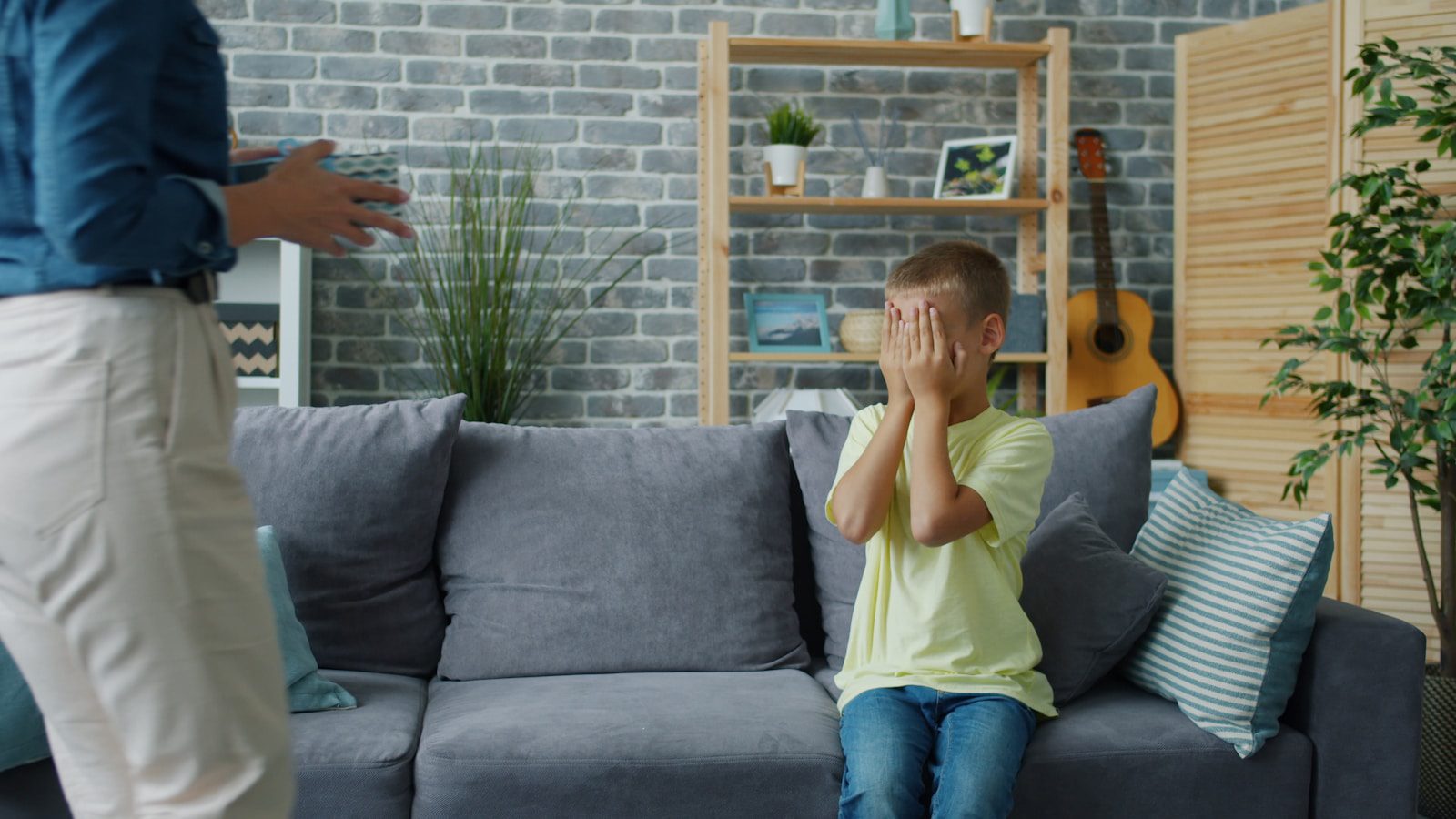
When a parent at school pickup casually asks their toddler to put on a jacket and the kid just… does it, other parents notice. The question that follows is almost always the same: “What are you doing that I’m not?” As of spring 2026, that question is flooding parenting forums, group chats, and comment sections, driven partly by viral posts from creators like mom-of-two Tia Wade, whose short videos on getting kids to cooperate without yelling have racked up millions of views on TikTok.
But the parents who consistently get cooperation from their children aren’t working from a single trick. Interviews, expert guidance, and peer-reviewed developmental research point to a handful of small, repeatable habits that change how children experience requests. None of them require a psychology degree. Most of them are free. And nearly all of them start with the parent, not the child.

Describe the problem instead of barking the order
One of the most consistent patterns among parents whose kids cooperate without a standoff: they narrate what’s happening rather than issuing commands. Instead of “Stop that right now,” they say, “The milk is spilling onto the floor.” Instead of “Get your shoes on,” they try, “We’re leaving in two minutes and your feet are still bare.”
This isn’t a new idea. It comes directly from the work of Adele Faber and Elaine Mazlish, whose book How to Talk So Kids Will Listen & Listen So Kids Will Talk has sold more than four million copies worldwide. Faber’s core advice, as summarized by Parents magazine, is to describe the situation rather than attack the child’s character. When a child hears information instead of accusation, the emotional temperature drops and the impulse to fight back fades.
There’s developmental science behind this. Research published in the journal Child Development has shown that children’s executive function, the brain system responsible for following multi-step directions and inhibiting impulses, is still maturing well into adolescence. Descriptive language gives a child’s developing prefrontal cortex a concrete problem to solve rather than an emotional threat to defend against.
Listen first, then redirect
Parents who get cooperation also tend to be unusually good listeners themselves. When a child refuses to put on shoes, these parents don’t escalate. They ask: “What’s bugging you about shoes today?” Then they repeat back what they hear before offering a solution.
This technique, called active or reflective listening, is a staple of clinical child psychology. Dr. Becky Kennedy, a clinical psychologist and the creator of the parenting platform Good Inside, has described it as the foundation of what she calls “repair and connection.” In her framework, a child who feels safe can actually hear what a parent is saying; a child in fight-or-flight mode cannot. Kennedy’s “magic phrases,” which went viral in 2024 and continue circulating in 2026, are built around validating a child’s emotion before making a request.
The nonprofit Connected Families offers a similar framework, urging parents to stop lecturing and start asking open-ended questions. Their model encourages caregivers to treat a child’s resistance as information, not defiance, and to respond with curiosity rather than volume.
The relationship bank account: why ordinary days matter most
Underneath any script or phrase is something harder to fake: the quality of the relationship on a regular Tuesday. Parents whose children are generally cooperative tend to invest in what therapists sometimes call the “emotional bank account,” small, consistent deposits of warmth and attention that build trust long before a conflict arises.
Amanda Diekman, a board-certified behavior analyst (BCBA) and parenting educator, puts it bluntly in her widely shared content: she asks parents to consider whether their children regularly experience them as “warm, respectful, interested in them, and easy to approach.” If the answer is no, she argues, no behavioral strategy will reliably work, because the child has no reason to cooperate with someone who feels adversarial. Her video on long-term trust has resonated with hundreds of thousands of parents online.
In practice, this looks mundane: five minutes of undistracted Lego time after school, listening to a full recap of a Roblox world before pivoting to homework, or simply making eye contact and saying “I’m glad you’re here” at breakfast. These micro-moments don’t show up on a parenting hack list, but they are the substrate that makes every other technique work.
Modeling matters more than rules
Ask parents of cooperative kids what they think makes the biggest difference, and many circle back to the same uncomfortable truth: children copy behavior far more reliably than they follow instructions.
Developmental psychologists have documented this for decades. Albert Bandura’s social learning theory, first published in the 1960s and replicated extensively since, demonstrated that children learn behaviors primarily through observation. A 2016 meta-analysis in Psychological Bulletin confirmed that parental modeling remains one of the strongest predictors of children’s prosocial behavior.
In practical terms, this means a parent who wants a child to speak calmly during disagreements needs to speak calmly during disagreements. A parent who wants a child to apologize sincerely needs to apologize sincerely when they mess up. As one caregiver in a parenting community put it: “Your child is listening less to what you say and more to how you live.” The phrasing is blunt, but the science backs it up.
Structure, timing, and the tricks that actually stick
Beyond relationship and modeling, parents who get results tend to be deliberate about the mechanics of how they give directions. Several patterns come up repeatedly:
Get close and get low. Shouting instructions from another room is one of the least effective ways to communicate with a child. Pediatric guidance from Nemours Children’s Health recommends physically moving to the child’s level, making eye contact, and using a calm, clear voice. Following through with realistic, pre-stated consequences when a direction isn’t followed teaches children that calm words carry weight.
Keep it short. Parenting educators often reference the “first eight seconds” principle: if a direction doesn’t land in the opening moments, it probably won’t land at all. The coaching group Equilibria frames this as part of the “3 C’s” of effective direction-giving: clear, concise, and consistent. One instruction at a time, stated positively (“Walk, please” instead of “Don’t run”), gives a young child’s working memory a fighting chance.
Use playful structure for high-friction moments. Wade, the mom whose videos went viral, told PEOPLE that her approach was never about manipulating children permanently. It was about using playful, concrete structure to get through specific bottlenecks, like transitions out the door or into the car seat. Parents in toddler communities share similar micro-strategies, such as teaching a child a “safe spot” to place their hands on the car while a sibling is being buckled, a tactic praised in a popular Reddit thread on toddler hacks.
When it doesn’t work: what these parents want you to know
Parents who seem to have cooperative kids are quick to add a caveat: none of this works every time, and none of it works the same way for every child. Children with ADHD, autism spectrum differences, sensory processing challenges, or anxiety may need adapted strategies, additional professional support, or both. A child who can’t follow a three-step direction isn’t necessarily being defiant; they may be struggling with working memory or sensory overload.
Even in neurotypical development, age matters enormously. A two-year-old who says “no” to everything is exercising a developmentally appropriate drive for autonomy, not disrespecting a parent. A nine-year-old who pushes back on rules is rehearsing the independence they’ll need as a teenager. Expecting uniform compliance across ages misreads what healthy development looks like.
The honest version of the “secret,” according to the parents living it, is less glamorous than a viral hack: show up consistently, talk less and listen more, model what you want to see, and accept that some days will still fall apart. The difference isn’t perfection. It’s pattern.
More from Decluttering Mom: