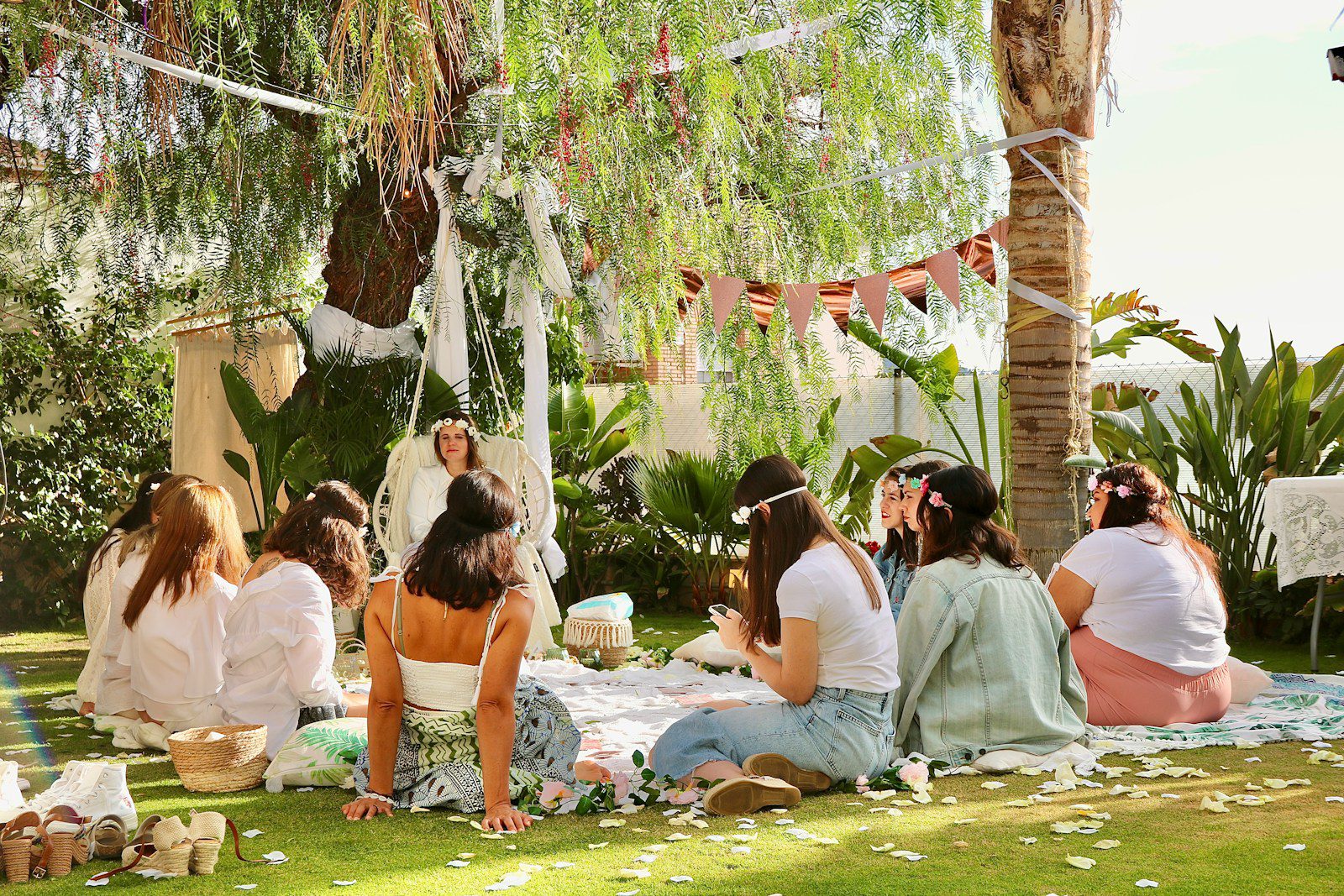
A pregnant woman drew a hard line with her controlling grandmother-in-law after the older woman tried to turn a simple celebration into her own personal event. When the tension finally boiled over, the mom-to-be shut it down with one pointed reminder: this was her baby shower, not anyone else’s stage.
Her story fits neatly into a growing wave of posts from expectant parents who are done tiptoeing around relatives that treat pregnancies and baby showers as vanity projects. The details change from family to family, but the pattern is the same: a pregnant person sets a boundary, an older relative ignores it, and a showdown follows.

The Baby Shower Power Struggle
In the original account, shared on Reddit, the pregnant woman described how her grandmother-in-law pushed to host the shower, then immediately began acting as if she owned every decision. The guest list, the theme, the schedule, even what the parents should say during the party all seemed to fall under the older woman’s self-appointed control, according to the AITAH post.
When the mom-to-be tried to give input, she was treated like a supporting character instead of the person carrying the baby. That finally shifted when the grandmother-in-law tried to reframe the event as a celebration of herself as a future great-grandmother. The pregnant woman responded with the line that anchored the entire debate: this was her baby shower, not her grandmother-in-law’s, and she was not going to let anyone rewrite that.
Commenters seized on that moment as a textbook example of how to handle a relative who confuses hosting with controlling. One response pointed out that the grandmother-in-law had been given a role because the pregnant woman wanted her to feel included, not because she had been granted full creative control. That same commenter described the older woman’s behavior as “Threatening, manipulating, controlling,” language that captured how quickly a supposedly generous offer can turn into leverage when a host forgets the event’s purpose, as seen in the linked comment thread.
Why Showers Bring Out Controlling Behavior
Baby showers look harmless on paper: a few games, some cake, a registry and a stack of tiny onesies. Yet the stakes feel high for relatives who see a new baby as a fresh chapter for the entire family. That emotional weight can morph into entitlement, especially for grandmothers and mothers-in-law who imagine the party as a reflection of their own status.
One pregnant woman described how her mother-in-law threw a separate “grandma baby shower” for herself after the actual shower had already happened. The older woman decorated, invited her own circle and accepted gifts that were supposedly for the baby but were clearly centered on her role, according to a post that opened with the line “My mother in law threw her own ‘grandma baby shower’ for herself” from BabyBumps. The poster later realized the situation was even worse than it first appeared, once the full scope of the self-focused party became clear.
Another commenter in a separate discussion shared that “My MIL” had also arranged a “grandma baby shower” when “BIL’s” wife was pregnant, and “None of the” extended family wanted to attend, a sign of how quickly enthusiasm can evaporate when a celebration shifts away from the actual parents and child, as described in an AmIOverreacting thread. These stories echo the same theme: when older relatives make the event about themselves, everyone else quietly pulls back.
When Boundaries Turn Into Ultimatums
In some families, the conflict does not stop at awkward speeches or off-key decorations. One Reddit user, identified in the key details as Jan, wrote about telling her mother-in-law that she would not be seeing the baby after throwing a chaotic shower. Jan described thanking everyone for their gifts and trying to sound as gracious as possible, yet she was deeply confused and hurt by how the event had unfolded, according to her AITA account.
Jan’s husband, who she described as “a little” conflict avoidant, had not fully grasped how far his mother had pushed. The shower became a breaking point where the pregnant woman had to decide whether to keep tolerating boundary stomps for the sake of family harmony or finally attach consequences. Her choice to restrict access to the baby was controversial in the comments, but it reflected a growing attitude among expectant parents that access to a newborn is not automatic, especially after a pattern of disrespect.
Other parents have shared quieter but equally telling examples. One person described agreeing to an in-law hosted shower while keeping expectations low. In the “Comments Section My MIL” story, the poster explained that they accepted help because of family dynamics but knew they might have to swallow some frustration, as outlined in the Mildlynomil discussion. That kind of emotional pre-planning shows how normalized it has become to expect drama when in-laws take the wheel.
The Bigger Pattern Around Pregnancy Decisions
The baby shower battles sit inside a wider pattern where relatives try to claim ownership over pregnancy related choices. One pregnant woman told her father that she would “never consider” naming her child after her late mother, despite pressure from her family. In that story, the key details highlight a section labeled “Related Stories,” where she started talking about how much she would have loved the honor and insisted that such a “beautiful name” should not go unused, which escalated into a heated argument with the pregnant woman, as described in the reported account.
That same piece described how the stepmother “barely spoke” to the pregnant woman afterward, then signaled that “the gloves are off.” The message was clear: refusing to follow an older generation’s script, whether on names or parties, could be treated as betrayal. The baby’s identity, the shower guest list, even who gets to be in the delivery room all become symbolic battlegrounds for unresolved family dynamics.
Another pregnant woman, who was six months along with twins, explained on Reddit that she did not want her parents to bring uninvited guests to her baby shower. She had carefully managed the guest list and felt that surprise additions would cross a major line, according to a description of the. Her mother refused to admit that this would violate a boundary, which again put the pregnant woman in the position of enforcing consequences or surrendering control.
Granny Showers And The “Main Character” Problem
Alongside traditional baby showers, a newer trend has sparked its own backlash: so called “granny showers,” where grandmothers host parties centered on their upcoming role. Some are sweet and low key. Others drift into what one analysis called a “narcissistic” direction, where the celebration is explicitly FOR the grandmother and HER experience, not the baby or the parents, as illustrated by the story from Lucy Seay about a mother-in-law who forced her coworkers to throw her a baby shower.
In that example, the coworkers were essentially drafted into a party that had little to do with the actual parents. The framing was not “let us support this growing family,” it was “let us celebrate this woman’s new title.” That same energy shows up in the grandmother-in-law who tried to steer the pregnant woman’s shower, and in the in-laws who hold their own duplicate events.
Even outside of family drama, the cultural pushback is growing. One viral post on Threads, quoted with the capitalized phrase “HEAR ME OUT: Less baby showers, more visiting a postpartum mom and holding the baby while she showers,” argued that the focus should shift from elaborate pre-birth parties to practical help after the baby arrives, as recounted in a viral debate. That sentiment lines up with what many of these frustrated parents are saying: the spectacle is less important than actual support.
More from Decluttering Mom: