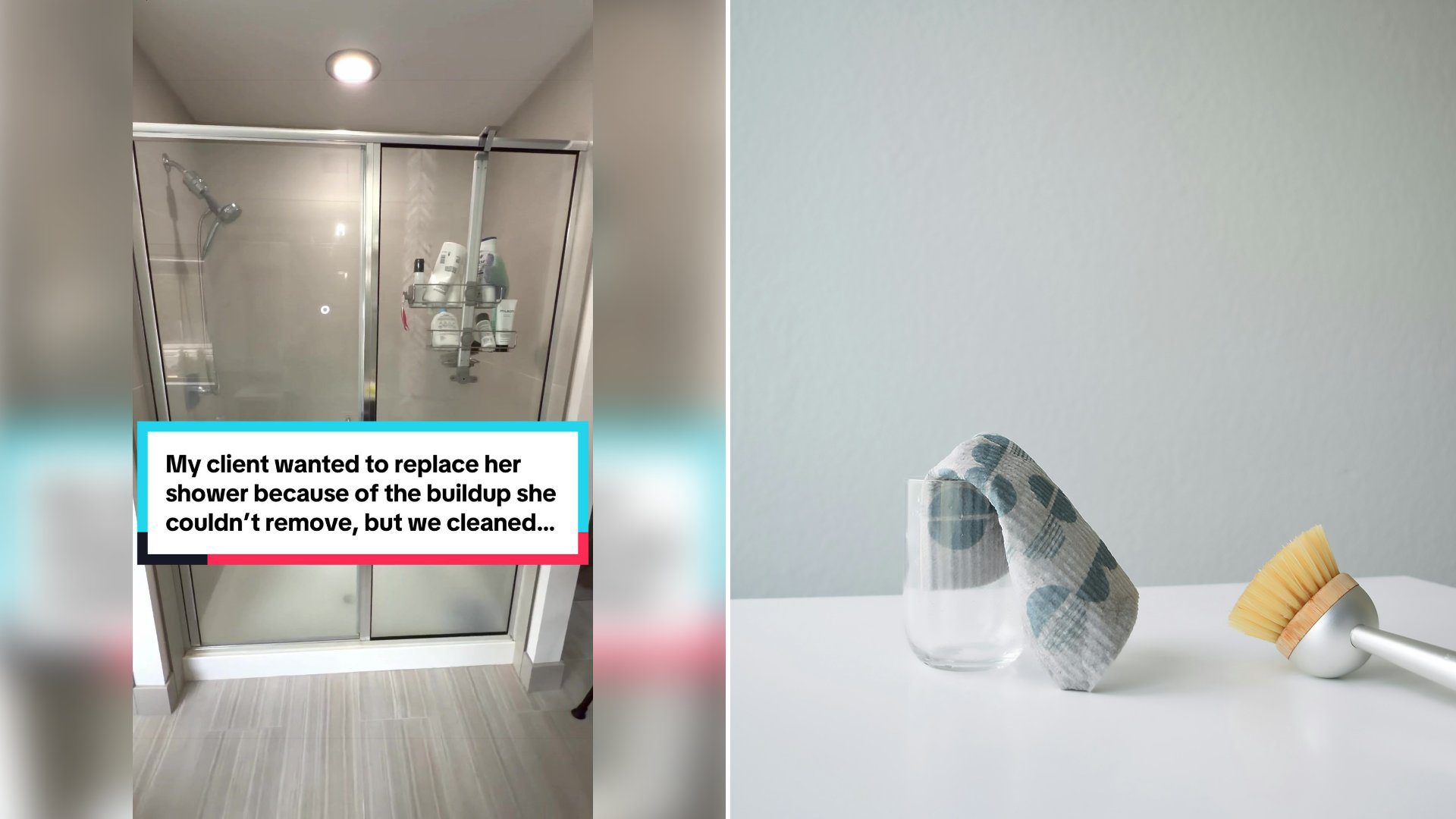
A video from the account edgecleaningwa opens with text laid directly over a shower that, by the owner’s own estimation, was headed for demolition: “My client wanted to replace her shower because of the build-up she could not remove. Here is what we did instead!” The creator, who describes a decade of professional house cleaning experience, walks through the restoration rather than the replacement, and the clip pulled in 61,200 likes, 316 comments, and more than 2,600 saves from people clearly filing this away for their own bathroom.
@edgecleaningwa My client wanted to replace her shower because of the build-up she couldn’t remove… Here is what we did instead!
The first step is diagnosis, not scrubbing. The buildup on a glass shower enclosure is rarely just one substance: there’s mineral scale left behind by hard water evaporating on the glass, and there’s soap scum and body-oil residue from actual use, and the two respond to completely different cleaners. Mineral deposits are broken down by a mild acid, which is why a vinegar solution works on hard water spots, while soap scum and oily film respond better to an alkaline or enzyme-based cleaner. Treating both problems with the same product is one of the most common reasons homeowners feel like they’ve scrubbed a shower for an hour with nothing to show for it.
Darkened grout lines get their own separate treatment, and for good reason: discolored grout often looks like mold or permanent staining, which is exactly what pushes people toward thinking a full shower replacement is the only fix. A grout-safe cleaner given several minutes to actually dwell and penetrate, combined with a stiff nylon brush rather than a metal one, lifts embedded grime without scratching or wearing down the grout itself. Glass fixtures and chrome hardware get a gentler pass: a glass-safe descaler or a simple 1:1 vinegar-and-water spray, wiped with microfiber and followed by a non-abrasive polish, which matches the care guidance glass shower manufacturers themselves typically publish for removing hard water spots without etching the surface.
The maintenance step at the end is arguably the part most people skip, and it’s the part that prevents the whole cycle from repeating. A quick squeegee pass on the glass after every shower keeps water from evaporating and leaving mineral deposits behind in the first place, which is advice echoed directly in manufacturer care guides for glass shower enclosures. A weekly spray of a mild cleaner or vinegar solution keeps soap scum from building into the thick, stubborn layer that takes real effort to remove later, and an annual grout reseal keeps moisture from working its way in and causing the kind of staining that looks, from the outside, like the grout itself has failed.
The broader point the video makes, implicitly, is one worth taking seriously before any bathroom renovation decision: a shower that looks ruined often isn’t structurally compromised at all, it’s just coated in buildup that was never matched to the right cleaner. Acid for minerals, alkaline for oils, mechanical agitation for embedded grime, and a sealant at the end to slow the next round, is a meaningfully cheaper path than demolition, and in this case it was the path that actually worked.
More from Decluttering Mom
- Cleaning Creator Sprays Cinnamon Water Inside Her Outdoor Bin to Keep Ants and Flies Away Then Buffs Shaving Cream Onto Her Oven in Five Home Hacks She Says No One Teaches You
- Cleaning Creator Squeezes Brown Grime Out of Her Oven Sponge, Washes Her Vacuum Canister in the Bathtub and Scrubs Green Garden Stone to Show Cleaning Things That Aren’t Already Clean
- Homeowner Sums Up Her Third Month in the House in 23 Seconds of Cleans, Scrubbing Grime Off the Garden Gate, Rust Off a Radiator and Cloudy Residue Off the Fireplace Glass