It is the cabinet everyone dreads opening: a jumble of plastic bases on one side, a slippery pile of lids on the other, and never a match when you need one. @allsortsorganizing, a professional organizer, has a simple fix that she admits is a bit of a hot take. Stop storing the lids separately.
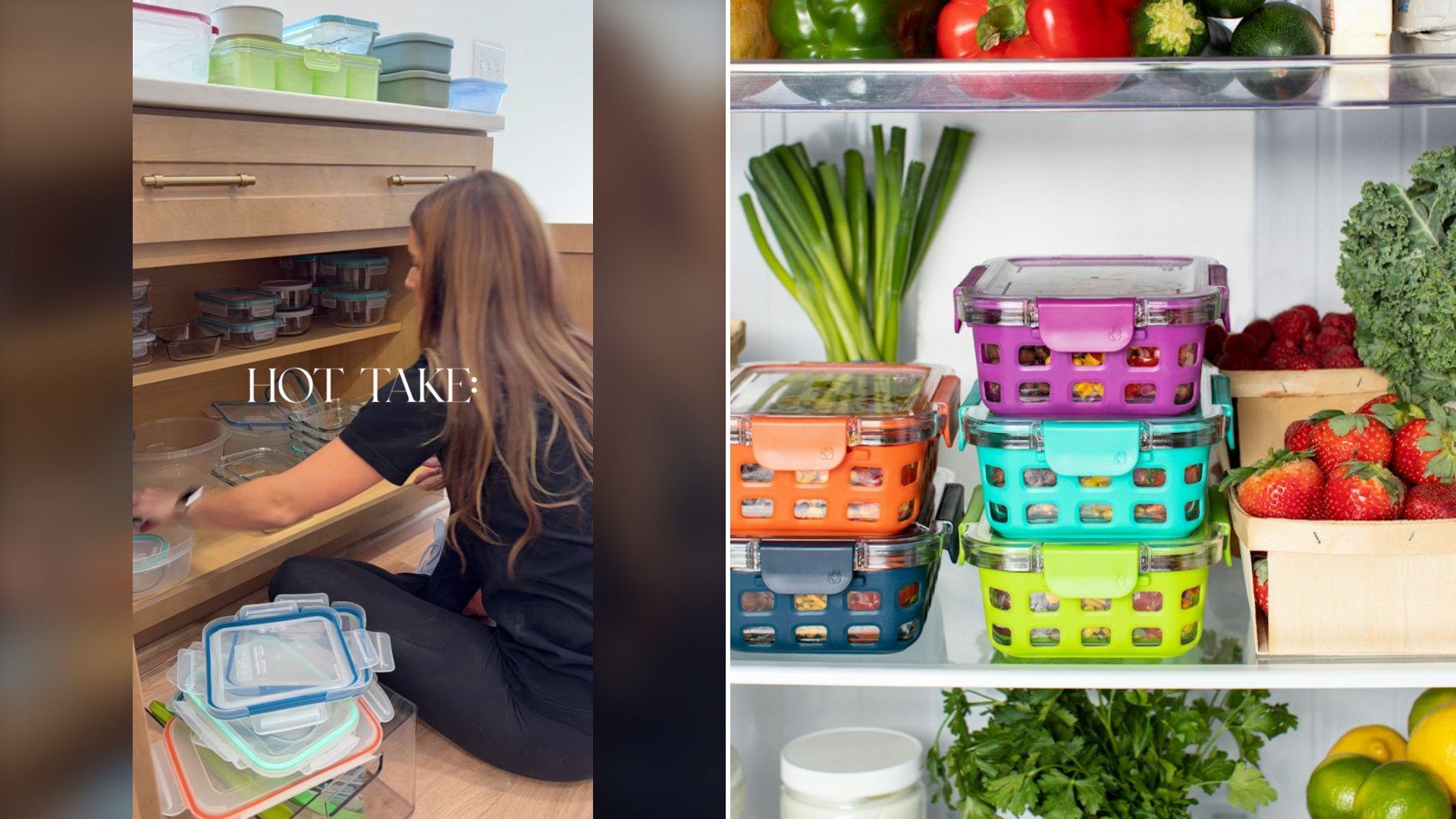
Her short video comes with a caption that gets straight to the point: “Why create an extra step?! Store the lids right with the containers.”
She lists the reasons in one breath. “You know every base has a match, you’re not searching through a separate pile, and you don’t need another organizer just to hold the lids.”
Then comes the blunt part, the rule that will make some people wince and others cheer. “And if it doesn’t have a lid?” she writes. “See ya.”
She sums up her whole philosophy with one line: “Simple systems > extra steps.” She even tagged the post as a hot take, knowing full well that plenty of people swear by nesting their containers and filing their lids in a rack.
@allsortsorganizing
Why Keeping Lids On Works
The popular approach of nesting all the bases together and storing lids separately does save space. But it creates a daily hunt. Every time you pack leftovers, you have to dig for the matching lid, and the missing ones are only discovered when the soup is already cooling on the counter.
Keeping each lid on its own base removes that hunt entirely. Grab a container and it is ready to go. You can also see at a glance how many usable containers you really own, which is often fewer than the pile suggests.
And as she points out, it saves money. Lid organizers, racks and dividers are sold everywhere, but if every lid already lives on its container, there is nothing left to organize.
The trade-off is that containers with lids on take up more room than nested bases. The answer is not a bigger cabinet. It is fewer containers. Most households use a handful of favorites over and over, while the rest sit untouched at the back.
How to Purge the Container Cabinet in 20 Minutes
If your cabinet is due for a clean-out, here is a quick way to do it.
Empty everything onto the counter. Pull out every base and every lid, including the ones in the dishwasher, the fridge and the car.
Play the matching game. Snap each lid onto its base. Anything left over, whether an orphan lid or a lidless base, goes in a pile to leave the kitchen. In her words, “See ya.”
Check the condition. Toss anything cracked, warped, melted, heavily stained or holding onto smells. A lid that no longer seals tightly is no better than a missing lid.
Count what you actually use. Think about a typical week of leftovers and packed lunches. Keep enough to cover that, plus a few extras, and let the rest go.
Store them ready to use. Stack the lidded containers by size, largest on the bottom, or line them up in a deep drawer where you can see them from above.
Lidless bases do not always have to go straight to the trash. Some make handy drawer dividers, a catch-all for screws in the garage, or a tray for craft supplies. Just be honest about whether you will really use them that way, or whether they will become clutter somewhere else.
Choosing Containers That Stay Easy
When it is time to replace containers, a few choices make the lids-on system easier to keep up.
Pick one set and stick with it. Containers from the same line usually stack neatly, and many sets use one or two lid sizes across several depths, which makes matching quick.
Choose square or rectangular shapes. They use cabinet and refrigerator space far more efficiently than round ones.
Consider glass. Glass containers do not stain or hold onto odors the way plastic can, and many are safe for the oven, microwave and dishwasher. Check the manufacturer’s label, since lids often have different temperature limits than the bases.
Follow the label for plastics. If you keep plastic containers, use them as the label directs for microwave and dishwasher use, and replace them once they become scratched, cloudy or warped.
Label for the freezer. Keep a roll of masking tape and a marker in the container drawer. Writing what is inside and the date on the lid keeps leftovers from turning into mystery containers, and it makes the weekly fridge clean-out much faster.
Watch the freebies. Takeout tubs and deli containers tend to pile up quietly. Keep a small, set number and recycle the rest according to your local program’s rules.
A Small Change With a Big Payoff
It is a tiny habit, but the container cabinet gets opened almost every day. Ending the lid hunt saves a little frustration each time, and over a year that adds up.
As @allsortsorganizing puts it, simple systems beat extra steps. Match them up, snap them on, and say goodbye to the ones that have lost their partners for good.
More From Decluttering Mom
- Minimalist Trends That Make One Woman Furious Are Listed by a Channel That Says Less Is Not Always More
- Professional Says You Do Not Need Another Bin You Need Six Decluttering Rules That Actually Work
- Professional Organizer Cleared Out A Family Of Five’s Pantry And Rebuilt It With Cube Baskets Turntables And A Riser For Canned Goods