

Professional organizers see the inside of a lot of homes, and they usually choose their words carefully. But @lauren.spruced decided to say the quiet part out loud. If she were not afraid of hurting anyone’s feelings, she says, here is what she would tell every client: you have too much stuff.

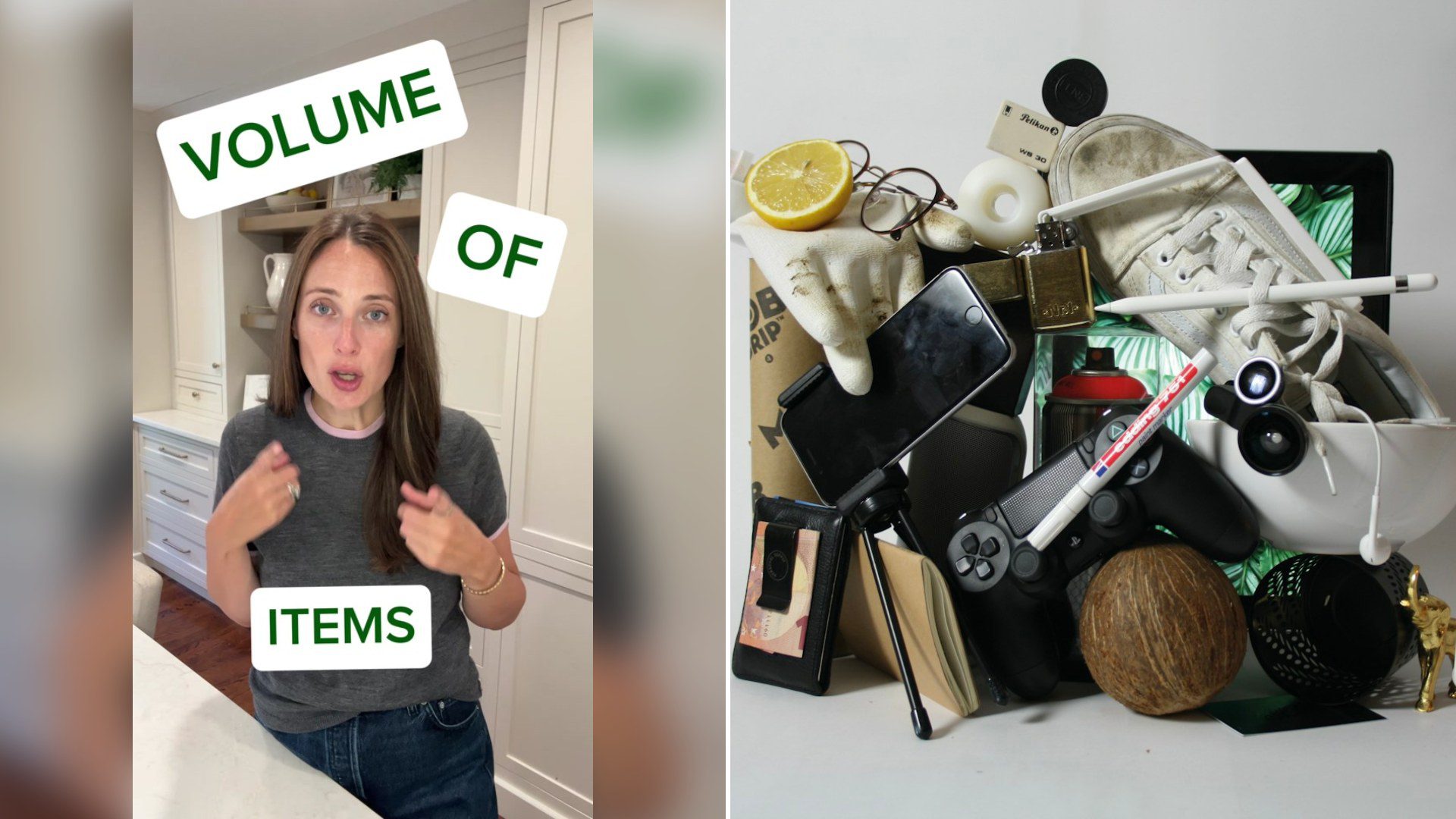
It is a short message, and it carries a lesson that may save you a lot of money on storage products. Here is what she said.
@lauren.spruced
“You Have Too Much Stuff”
She says the reason a home does not stay clean and organized is the volume of items in it. It is not a lack of effort, and it is not a lack of the right products. It is the number of things trying to live in the same space.
She follows with a point that will be familiar to anyone who has wandered the aisles of a home goods store: you can buy all the pretty matching bins and beautiful colored labels you want, but they will do nothing if you do not get the volume of items under control.
She admits that this might feel overwhelming. Her caption adds that she wants to help anyone who feels overwhelmed by their home, and she says the number one issue standing in the way of a clean and organized home is the amount of belongings. She offers easy tips and free advice on her page for how to declutter, where to start, what to keep and what to let go. And she promises that getting the volume under control is going to feel amazing.
Why Storage Products Cannot Fix It
It is easy to understand why people reach for containers first. A set of matching baskets looks tidy in a catalog. Labels are satisfying to make. Buying them feels like action, and for a day or two the space looks wonderful.
But a container does not make an item disappear. It only gives the item a box. When a house holds more than the shelves, closets and drawers can handle, bins start stacking on top of bins. Soon you need more bins to hold the bins, and you are right back where you started, only with more things to dust.
A useful way to think about it is that every home has a natural capacity. Once belongings go beyond that capacity, no storage system can keep up. The only real solution is to bring the volume back to a level the home can hold with some room to spare.
How to Tell When the Volume Is Too High
You do not need a professional to spot the signs. Here are some common ones.
- Drawers and cabinets that are hard to close or open without a struggle
- Surfaces that fill up with piles again within days of being cleared
- Duplicate items you keep buying because you cannot find the first one
- Closets where hangers are so tight you have to pull the rod apart to get something out
- A “catch all” spot, like a spare room, garage corner or closet floor, that nobody wants to open
- Bins and baskets that are overflowing even though you added them recently
If three or more of these sound like your house, volume is probably the main problem, just as she says.
Getting the Volume Under Control
The good news is that you do not need to solve the whole house at once. Here is a gentle plan that fits the advice she gives.
Start with the easiest categories
Begin with things that carry little emotion: expired products, old paperwork you no longer need, mismatched containers, worn out linens and clothes that no longer fit. Success here builds momentum for tougher categories later.
Do not buy storage until you finish
Resist the urge to shop for bins at the beginning. Wait until you have cut back what you own, then measure the space and buy only what you need. Many people find they need fewer containers than they expected, or none at all.
Give every category a limit
Decide how much space you are willing to give to each type of item. One shelf for towels. One drawer for pans. One box for keepsakes. When the space is full, something has to go before something new comes in.
Use a one in, one out habit
When you bring home something new, such as a pair of shoes or a kitchen gadget, let one similar item leave. This keeps the volume from creeping back up.
Keep a donation bag handy
Place a bag or box in a closet or the garage. Whenever you notice something you no longer need, drop it in. When the bag is full, take it to a donation center right away.
Being Kind to Yourself While You Do It
Hearing that you have too much stuff can sting, as she admits. But there is no shame in it. Most of us collect belongings over decades of life. Gifts, hand-me-downs, bargains, hobbies, children’s belongings and good intentions all add up. Nobody sets out to have a cluttered home.
It also helps to remember that stuff has a cost beyond the price tag. It takes up space, time and energy. Every item has to be cleaned, moved, sorted and stored. The fewer things you own, the less of your day goes to caring for them, and the more you have left for the people and activities you enjoy.
There is a hopeful side as well. Many families report that once they reduce the volume, daily tidying becomes dramatically easier. Putting things away takes a minute instead of an hour. Cleaning is faster because there are fewer objects to move. Guests are easier to welcome because every surface is not covered.
The Takeaway
Her one blunt sentence carries a lot of wisdom. If your home refuses to stay organized, the answer may not be a new system. It may be a smaller number of things. Try it this week by choosing one drawer, one shelf or one closet, and removing a third of what is inside. Notice how much easier it is to keep that space tidy, and let that feeling carry you to the next one.