

Plenty of parents have stood in a messy living room and thought the same thing: I do not know what to do anymore. In a stitched response to a cleaning creator who voiced exactly that feeling, professional organizer @kayleenkellyorganize offers a plan so small it is almost hard to believe it works. Set a timer for fifteen minutes, pick one room, and for now only pick up trash off the floor.

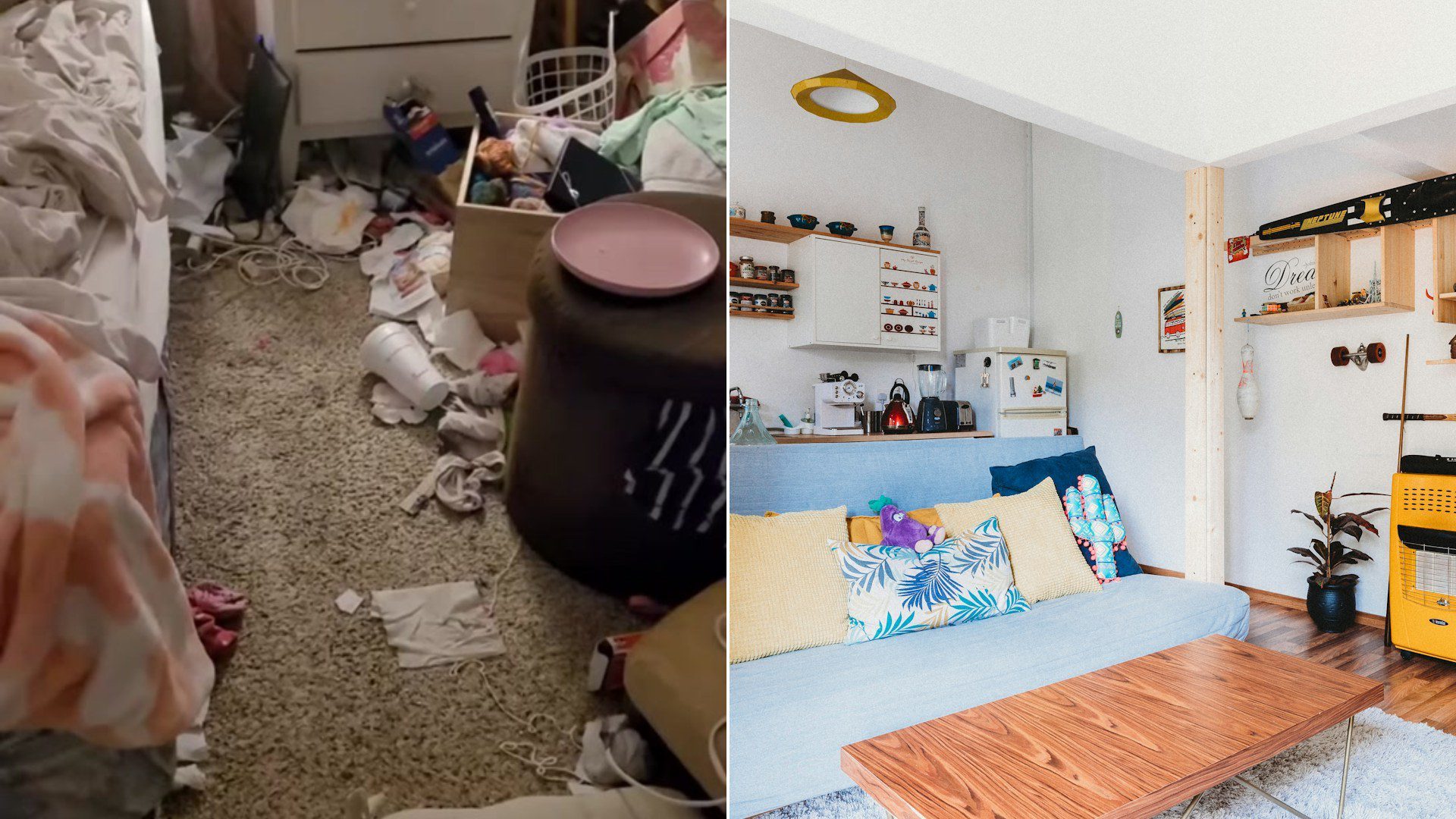
She opens with kindness, telling the overwhelmed person that she knows it is tough and that she can absolutely do it. She also shares that she has ADHD herself, which is why she builds her advice around how a busy, distractible brain actually behaves instead of how we wish it would. Here is her method from start to finish.
@kayleenkellyorganize
Step one: set the timer and shrink the job
The first move is to grab your phone and set a fifteen minute timer. She says the clock gives you focus and a sense of urgency, which helps the brain settle on one task. Then she narrows the target further. You are only working in the living room, and your only job is the floor.
Take a trash bag, start in one corner and pick up the trash. That is all. You are not organizing, not deciding what to keep, and not wiping anything yet.
Step two: make one pile and sort it by room
Once the floor is free of trash, she says to gather all the random items left behind. You can even sweep them into a single pile so the rest of the floor is clear. Then sit down on the floor and sort that pile by the room each item belongs in. Keep the categories broad: a kids room pile, a bathroom pile, a kitchen pile, just the main areas of the house.
When the piles are sorted, carry each one to its room. She is firm about the next part: nobody is asking you to put things away in the dresser or the drawer, and nobody is asking you to figure out where every small item lives. Putting it in the correct room is your only responsibility for now.
Step three: check in, then do surfaces
When the fifteen minutes are up, she asks you to check in with yourself. How do you feel, and do you have another fifteen minutes in you, or even ten? If you do, repeat the same process on the surfaces in the living room. Gather the trash first, collect the random leftovers, and break them down by the room they belong in. She says this approach gets one room under control very quickly, and that you will be able to breathe and take a moment for yourself. When you are ready, move on to the kitchen.
Why perfectionism is the real obstacle
The part of her message that may resonate most is about perfectionism. She says it tends to work against people with ADHD: if the space is not perfectly tidy and organized, the thinking goes, then it is not worth starting. She wants you to push against that voice and tell yourself that it only needs to be okay, that it is good enough for who it is for and good enough for what it is. The goal is to gain control of the space so that you feel better right now.
You do not need an ADHD diagnosis to see yourself in this. Plenty of parents, caregivers and grandparents hold off on cleaning because they cannot do it all the way. The result is a mess that grows while everyone waits for a free Saturday that never arrives.
Why short timers work for almost everyone
Timed work sprints are popular with organizers for a simple reason: a clear finish line makes a task feel safe to begin. Fifteen minutes is short enough that you cannot talk yourself out of it, and long enough to see a visible difference on a single floor. You can stop when the buzzer goes and feel you succeeded, or keep going if you have energy.
Her approach also removes the three decisions that usually stall a cleanup: what to keep, where it goes, and whether to buy a better organizer. By sending every item only as far as the correct room, you postpone those decisions to a day when you have more energy. Nothing has to be perfect, and nothing has to be final.
A simple plan you can try this week
- Pick the room you see most. The living room, kitchen or entryway gives the biggest emotional payoff.
- Keep a trash bag and a timer ready. If you have to look for either one, you are less likely to start.
- Do floors before surfaces. Clear floors make a room feel calmer almost immediately, and you can walk through safely.
- Sort by room, not by category. Do not worry about perfect homes for each item. A basket by the stairs for things that go up is enough.
- Take the check-in seriously. If you are tired after fifteen minutes, stop. A small win counts and you can repeat it tomorrow.
- Save big decisions for later. Donating, purging and buying storage can wait until the surface mess is gone.
- Repeat on a schedule. One timed session after breakfast or right before the evening news can keep a cleared room from sliding back.
Letting your brain lead
She closes by asking people to work with their brain and not against it, one room at a time with timers, and she promises that you have got this. She also invites anyone who needs help to reach out to her by direct message. For an overwhelmed mom looking at a floor she can no longer see, that may be the most useful part: you do not need to become a different person to get your house back. You need a timer, a bag and permission to call it good enough.