

“Second pass. Second pass.” That is how Joyce, a retired Texan who shares her decluttering on the Joyce’s Heart and Home Declutter channel, opens a walkthrough. The idea is simple. Sometimes a room feels overwhelming because there is a lot in it and it serves a lot of different purposes. So Joyce goes back through for another round.

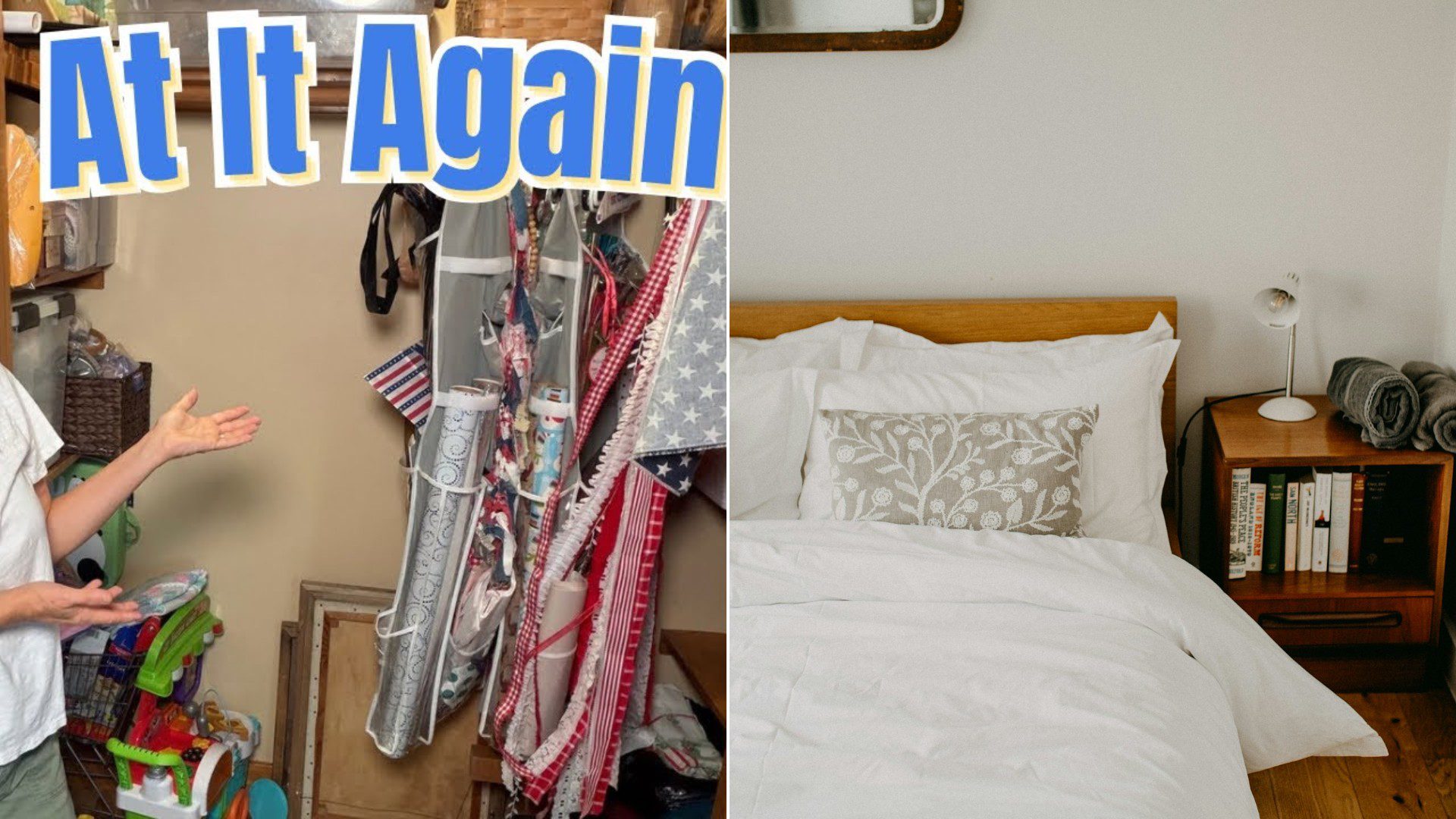
This is part of a series on second passes of decluttering and deep cleaning. Joyce has already done the master bedroom and one guest bedroom. Now it is on to the other guest bedroom, which Joyce calls the Africa room. The plan is to declutter first and deep clean second.

Start With The Bulky Stuff
Here is the best tip in the whole walkthrough. If you are having difficulty getting started, Joyce says, and there is stuff that is bulky that you can deal with first, do that, because then you see progress. A big item that leaves the room makes an instant difference, and that early win helps keep you going.
By the end, Joyce points out how much more open the room already looks. Not every bin has gone back in, and Joyce does not plan to put them all back. The second tip is just as handy: if something hangs you up, go to the next thing. You can always circle back to it.
Things With A Better Home Elsewhere
A lot of what leaves the room is not trash. It is simply in the wrong place or no longer needed. Joyce’s craft supplies, for example, all live in a closet, so they do not need to be in the guest room too. Ribbon meant for canning jars is being donated to a library to sell, and the empty bins may be saved for helping other people in the future.
Joyce also asks hard questions about gift supplies. Joyce says they do not give a lot of gifts now that they are retired, and does not need a ton of Christmas and non Christmas wrapping paper and gift bags. Joyce admits to still doing little things once in a while, and anything made that does not stay can be sold by the thrift store.
The Little Wagon
One of the more heartwarming moments involves a little wagon. Joyce thinks the kids have outgrown it. There is still one little one around, but Joyce has had the wagon for about two years and it has never been used. So the plan is to donate it, and Joyce is going to see if Joyce’s mother in law can use it for her little church kids. Joyce describes it as one of those procrastination, good intentions things that never got done.
The wagon would be dropped off the next time Joyce goes to that town, probably in about a month. That is a good example of a smart decluttering move: rather than let a useful item sit, find a specific person who will use it, and set a date.
The Pieces That Make It Harder
Not everything is easy. Joyce is still holding on to some neckties that could become a craft. Joyce showed the idea to a sister and a niece, a project that could be done with grandpa’s ties and dad’s ties. Those are the kinds of items with feelings attached, and it is okay to take your time with them.
Then there is a Hobby Lobby purchase that cost about $6. Joyce wonders aloud whether to keep it or donate it. And Joyce mentions a rule of thumb some people use: if you can replace an item for under $10 or under $20, just let it go. Joyce adds that this makes sense.
Try A Second Pass At Home
If you decluttered once and the room still feels crowded, a second pass is a great idea. You already know what is easy to let go of. Now you can look at what is left with fresh eyes.
- Do the bulky items first. Seeing a big change in the room gives you momentum.
- Move things to where they belong. If craft supplies have a closet, they do not need to live in the guest room too.
- Match items with people. A wagon for a church children’s group, ribbon for a library sale. A named recipient makes it easier to say goodbye.
- Use the replacement test. If you can replace it cheaply and you do not use it, let it go.
- Skip the sticking points. If something hangs you up, move to the next thing and come back later.
- Be honest about your life now. Joyce is retired and does not give many gifts, so a mountain of wrapping paper does not make sense anymore.
Why Seeing Progress Matters
Many of us have a spare room that slowly became a catch all. It started with a few bins, then a box or two, and then nobody could walk in comfortably. The temptation is to say the job is too big and put it off, which is exactly the procrastination Joyce describes.
What makes Joyce’s approach useful is how ordinary it is. There is no big reveal and no perfect system. There is a retired person in Texas walking through a room, making one decision after another, and giving things to people and places that can use them. If a hard decision comes up, Joyce moves on to the next thing.
So pick the biggest, bulkiest thing in your own spare room. Take it out first. Then look at how much more open the space looks, and let that feeling carry you to the next item.
More Stories You May Like
- Woman Decluttering Her House Before Downsizing Draws a Number From One Bucket and a Room From Another to Decide Exactly What to Throw Away Each Day for Thirty Days
- Professional Organizer With ADHD Tells Overwhelmed Moms To Set A Fifteen Minute Timer And Only Pick Up Trash Off One Living Room Floor
- Consuming Too Much Decluttering Advice Can Make Decluttering Feel Harder, Because Your Brain Gets Overloaded If You Never Act On It