Robert F. Kennedy Jr is preparing to upend the familiar food pyramid, replacing decades of carbohydrate-heavy advice with a daily template that elevates whole foods, animal products and fewer ultra-processed staples. His allies frame the shift as a long overdue correction to nutrition science, while critics warn that the new guidance could confuse Americans about what they should actually eat to stay healthy.
The stakes are unusually high because Kennedy’s Make America Healthy Again agenda is designed to reach into school cafeterias, grocery budgets and even military mess halls, turning a philosophical debate about fat, sugar and meat into concrete rules about what ends up on the plate each day.
The MAHA vision behind a new food pyramid
The planned overhaul of the food pyramid is rooted in Kennedy’s broader Make America Healthy Again, or MAHA, platform, which casts chronic disease as a policy failure rather than a matter of individual willpower. Federal health officials have said that HHS and the USDA will use the next iteration of the Dietary Guidelines for Americans to promote MAHA priorities, explicitly tying nutrition advice to goals like lowering obesity, diabetes and heart disease across the population, according to an overview from HHS and USDA.
That same MAHA blueprint emphasizes what it calls “radical transparency,” promising to show how evidence is weighed and how industry influence is handled as the guidelines are drafted. Analysts tracking chronic disease policy note that 2026 is when Kennedy’s MAHA vision will be tested in practice, with the new nutrition rules expected to shape everything from insurance incentives to food assistance programs, and they warn that the choices made now could either curb or worsen the higher risk of heart disease associated with poor diets, as highlighted in a review of MAHA issues to watch.
What Kennedy’s daily plate could look like
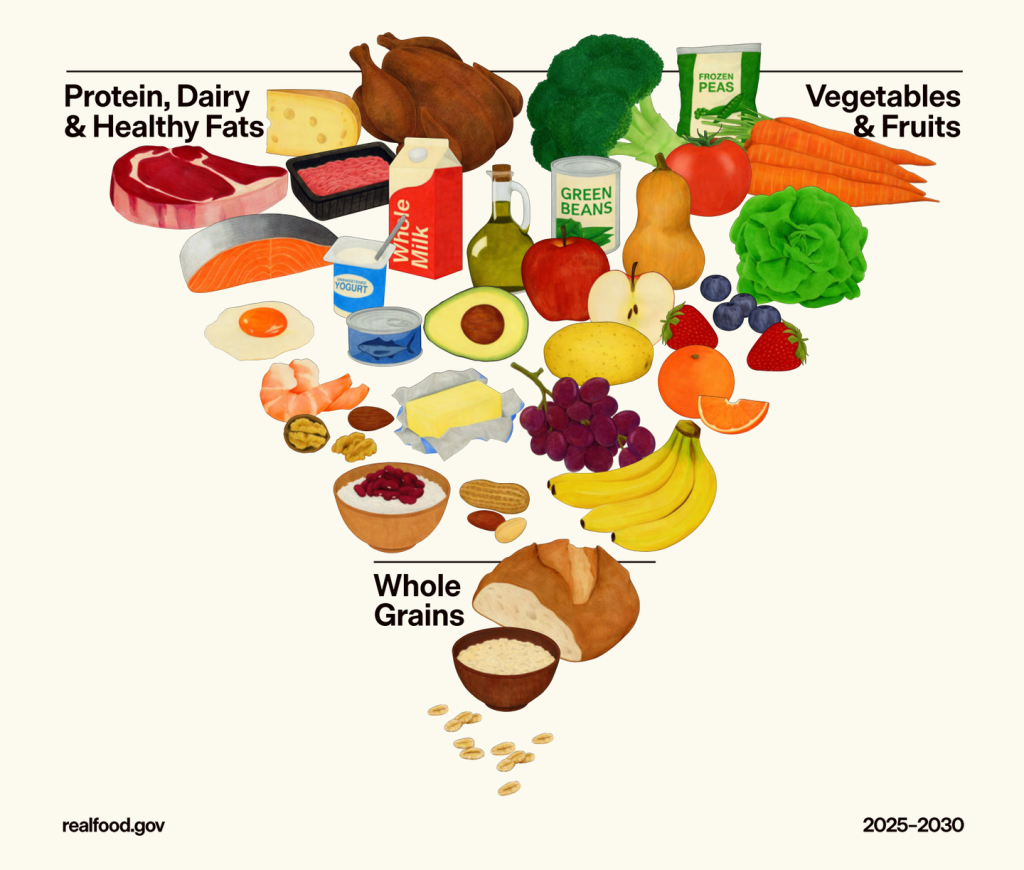
Although the final graphics have not been released, Kennedy and his team have sketched a daily eating pattern that looks very different from the grain-heavy pyramids of the past. Reporting by Ariana Baio describes how RFK Jr has signaled that the new framework will prioritize whole, minimally processed foods, with a strong emphasis on fresh meat and vegetables as everyday staples rather than occasional side dishes, a shift that would move animal protein closer to the base of the national diet, according to Baio’s account of what he wants Americans eating.
At the same time, Kennedy has repeatedly criticized the role of refined grains and sugary products in earlier guidelines, arguing that the government effectively nudged families toward cheap, processed calories. A separate summary of his plans notes that RFK intends to make major changes to the food pyramid so that heavily processed snacks and sweetened beverages are pushed to the margins of the plate, while whole foods, including fresh meat and vegetables, are presented as the core of a healthy routine, reinforcing his pledge to reset the government’s daily recommendations.
From low fat to “real food”: how the science fight shapes policy
The Kennedy team is positioning its new pyramid as a break from the low fat orthodoxy that dominated nutrition policy for decades, and that pivot is already colliding with contested science. A recent analysis of saturated fat research reported that Authors behind a major study say they have confirmed heart risks from higher saturated fat intake, while others argue the same data can be read as support for MAHA-style guidance that focuses more on cutting ultra-processed carbohydrates than on driving saturated fats down to a strict threshold, a debate that has direct implications for how the guidelines treat butter, cheese and red meat, according to coverage of the saturated fat controversy.
Health Secretary Robert F. Kennedy Jr has already previewed how he interprets that evidence, telling audiences that the next Dietary Guidelines for Americans will move away from blanket low fat messaging and instead target industrially processed foods and added sugars as the main culprits in chronic disease. A health policy roundup noted that Perna of Modern Healthcare and Makary and Neill of the Washington Examiner have described how the draft MAHA framework would still cap saturated fats, but at a level that reflects Kennedy’s skepticism of past limits, while also tightening restrictions on refined carbohydrates, according to their summary of the evolving fat targets.
Why MAHA’s meat-forward message alarms some experts
Not everyone in the nutrition world is comfortable with a federal stamp of approval on more animal products, even in the name of cutting processed food. Thought leaders in the MAHA movement argue that animal products have been unfairly vilified and some advocate low carb, high fat patterns that feature steak, eggs and full fat dairy as daily staples, but other researchers caution that such advice could backfire for people at high risk of heart disease, a tension captured in an analysis of why the new guidelines could be controversial.
Some health officials have also raised concerns about specific recommendations Kennedy has touted, including the possibility of encouraging higher intakes of certain animal fats and organ meats, and they warn that such moves could clash with long standing cardiovascular guidance if not carefully framed. Reporting on the internal debate notes that Some experts inside and outside government are pressing for clearer guardrails on saturated fat and cholesterol in the final document, even as Kennedy insists that the new set of guidelines must align with MAHA’s emphasis on whole foods and metabolic health, according to accounts of the pushback to his dietary recommendations.
How the new pyramid could reshape daily life
Because the Dietary Guidelines for Americans drive everything from school lunch menus to food stamp purchasing rules, Kennedy’s reworked pyramid will not stay on paper. A campus discussion of the 2025 to 2030 Dietary Guidelines for Americans noted that Under Kennedy’s leadership, the federal government’s next iteration of the guidelines is expected to be unlike any other, with nutrition scientists at Cornell warning that a stronger tilt toward MAHA principles could change how universities design dining hall offerings and how public health campaigns talk about carbs, fats and protein, according to their assessment of the coming policy shift.
Health Secretary Robert F. Kennedy Jr has already previewed some of these downstream effects in public appearances, outlining MAHA dietary guidelines for 2026 that aim to reduce heavily processed foods in federal feeding programs and increase access to fresh meat and vegetables in settings like school cafeterias and military bases, a direction he described in remarks about his 2026 dietary guidelines.
What Americans should watch for as the guidelines land
As the final guidelines approach, nutrition watchers are focusing on a few key questions that will determine what Americans are told to eat every day. One is how aggressively the new pyramid will promote low carb patterns, a topic that has already surfaced in televised discussions of how the next set of Dietary Guidelines for Americans could look very different, with commentators noting that Oct briefings for Americans have hinted at a stronger role for protein and fat relative to starches, as seen in early coverage of Kennedy’s planned changes.
Another is how the MAHA framework will handle the explosion of GLP-1 drugs for weight loss and diabetes, which are changing how clinicians think about appetite and metabolism. Analysts tracking chronic disease policy say that in 2026, as GLP medications become more widespread, the interaction between pharmacology and diet will be a central test of How far Kennedy’s MAHA agenda can go in reducing obesity and related conditions without oversimplifying the complex links between food, hormones and long term risk, a concern highlighted in a review of three MAHA issues to watch.
Behind the scenes, health policy specialists are also watching how the drafting process incorporates feedback from clinicians and researchers. A health policy roundup that cited Perna, Modern Healthcare, Makary and Neill described how earlier proposals to tighten saturated fat limits to just 6 percent of calories sparked intense debate, and the final language will signal whether Kennedy is willing to compromise with more traditional cardiology voices or will fully embrace MAHA advocates who want to rehabilitate certain animal fats, according to their account of the internal negotiations.
For now, the clearest throughline is Kennedy’s insistence that Americans move away from ultra-processed foods and toward what he calls “real food” as the foundation of daily eating. Ariana Baio’s reporting on Jan discussions of the new pyramid underscores how RFK and his allies see fresh meat and vegetables as the centerpiece of that shift, while critics counter that the details on fats, grains and sugar will determine whether the new guidance truly improves public health or simply trades one set of controversies for another, a debate that will come into sharper focus once the Dietary Guidelines for Americans are formally released after Baio’s early look at Kennedy’s plans.
More from Decluttering Mom: