A dresser and nightstand set bought for $150 does not sound like much. But a furniture flipper who posts as @jessijeanhome turned one into a $2,000 sale, and the way it happened is a lesson in more than paint. A buyer was already waiting before she even started the work.
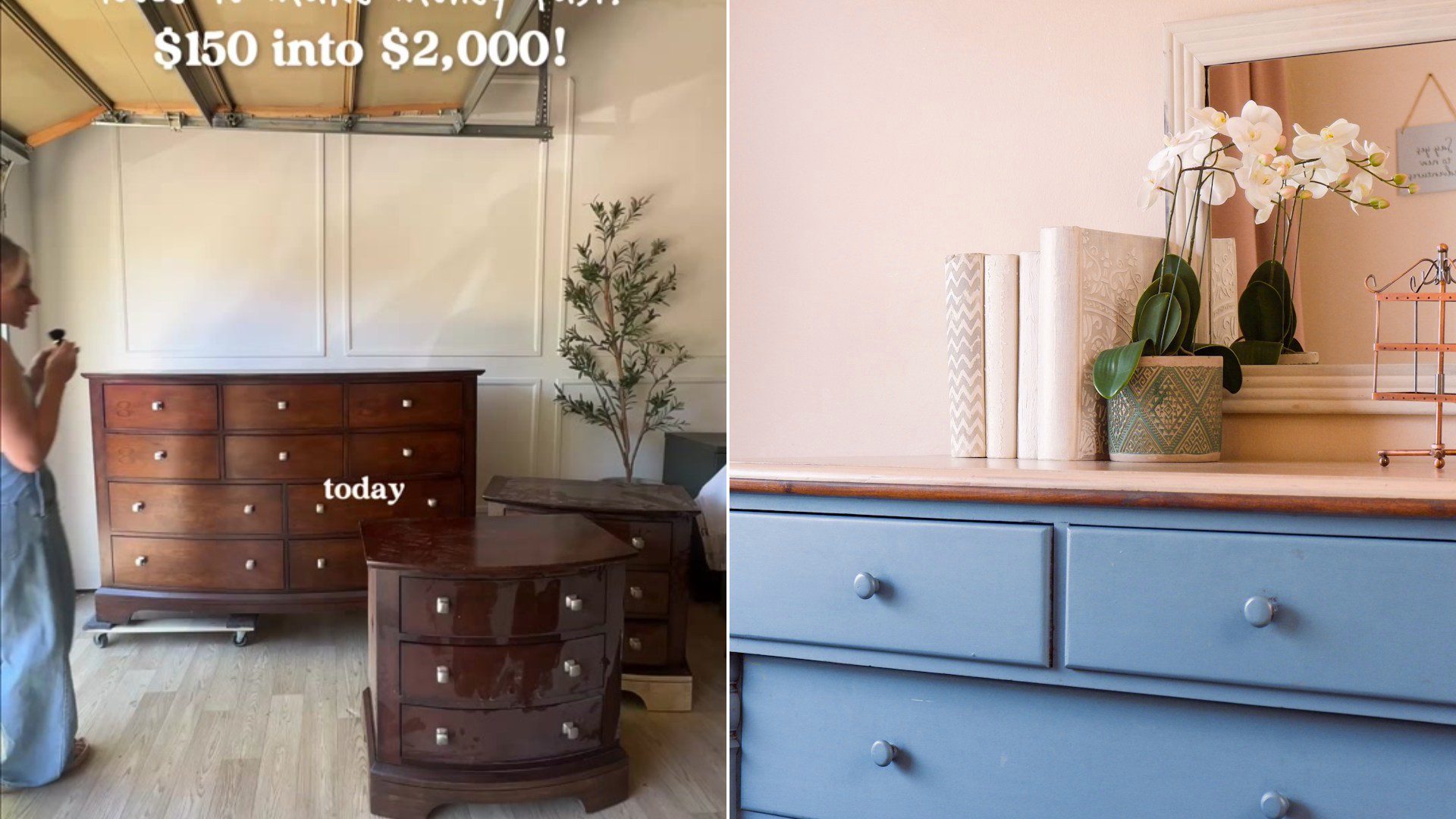
According to the caption, she would have listed the set for $1,700, the same price she got on an earlier set. But the buyer said she would pay more if the piece was finished before the flipper left on vacation, so she pitched $2,000, and the buyer agreed. The whole project took about 18 to 20 hours.
@jessijeanhome
How the deal came together
She explains that she sold her last set for $1,700 and had multiple interested buyers, which gave her beginner confidence a boost. This new set came out in the exact same color combination as the first. One of the people who had seen her earlier flip, but did not get it in time, asked if she would find and refinish another set for her. That buyer agreed to the $2,000 price before the work began.
She also notes that her next flip, another custom order, came from a different Facebook Marketplace buyer. In other words, one finished piece led to a second, and that one led to a third. For a small furniture business, a good before and after is better than any ad.
Her step by step method
Her advice is for anyone who wants to repeat the process. Here is how she lays it out.
Step one: shop the right places. Search Facebook Marketplace, auctions and estate sales. She looks for dressers, sideboards and nightstands, ideally solid wood or mid-century styles. Those pieces tend to be well built and tend to be what buyers are searching for.
Step two: clean and strip the hardware. Once the furniture is home, she cleans every surface with a degreaser and removes the hardware. Old furniture often carries years of grease, wax and grime, and paint will not stick to it.
Step three: pick a style. Before she touches the piece again, she decides what look she is going for. She had a color combination that had already sold well, and she repeated it.
Step four: sand. She uses an orbital sander to lightly scuff sand the entire piece. The idea is not to take it down to bare wood, just to dull the old finish so primer can grip.
Step five: prime, paint and seal. She applies primer, a couple of coats of paint and a few coats of a matte polyurethane. A matte clear coat gives a modern look and protects the surface from daily wear.
Step six: add a detail. If you want to get fancy, she says, glue a product called pole wrap onto the drawer fronts and stain it along with the base in the same color. That adds texture, which can help a piece look high end.
Step seven: hardware and staging. Put the hardware on, then stage the piece so it looks expensive. Good lighting, a clean background and a few simple accessories in photos can make a big difference in what people are willing to pay.
The math behind the story
It is tempting to read the headline and see a $1,850 profit. Be careful with that. The $150 purchase price is only the beginning. Paint, primer, polyurethane, sandpaper, hardware, trim and a degreaser all cost money, and the flipper also put in 18 to 20 hours of work. The caption does not give her material costs, so we cannot say what she netted. As a rough illustration only, if supplies came to $300, that would leave about $1,550, or somewhere around $80 an hour for 19 hours of work. That is a guess, not her number, but it shows why a well chosen flip can pay far better than many side jobs.
The bigger point is that the sale price is not just about paint. It is about finding the right piece, knowing a buyer, and finishing it well. And it is worth remembering that she had an earlier success to point to, which is what brought this buyer to her in the first place.
What makes a flip worth the time
- Start with demand. She had already sold a similar set and had several interested buyers. Look at what is actually selling in your area before you buy.
- Pay attention to the wood. Solid wood and mid-century pieces hold their value, and they can usually be sanded and repainted. Particle board often cannot.
- Take good before and after photos. Her buyer found her because she saw the earlier flip.
- Be clear about the timeline. A deadline, like a vacation, gave her a reason to ask for more, and the buyer was willing to pay for speed.
- Know your number. Track what you spend and what you earn, so you can see your real hourly rate.
Safety and common sense
If you decide to try this at home, work in a well ventilated space and wear a mask when sanding. Lead based paint was banned for residential use in the United States in 1978, so a very old piece may have lead in its paint layers. If you suspect that, test the paint with a lead test kit before you sand it.
The takeaway
What stands out in this story is not the speed or the price tag. It is how a repeatable process, a recognizable style and a good reputation can turn a $150 find into something much bigger. And for anyone cleaning out a house, it is a reminder that a solid wood dresser sitting in a basement might be worth more than you think, either to sell as is or to hand to someone who can give it new life.