

Can you really declutter your life by asking one simple question? @danalitzel thinks so. In episode 11 of her series on 23 lessons she learned decluttering her life at 23, after decluttering her parents’ house, she tackles the thing she says stops most of us: scarcity thinking.

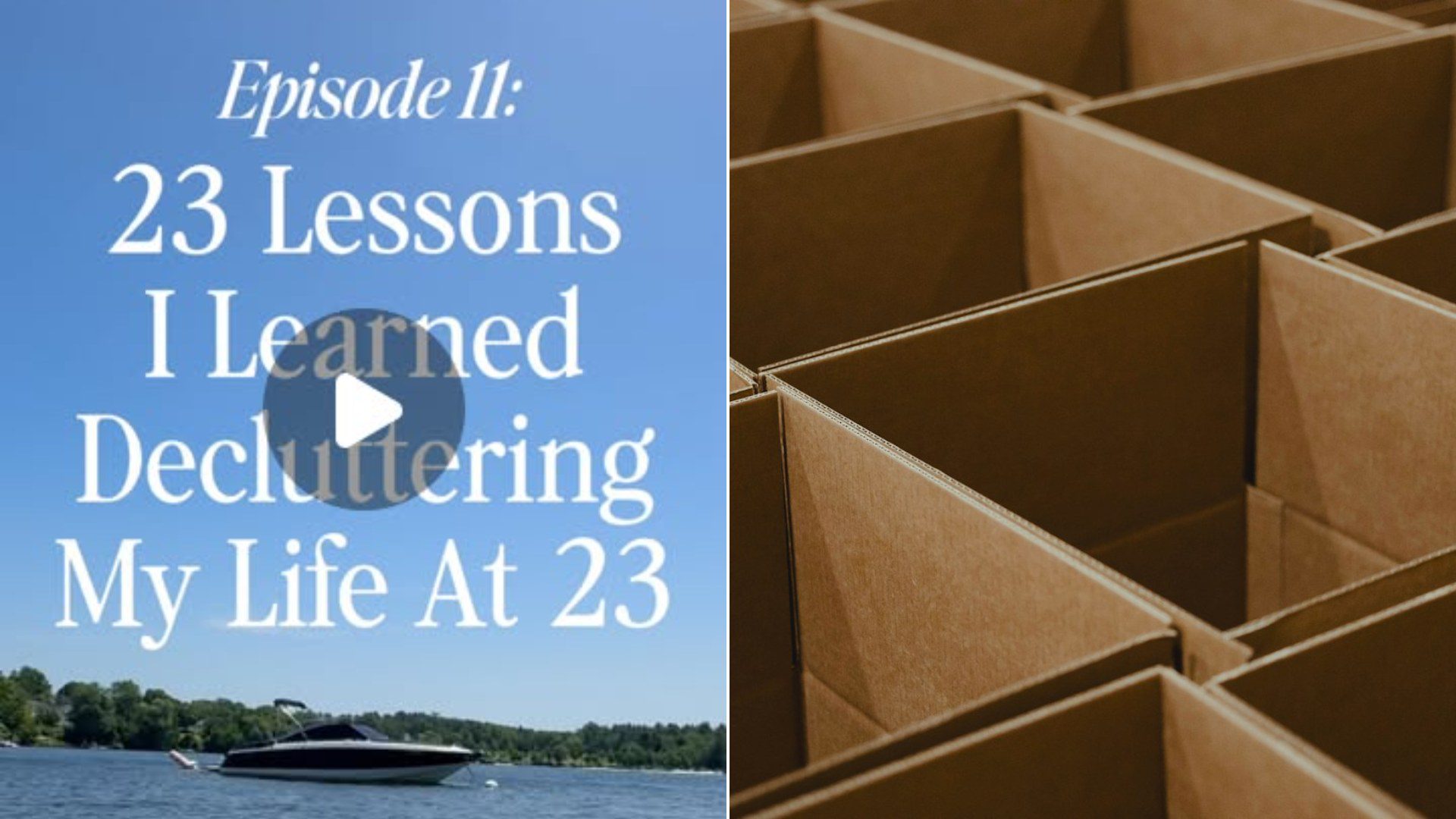
Her caption sums up the lesson. She says it was about breaking through the scarcity mindset, and she also reasoned that if an item was cheap, she could buy it again if she ever desperately needed it.
The Fear of Needing It Later
According to the creator, the reason many people cannot declutter is a scarcity mindset, the fear that you will need something later. It is a familiar worry. Plenty of us hold onto a cable, a jar or a spare gadget just in case, even when the item has been sitting untouched for years.
Her fix is a question she asked about every item: Have I used this in the last six months, and do I plan to use it in the next three? If the answer is no, she says, it is gone.
Looking at Things Objectively
She admits it is hard to look at your belongings objectively rather than emotionally. Her advice is to strip away the emotional importance, because without it an item is just an item. She describes decluttering as a form of detachment that takes practice.
To help, she offers three more questions. Does this provide me value outside of its emotional importance? Would I clean it off if it were covered in mess? And if anyone else in my family were cleaning this out, would they throw it away?
The first question separates usefulness from sentiment. The second tests whether you care enough to maintain it. The third offers an outside view, which can be a gentle reality check.
She ends the episode by saying that the next video is about shame.
Putting the Six Month Question to Work
The video does not go into a how to guide, so the tips below are general suggestions that fit her approach.
Start with a single category. Choose something easy, like kitchen gadgets or bathroom products, and hold each item while you ask her six month question.
Use the cheap and replaceable test. If something is inexpensive and easy to find again, the creator’s reasoning applies. You can buy it again if you truly need it, so the risk of letting go is small.
Be careful with irreplaceable items. Important papers, family photos and true keepsakes are different from a spare phone charger. Her questions are best for everyday things. If you are unsure about a sentimental item, set it aside to look at again later.
Make three piles: keep, donate or sell, and trash. If you are on the fence, ask the second and third questions. If your answer to all of them is no, you have your answer.
Give yourself some practice. If decluttering is a form of detachment that takes practice, as she says, then your tenth drawer will be easier than your first.
Where Scarcity Thinking Shows Up
Many people notice the scarcity mindset in the same places. The pantry may be full of duplicate food that is close to expiring. The linen closet may hold towels that no one uses. The garage may be filled with just in case materials. Seeing the pattern is the first step to changing it, because each of these spaces can be cleared one shelf at a time.
Remember what the clutter costs you. Every item takes up space, takes time to clean and sort, and can make it harder to find what you actually need. A home with only what you use can feel easier to live in.
The Takeaway
The creator’s lesson is that fear of needing something later should not run your home. Ask whether you have used it in the last six months and plan to use it in the next three, take the emotion out of the equation, and let your family’s perspective help you decide. It takes practice, and as she says, the next lesson is about shame.
More from Decluttering Mom
- She Finally Tackled The Closet Where Everything Without A Home Ends Up, And Found A Random Bowling Pin, Cheerios, And Food Her Dog Buried
- Her Deli Meat Maker Sat Unused For 128 Days, And She Says Letting Go Of Perfectly Good Stuff Is Not Wasteful At All
- Mom Kicks Off a Room by Room Declutter Series With Her Badly Neglected Pantry, Checking Every Expiration Date and Listing Everything That Has to Go