

Every parent has been there. A new toy arrives with big promises on the box, and the internet swears it will keep your little one busy for hours so you can finally take a bath in peace. Then the toy sits in a pile while your toddler tugs on your pant leg. One mom taking on a whole-house purge says she lived that exact story, and on day two of her thirty day challenge she finally figured out why.

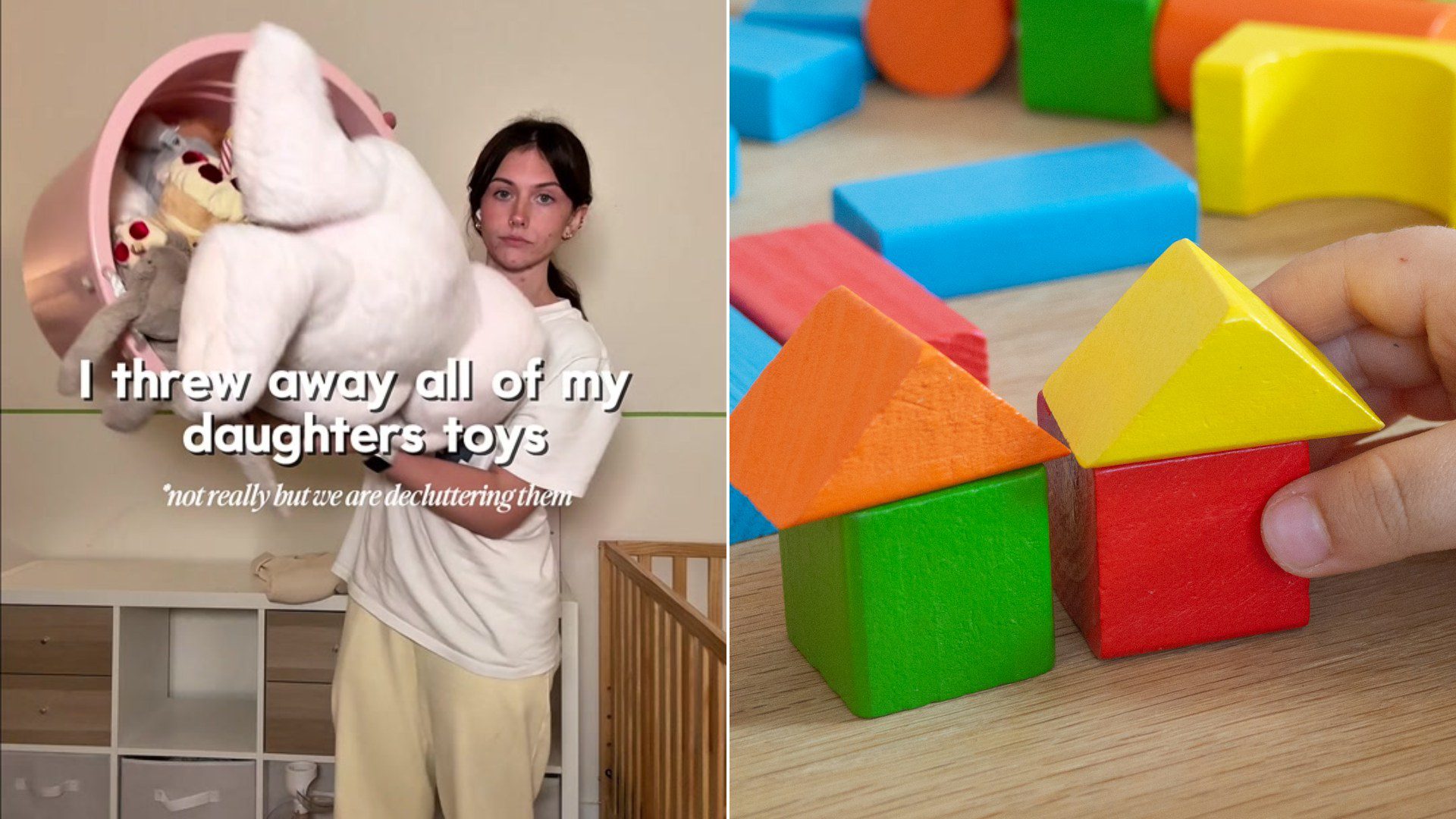
The mom, who posts as @jaydinalora, is working her way through her home with the goal of making it feel less cluttered. Day two was the toddler’s toys, and she opened with a warning for anyone about to type a nasty comment: her daughter does not even play with half of what she owns.
@jaydinalora
The toys that were supposed to buy her an hour
By her own admission, she had bought just about every toddler toy you can think of. These were the ones the internet claims will leave a child happily occupied so a parent can do skincare, soak in the tub, or simply sit down. She says it never happened, and for a long time she could not work out why.
So she did some reading on independent play, and the answer was uncomfortable. She had been doing it backwards. Her thinking had been that if she kept showing her daughter every new toy, the little girl would eventually settle in and play. Instead, the opposite happened. The more she brought out, the more her daughter wanted to be held.
Her big takeaway is one many of us already know from our own lives. When a house gets too cluttered, grown-ups feel overwhelmed and cannot function. She learned that kids can feel the same way, and with toys the effect may be even stronger. A toddler who faces a mountain of options may not know where to begin.
Her day two game plan
The goal for the day was to start sorting the toys into categories and, down the road, begin toy rotations. Before any of that could happen, she had to take inventory of what the family even owned. She also began taking down a playpen her daughter had not used in months, which she describes as honestly just so ugly.
By the time she finished she was worn out and went to bed. By morning, her daughter had knocked down all of her piles. She took it in stride, saying she has a game plan, and promised a part three where she keeps clearing the rest of the house.
Why fewer toys can mean more play
You do not need to run a thirty day challenge to borrow her main idea, and there is some research that points the same way. In a University of Toledo study of 36 toddlers aged 18 to 30 months, each child visited a playroom twice, once with four toys and once with sixteen. According to the university’s write-up of the findings, the toddlers played roughly twice as long with each toy when fewer were available, and used them in more sophisticated ways. A smaller, well chosen set of toys may make it easier for a toddler to focus, invent games and stick with one activity instead of hopping from one thing to the next.
Here is a simple way to try it at home, drawing on the steps she describes.
Step one: take inventory
Before you throw out or put away anything, gather the toys in one place so you can see the full picture. Most of us are surprised by the total. Pull toys from the bedroom, the living room, the car and the toy bins in the closet. You cannot decide what to keep until you know what you have.
Step two: sort by category
Group the toys the way a store would. Blocks and building toys together, dolls and stuffed animals together, books together, cars and trucks together, art supplies together, and puzzles together. Categories make it clear when you have ten versions of the same thing, and they make cleanup easier because every toy has an obvious home.
Step three: pull out what is broken, outgrown or ignored
Be honest about what your child has really played with. Toys with missing pieces, toys meant for a younger age and toys that have not been touched in months can go. Donate what is in good shape. Many families find it helps to do this while the little one is napping or away, so there is no tug of war over every item.
Step four: set up a toy rotation
A rotation simply means only some of the toys are out at a time. You keep a handful of categories on a low shelf where your child can reach them, and store the rest out of sight in a closet or bin. Every week or two, swap a few categories. Old toys feel new again, nothing needs to be bought, and the play space stays calmer. The mom in this story named toy rotations as her next goal once the sorting was finished.
Step five: expect the piles to get knocked over
One of the most relatable moments in her story is waking up to find her daughter had destroyed every pile. That is normal. Toddlers explore by dumping, climbing and scattering. Treat a sorting project as something you will touch more than once, and try to finish a category in a single sitting so there is less to knock down overnight.
A gentle note for grandparents and gift givers
If you are a grandparent reading this, you may be the person who loves to bring a surprise toy on every visit. Nothing about this approach says to stop giving. It is just worth asking the parents what the child needs, or choosing experiences instead, like a trip to the zoo, a pass to the children’s museum, or a trip to the park together. Books and art supplies also tend to get used for a long time without taking up much room.
The bigger lesson
What stands out in her story is not the throwing away. It is the discovery that the extra stuff was not helping her child at all. She spent money on toys that promised her more free time, and the thing her toddler wanted most was her mom. Cutting back on the clutter is as much about creating room for that connection as it is about tidiness.
If you are feeling overwhelmed by your own toy room, start small. Pick one shelf, one bin or one corner, and sort it today. You may find, as she did, that a little less makes everyone breathe easier.