Some thrift store finds practically call out to be rescued. A furniture flipper who goes by @handy.zandy walked into Goodwill again and spotted another pair of nightstands marked five dollars each. As she puts it, you really cannot pass that up. She grabbed them, hauled them home, and turned a rough looking pair into a fresh green set with natural stained tops.
She calls it another Goodwill challenge, and the question she poses in the caption is the one every flipper asks: can she turn a profit? Here is how the project unfolded, step by step, along with some lessons that apply to anyone who wants to try a thrifted furniture makeover at home.
@handy.zandy
Why they were only five dollars
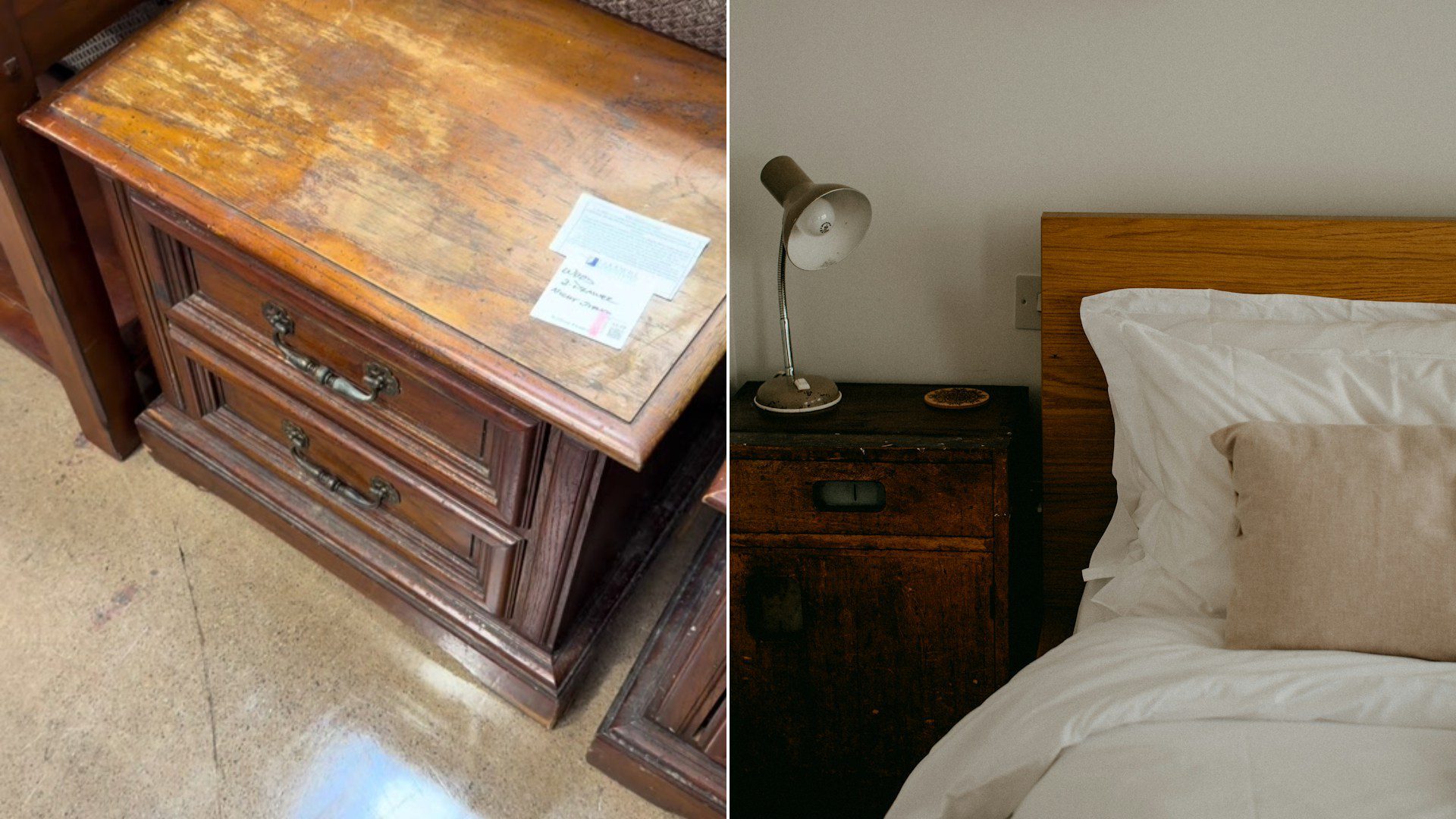
Up close, she says, you can see why the nightstands cost so little. There was a lot of work to do. The veneer on the base was peeling, and she decided it was not worth the time to save it. Instead, she took the base off and planned to build a new one from scratch. She also noticed that the track had come off one of the drawers, and when she checked the others she found they had been held in with staples.
Sanding the tops carefully
Once the old base was off, she flipped each piece over and started sanding the top. Veneer is a very thin layer of real wood glued over a less expensive core, so it is easy to sand right through it. She says the edges are usually where people run into trouble, so she turned the speed down on her orbital sander around the edges. Then she hand sanded the spots the machine could not reach.
That is good advice for anyone working with veneer. Use a fine grit, keep the sander moving, and never press hard. If you sand through the veneer, you will see a different color or the rough core underneath, and it is very difficult to fix.
Fixing the drawers
The drawer track that had come loose was reattached. Because many of the staples were not very strong, she put in a single screw to hold it. A single screw can be a quick way to add strength where staples have failed, as long as the screw is short enough that it will not poke through the other side of the drawer.
Primer, green paint and a new technique
Next she scuff sanded the rest of each piece, masked off the areas she wanted to keep natural, and got everything ready for paint. She sprayed primer, and here she tried a tip that her followers had suggested: leaving the drawers in while spraying. While the primer dried, she took a snack break, then returned to apply several coats of a lighter green.
Painting furniture is mostly a matter of patience. Thin coats look better than thick ones, and letting each coat dry fully helps keep the finish from running or peeling later.
Building a brand new base
For the new base she cut pieces of wood, used wood glue and nailed them together. She painted those pieces green as well, and then she sealed everything with a clear coat. Building a base is a smart move when the original is beyond saving, because a sturdy base changes how a piece looks and feels. It also lets you choose the height and the style you want.
Staining the tops and finishing touches
After the tape came off, she stained the tops. Once the stain had dried, she added polyurethane for protection, which matters on a nightstand that will hold lamps, glasses of water and phones. The last step was to install new handles. New hardware is one of the cheapest ways to make an old piece look current.
The reveal and the price question
She finishes with a before and after. She says this green color always sells really quickly for her, and that she is starting to become a big fan herself. She had just finished the set that day, and she did not name a sale price. Instead, she asked her followers how much they think the pair could sell for. So, as of this story, the profit question is still open.
It is worth noting what we do know. She paid five dollars each, so ten dollars for the pair, plus paint, primer, wood, stain, clear coat and new handles. She did not share what those supplies cost, so the true total is higher than the sticker price, but by how much is anyone’s guess.
Tips if you want to try this yourself
Thrifted nightstands are one of the best beginner projects because they are small, easy to move and easy to sell. Here are a few things to keep in mind.
- Check the bones. Pull each drawer out and make sure it slides. Look for wobbly legs and damage from water. Surface problems are fixable, but heavy structural damage is not worth the effort.
- Learn about veneer. If it is bubbling or peeling in a small area, you may be able to glue it down. If it is coming off in sheets, you may decide, as she did, to replace the base instead.
- Do not skip primer. Primer helps paint stick to old finishes, and it keeps wood tannins from bleeding through.
- Protect the top. A stained top needs a few coats of polyurethane to stand up to everyday use.
- Buy matching pairs. A matched set of nightstands is often easier to sell than a single piece, because shoppers need two for a bed.
- Wear protection. She jokes about suiting up, and a mask and gloves are important when sanding and spraying.
Why this kind of project is worth it
Beyond the possible profit, there is a quiet benefit. Every piece of furniture that gets rescued from a thrift store shelf and refinished is one less item headed to the landfill. For people who are trying to simplify their homes, it is a good reminder that you do not always need to buy new. Sometimes the best addition to a room is something that has already been loved once and just needs a fresh coat of color.
If you have a spare weekend, a sander and a little patience, a five dollar nightstand might be the start of something. And if you do try the green, she would probably tell you it sells.