Pantry organizing usually means matching jars, bulk shelves and a long list of things to stock for any emergency. @TheMinimalMom, the creator behind The Minimal Mom channel, says she has gone the opposite direction. She shared a tour of the pantry in her new home and explained why she keeps her food inventory low, her categories clear and her floor empty.
Her Goals Come First
Before showing a single shelf, she laid out what her pantry is supposed to do. By her account, the goals are to save money, to put as little time and energy into managing the pantry as possible, and to help someone who has historically not enjoyed cooking. She says she dreaded it and would often default to eating out or relying on convenience foods. She added that if those goals are not yours, her approach will not include bulk shopping, decanting or stocking up for every possible situation.
She says she has been refining the system since moving into the house about six months earlier. The project started because she wanted to remove some upper kitchen cabinets and needed a new spot for the microwave. That meant taking out shelving in the walk in pantry and adding a counter, and while she was at it, she realized stuff had crept into the pantry that the family no longer used.
See It and Serve It
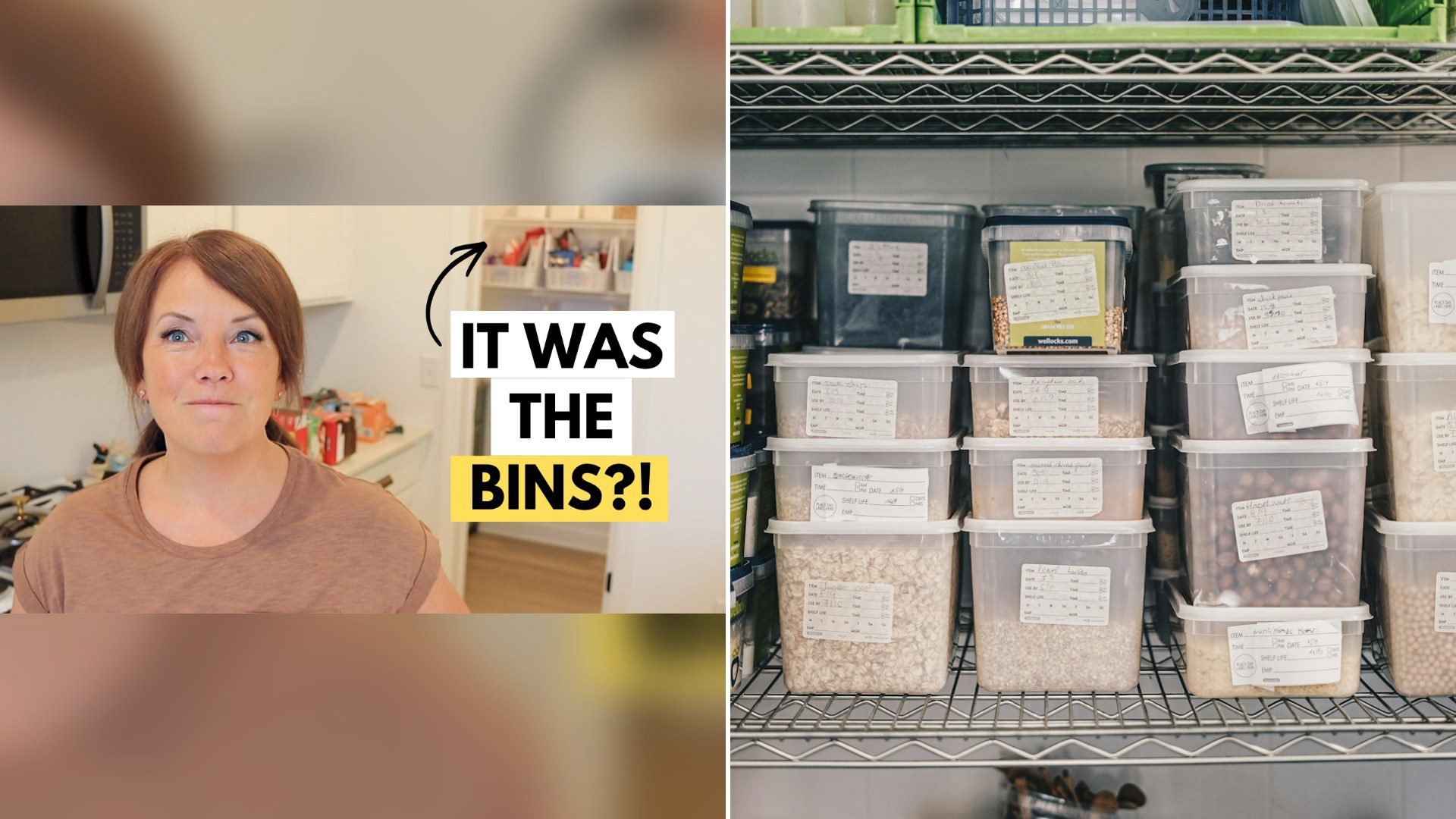
Her central rule is simple. If you want to stop wasting food, you need to see it and serve it. When items are stacked two or three deep, she says, of course they go bad, and she believes the problem is not a personal failing or a missing management system. It is that most of us cannot remember what we cannot see.
Her answer was to divide the open wire shelving into clear categories using bins she says she grabbed quickly at a big box store. The bins separate bread, fruit that does not need refrigeration, cereal, salty snacks and more. At first she thought the bins were too small, but she says they hold more than she expected, including four loaves of bread. Because she keeps a low inventory on purpose, small bins turned out to be the right size.
She also points out that food which has historically spoiled before she could use it, such as bread and fruit, has to sit front and center. The second half of the rule matters just as much. Seeing a bowl of fruit does not mean anyone will eat it, so she cuts up apples while making dinner and serves them as a snack before the meal or as dessert.
Bins Built Around Meals
One of her newest changes is grouping the ingredients for full meals into a single bin instead of sorting by type. In the past she kept one bin for canned goods and another for noodles, which scattered the parts of any one dinner across the shelves. Now one bin holds what she needs for chicken chili, butter chicken and sloppy joes, so she can see at a glance which dinners are covered. She says it makes meal planning and grocery ordering much easier, and that her bins now tell her what to buy.
She also noticed that she used to throw away the ends of bags of chips, pretzels and cereal because there was always so much inventory. She says that waste has dropped by about ninety percent since she shrank what she keeps on hand.
Letting Things Run Out
She is also comfortable letting items run out before replacing them. When a cereal her children did not love was left in the bin, she said they would finish it before she bought their favorite. According to her, they ate eggs and some frozen waffles in the meantime and nobody suffered. She calls it a mindset shift and says it is a value choice, since she does not want her children to assume everything they like is always available.
The Cost of Too Much Inventory
She also takes on a common argument against throwing out unused food, which is that it feels wasteful. She says it is easy to add up the cost of a box of granola bars from a warehouse club that went uneaten, which she put at fourteen dollars. What gets overlooked, she argues, is the cost of the meals that replace home cooking, like the thirty six dollars she says she spent on a pizza order the night before because she did not feel like cooking.
She offered a challenge. Pull out anything in the pantry that you have not used and that is more than a year old, no exceptions, so you can see how much you actually have. She tried it herself with a shorter window, three months, and found a six pack of oat milk bought for a phase that had passed, plus a bulk pack of protein shakes that sat for over three months. Her explanation is that they lost their novelty once they were in a big package instead of being picked up cold at a gas station.
Putting Her Ideas to Work in Your Kitchen
You do not need a walk in pantry to use any of this. Here are ways to try the same ideas, drawing on her approach and some common sense:
Do a one hour pull out. Take everything out of one shelf or cabinet and put back only what you use. Check dates, group duplicates and set aside what no one will eat.
Give every category a home. Even a dollar store basket or a cardboard box works. Clear boundaries keep new groceries from burying old ones.
Move spoilers forward. Put bread, produce and open packages at eye level so they get eaten first.
Check before you shop. A quick look at the bins, plus a note on your phone, prevents the twelve ketchups problem she joked about.
Donate what is still good. Unopened, in date items can go to a food pantry, which beats letting them expire on a shelf.
Count the real cost. If a bulk deal sits unused, the savings were not real. Compare the price you pay per serving that is actually eaten.
How It Feels
She also described something less measurable. After the shelves and floor were cleared, she says she found herself standing in the pantry just looking at it because it felt good. Her point is that a full, crowded space can send stress signals, and that cooking is easier to enjoy when the place where you start is calm. She acknowledged that having plenty of food is a luxury and that for some people a full pantry signals security, so she encourages readers to know themselves before cutting back.
Her approach will not suit everyone, and she says as much. If you cook in bulk for a big family or live far from a grocery store, a larger stockpile may make sense. But for anyone who keeps throwing away food, orders takeout out of frustration, or cannot remember what is in the back of the shelf, the idea is worth a weekend. Set a goal, give your food a visible home and let the shelves tell you what is needed.