Most people who talk about downsizing mean trading a big house for a smaller one. A creator named Vida, who posts as @Vidaloveslife, went much further. She says she went from raising three children in a four bedroom house to owning only what fits in her Subaru, with room left over for yoga. She shared a list of twelve lessons she says she learned over sixteen years of letting go, and she calls some of them ruthless.
Why She Says Owning Less Matters
She opens by describing something many homeowners feel but rarely say out loud. According to her, most people are burdened by the mental energy it takes to manage possessions, papers and cleaning. She argues that it also blocks people from pursuing their dreams, because you end up paying rent or a mortgage just to store stuff. She says she has never regretted getting rid of anything, and that it took her sixteen years to get where she is, which is why she wants others to move faster.
Her guiding idea is that she is creating space for new beautiful experiences, opportunities and people. She suggests picking two or three of the twelve tips, writing them down and putting them on a sticky note somewhere you will see them, rather than trying to apply everything at once.
The Twelve Tips
Below is a rundown of her lessons, as she described them.
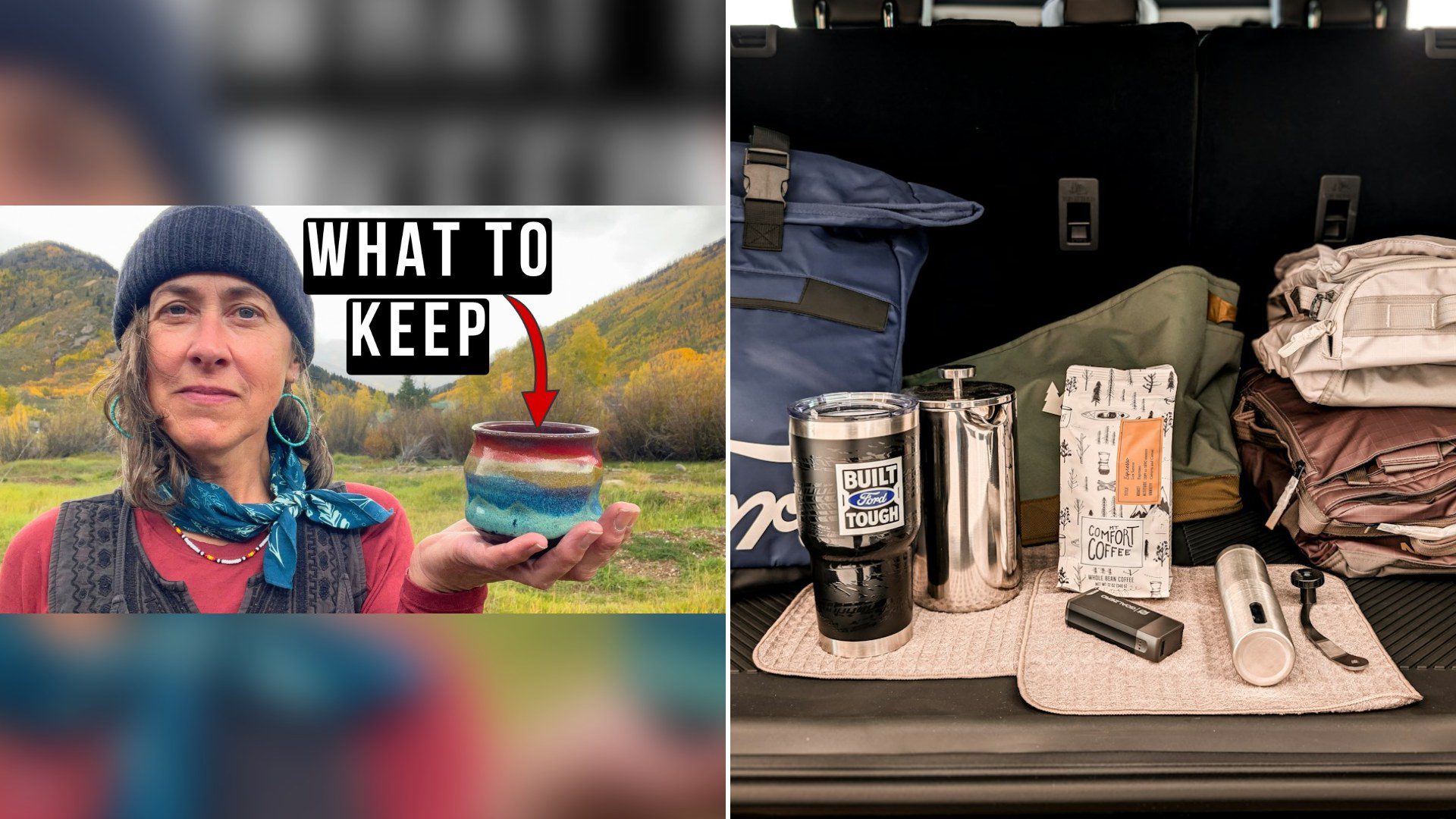
1. Keep only your favorites. Instead of asking what to throw out, she says to focus on what to keep. Her anchor item is a bandana from a trip to Yosemite with a drawing of the valley on it, and she says holding it makes her heart race and her breathing feel expansive. Her advice is to say “I choose you” to the things you keep.
2. Ask whether it is deprivation or liberation. A toothbrush or a bowl is something you need, so removing it would be deprivation. Thirty pairs of shoes, on the other hand, is a burden. She says she owns three pairs and suggests staying under ten. Old yearbooks, adult children’s school work and clothes that no longer match who you are are, in her view, candidates for liberation.
3. Keep what adds value. Her list of keepers includes two snowboards, a backpack, thru hiking gear and a favorite pottery mug. Thirty pairs of socks do not add value, she says, since five is enough. She also sold a mountain bike she bought to impress someone she was dating, and the buyer was thrilled.
4. Ask whether you would buy it again. She says to imagine the item was lost or damaged and ask if you would replace it. As an example, she says she tried a portable electric water heater, found it big and clunky for her car, and passed on it brand new.
5. Separate love from guilt, obligation and fear. Sentimental keepsakes are the hardest, and she treats the phrases “just in case” and “might need it someday” as warning signs. Seasonal items are an exception, but if something has gone unused for a year, she says it may be guilt. She photographed important artwork her children made, kept the digital copies and discarded the originals, and says they never asked about them.
6. Ask whether you can live without it. Her answer for almost everything, she says, is yes, and long distance hiking taught her that she thrives with very little.
7. Look for items that do two or three jobs. She gave up her toaster and toasts bread in a pan, and her bandana serves as a scarf, a head cover and a cooling cloth.
8. Give everything a true home. If you own fifty spoons that do not fit the spoon slot or fifteen hammers, she says, something has to go. She even says her earrings want a home.
9. Choose things that are easy to care for. She skips clothes that need dry cleaning, and she returned a microphone after finding battery, cold weather and phone fit hassles.
10. Wear clothing that makes you feel good. She says she stopped wearing baggy clothes that, in her view, reflected giving up, and she credits that shift with helping her get back in shape.
11. Stop saving things for someone else. Nice dishes saved for company are a common example. Her view is that every day is a special occasion.
12. Accept the ruthless truth. In her words, “Everything you own right now will eventually be in the trash.” She says about ninety percent of your stuff will end up there, and that passed down furniture is often no longer wanted by the next generation.
A Gratitude Ceremony for Your Things
Her wrap up is a gentle one. Before donating or tossing something, she suggests holding a short gratitude ceremony and simply saying thank you for being in your life. She also says she does not take on identities like minimalist. She quoted a line, attributed in the captions to a person named Casey Ryan, about minimalists not owning “the nothingness found in excess,” and says owning less let her make almost every dream come true.
Turning Her Ideas Into a Plan
Few of us want to fit our whole lives into a car, and she does not suggest everyone should. But her questions work at any scale, and they are especially useful for anyone staring at a house full of things after the children have grown. Here is how to put them to use:
Start with what you love. Walk through one room and pull out only the items that make you glad. The remainder becomes your pile to review.
Use the one year rule. If something has not been used, worn or looked at in a full year and is not a seasonal item, ask why it is still there.
Photograph before you let go. Pictures of children’s drawings, trophies and ticket stubs keep the memory without the box.
Sell what has value, donate the rest. Her bike found a happy buyer. Online marketplaces, consignment shops and local charities all work, and the sooner you move an item, the less it costs you in space.
Do not buy a replacement bin. Reaching for storage containers before you have sorted is how clutter gets a new address.
Share your plan with family. If your adult children expect to inherit furniture or keepsakes, ask them early so you are not storing items nobody wants.
Starting Small
Her ideas stand on their own, and you do not need to buy anything to try them. Her story is a useful reminder that downsizing is not a single event. She describes sixteen years of small choices, repeated until the stuff no longer ran her life. If one or two of these twelve questions help you let go of something this week, that is a good start.