

Every estate sale shopper knows the sinking feeling of pulling up to a driveway full of cars and realizing the good stuff may already be gone. One reseller rolled in 30 minutes late to a sale and braced for the worst. Then came the surprise.

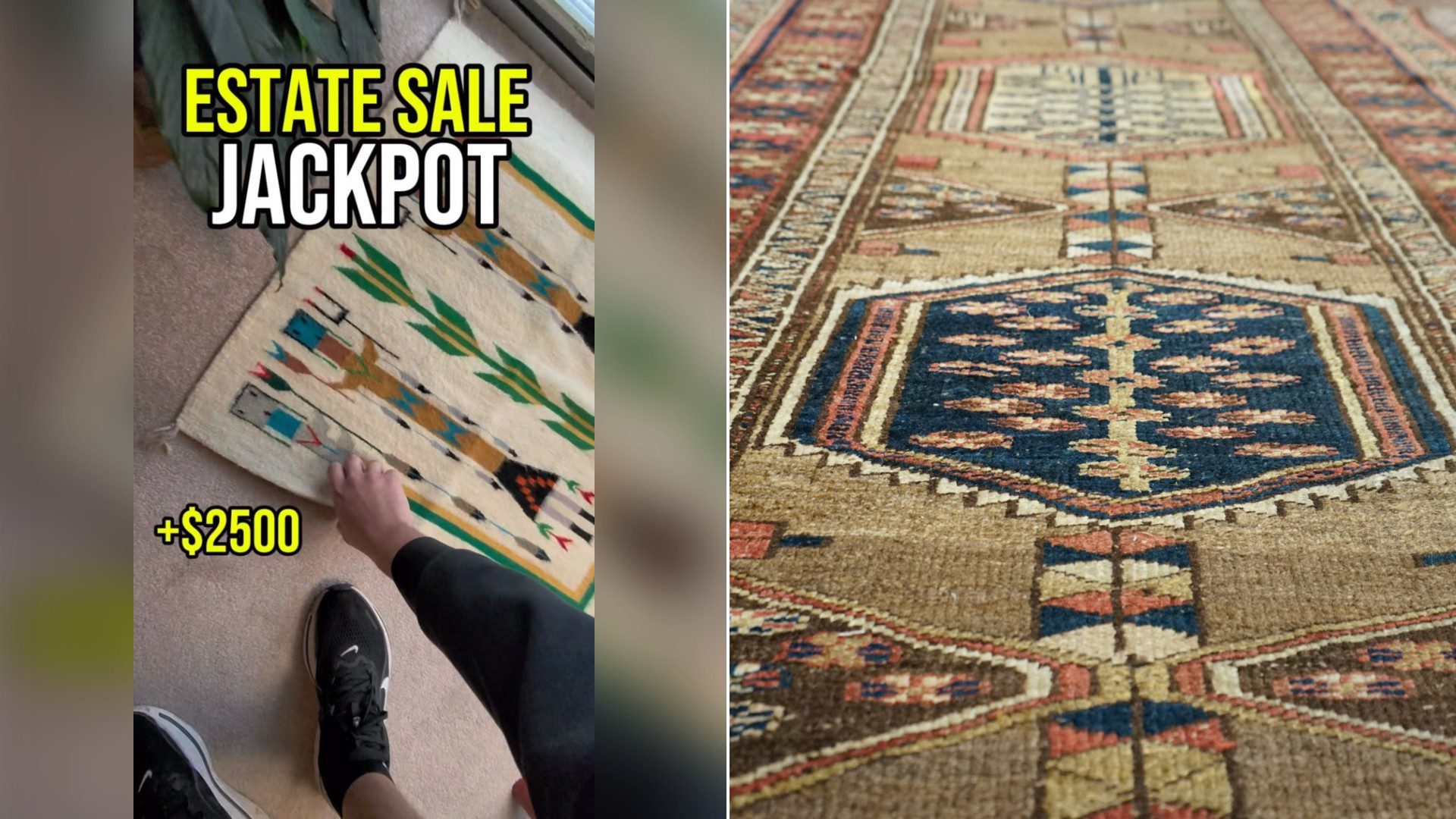
According to a reel from @finestflipsllc, the vintage Navajo rug they came for was still sitting there, waiting, with a price of just $20.
The reel catches the moment at the sale itself, when the price comes out. It is a short, happy ending to a story that nearly went the other way.
“You Know How Much This Rug Is?” The Price Was $20
In the clip, the reseller asks the person running the sale about the rug and gets a quick answer. “It’s 20.” The reaction is a mix of disbelief and a quiet “okay, all right,” and then the rug is theirs.
That is the whole drama in a few seconds. Thirty minutes late at an estate sale can mean empty tables. This time, the late arrival still got the prize.
The post also mentions a painting among the finds from the same sale, so the trip paid off beyond one rug.
Why Vintage Navajo Rugs Can Be Worth Far More Than $20
A vintage Navajo rug is a handwoven textile made by Navajo (Diné) weavers in the American Southwest. These rugs are woven on upright looms, often from wool, and the craft has been passed from generation to generation. Weaving remains an important part of Navajo culture.
Collectors prize the work for its patterns and color. Regional styles such as Ganado, Two Grey Hills and Teec Nos Pos are among the names serious buyers know. Age, size, wool quality, design and condition all affect what a rug is worth.
That is why a $20 tag stands out. A handwoven rug takes weeks or months of work, so a rug priced like a bake sale item at an estate sale has the sort of price that makes resellers hold their breath.
A price like $20 is a starting point, not a promise of profit. What a rug actually sells for depends on the piece, its condition and the buyer, so smart shoppers check sold listings before getting too excited.
Even so, cheap prices at estate sales are common for a simple reason. Families clearing a home want the house empty, and the people running the sale often price things low to move them quickly.
How To Tell A Real Handwoven Rug From A Lookalike
Plenty of rugs are sold as Navajo style but made by machine, so learning to spot the difference saves money. Here are a few things to check at a sale, using plain observation.
Flip it over. A handwoven rug usually looks similar on the back and front, with the pattern showing through the weave. Machine-made rugs often have a uniform, tidy backing.
Look at the edges and corners. Hand weavers finish the sides with a continuous cord edge, and small irregularities are normal and often a good sign. Perfectly identical lines can point to a factory.
Feel the fibers. Traditional rugs are woven from wool, which feels dense and slightly textured. A very slick, shiny or thin feel can mean synthetic fibers.
Check the colors. Soft, earthy tones are common in older rugs, and age often brings a gentle fading. Look for even, unnatural brightness that seems too perfect for a piece that is supposedly decades old.
Check for damage. Look for moth holes, stains, tears and strong odors. Many damaged rugs can still sell, but the price should reflect the repair work.
Look for a weaver’s mark. Some rugs have a tag or a woven signature, though older pieces may have neither. A tag is helpful but never the only factor.
It also helps to know there is a federal law, the Indian Arts and Crafts Act, that protects against products being falsely sold as Native American made. If a seller makes a specific claim, ask for the details in writing.
Estate Sale Tips From The Late Arrival Lesson
This story is a good reminder that estate sales do not always go the way you plan. A few habits can help you whether you arrive early or late.
Keep your expectations flexible. Some sales are picked clean in the first hour, and others hold treasures all day. You never know which kind you are walking into until you step inside.
Go anyway. Arriving 30 minutes late is not always fatal. Large rugs, framed art and bulky items can sit while shoppers grab small, easy-to-carry things first.
Walk the whole sale. The reseller found the rug and a painting by looking beyond the first table. Check bedrooms, garages and basements, where larger items often wait.
Ask for prices. At many sales items are not marked. Do what the reseller did and ask, politely, right away.
Check sold listings before you buy. A quick search for similar rugs that actually sold helps you tell a $20 find from a $20 mistake.
Bring a tape measure, a flashlight and cash. Rugs need to be measured, flipped and examined, and small bills make quick deals easier.
A rug priced at $20 does not always turn into a big payday, but it shows why resellers keep showing up. Even when you are late, a good piece can still be waiting.
More Stories You May Like
- Estate Sale Shopper Spends $70 On Trinkets, Then Asks About A Stained Glass Lamp At The Register, Expects To Hear $140 And Says Sold
- Estate Sale Shoppers Drive Three And A Half Hours To Nashville And Wait 2 Hours In Line, Then Grab A $600 Daybed They Say Is Really A $4,000 Piece
- New York City Becomes The Second City To Ban Surveillance Pricing, So Stores Cannot Use Your Browsing History To Show You A Higher Price Than The Next Shopper