“A house is supposed to look after you.” That is how the creator behind Denise HomeClean on YouTube opens a video called “Over 60 and Live Alone? 12 Things I Removed From My Home.” Somewhere along the way, she says, her house had turned that around and started asking her to look after it. Every pillow wanted fluffing, every shelf wanted dusting, and every rug wanted straightening, and her knees and back were the ones paying for all of it, one bend at a time.
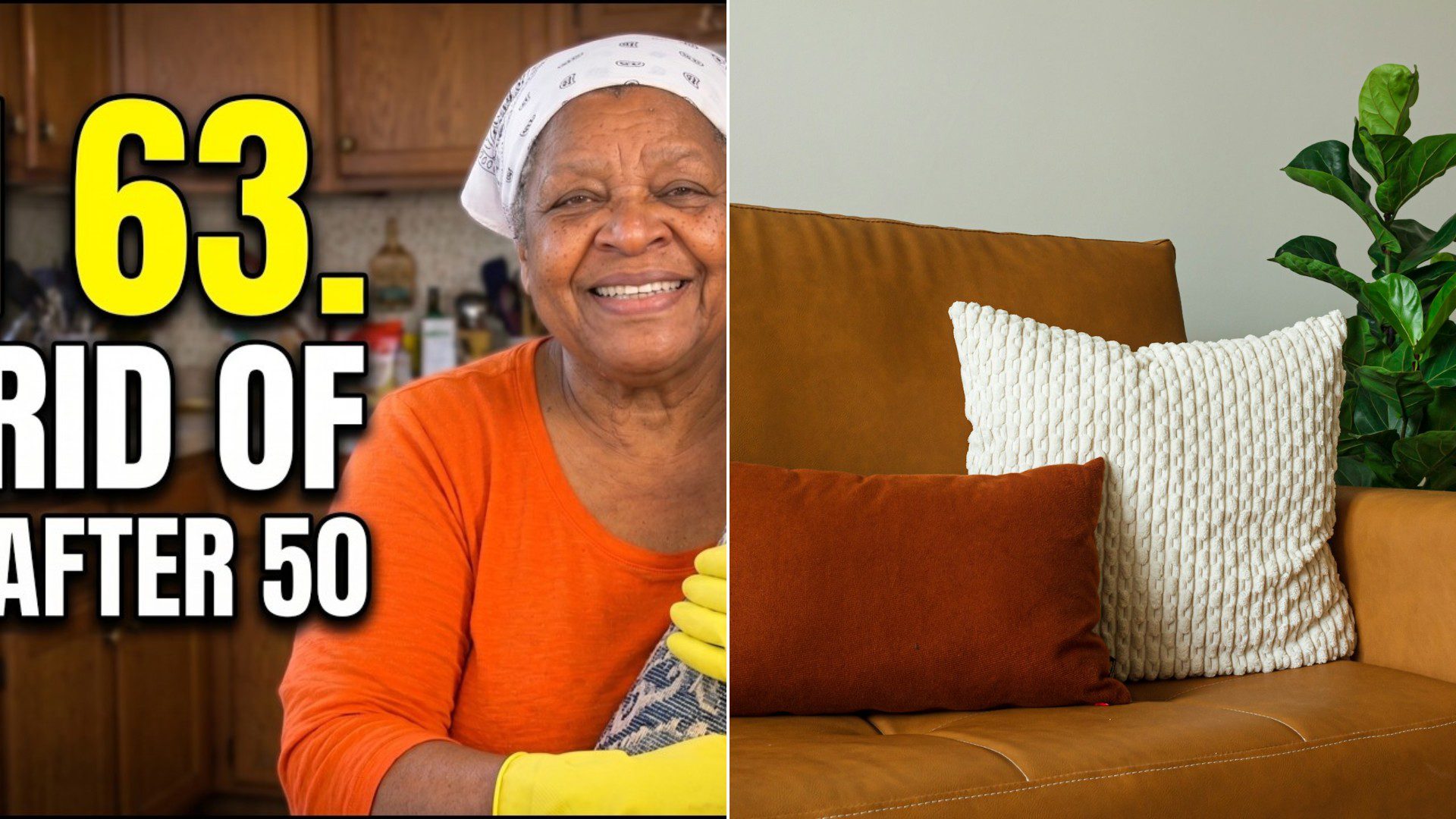
By the end of the day, every room had a little list of chores sitting in it, and a few were the kind that could put a person on the floor with nobody home to help her up. She did not fix that by cleaning harder. She fixed it by owning less of what needed cleaning and by removing things that were quietly waiting to trip her. At 63, she still carries her own groceries in from the car, so this is not about being old. It is about a house that asks less of your body, so your body has more left for the things you want to do. Here are all twelve things that went.
The Extra Pillows On The Bed
She had seven pillows on her bed: two to sleep on and five just to look at. Every morning she lined them up, and every night she tossed them on the floor and stepped around them in the dark. Over a year that adds up to hours of moving pillows from floor to bed and back again for nobody.
The five decorative ones went, along with shams that never got washed because they were such a pain to get off. She is clear that a pillow that props up your back, hips or knees at night is not decoration, and you should keep every one of those.
The Loose Little Rugs
Next went the skinny rug in front of the sink, the one by the back door and the hall rug with the curled corner that kept catching her toe. A government fall prevention checklist says plainly to either take small throw rugs up or hold them down with double-sided tape. Hers came up, and the one or two she could not live without got a non-slip backing.
The floor became far easier to sweep without five rugs to shake out every week. One mat stays, though: the rubber non-slip mat inside the tub or shower, which she says is not decoration but what holds you up. The thick cotton bath rug that never dried out was replaced by a thin non-skid mat.
The Kitchen Chair She Used To Climb
Her everyday plates lived on the second shelf and the big platter sat up top, so every few days she stood on a kitchen chair to stretch for something. The climbing ended when she turned the kitchen around. Whatever she uses daily now lives between her waist and shoulders, where she can reach it standing flat on the floor, which matches the fall checklist advice.
Items she only used once a year found new homes with other people. If you truly need a step, the checklist says to use a steady step stool with a bar to hold on to, never a chair. Since she lives alone with nobody to stand beside her, she keeps a long-handled grabber in the pantry and simply does not climb, even for the good platter at Thanksgiving.
The Furniture That Wobbles
This one she did not think about until she caught herself. When you stumble, your hand grabs whatever is closest, and in her living room that was a pretty plant stand that could not have held up a cat. Anything light and tippy near a place she might grab went out, and the pieces that stayed are ones that could hold her weight.
Her suggestion is to walk through your own living room and ask which table you would reach for if your foot slipped, and then ask whether it would hold you.
Clutter On The Path To The Bathroom
The walk from bed to bathroom is made half asleep in the dark, and it ought to be the clearest walk in the house. She had a basket of magazines and a footstool sitting on hers, and she moved both. Then she added a night light in the hall, one in the bathroom, and a lamp by the bed she can reach before her feet touch the floor, as the checklist recommends.
Her phone now sleeps charged on the nightstand beside that lamp, so if she ever does go down in the night, it is within reach. She sleeps better knowing the path is clear.
The Cords Across The Floor
A lamp cord ran across a doorway, a phone charger dangled over the walking path, and an extension cord snaked out from behind the couch. Every one was a trip waiting to happen. Now each cord runs along the wall, and the checklist says to coil or tape them so a foot cannot catch.
She adds that an extension cord should never run under a carpet or rug or through a doorway, and one power strip should never be plugged into another. She removed two extension cords altogether just by moving a lamp closer to the outlet, a five-minute job she had stepped over for three years.
The Soft Slippers With No Grip
She loved those slippers, soft as a cloud, with no grip on the bottom whatsoever. One morning on the kitchen floor she found that out and caught the counter just in time. People who study aging recommend non-skid, rubber-soled, low-heeled shoes, and say not to walk around in socks or in slippers with smooth soles.
Now she wears house shoes with a rubber sole that stays put. They are not nearly as pretty, and she still misses the cloud ones a little, but she would rather miss a slipper than a hip.
The Overstuffed Linen Closet
When she pulled everything onto the bed, she had more towels than one woman could use in a month, and sheets for beds she no longer owns. All of it had to be folded, stacked and kept from going musty. Now each bed has two sets of sheets, one on and one in the wash, and she kept enough towels to last a week.
The rest went to an animal shelter, which will take old towels and blankets and put them to work. The closet now takes about two minutes to put away, instead of a whole afternoon of refolding things she never used.
The Heavy Pots And Pans
She comes from cast iron people, so this one stung. But the big pot and big skillet were too heavy to lift with one hand once they were full, and cooking for one does not call for a pot that feeds twelve. She kept one good skillet she loves, and it lives on the stove, never down low and never up high.
The rest went to her niece, who has a full table to feed every Sunday. If your cast iron makes you happy, she says, keep it, just store it where you never have to lift it over your head or up from the floor.
The Bottles Under The Sink
She counted eleven spray bottles under her kitchen sink and used maybe three, and a couple were older than her car. More bottles mean more chances to grab two at once, and bleach mixed with ammonia or vinegar makes a gas you never want to breathe. She kept a dish soap, a gentle all-purpose spray and one bottle of bleach stored in its own corner.
The rest did not go down the drain. The EPA advises keeping old cleaning products in their original bottles with labels on and taking them to a household hazardous waste collection. Some places hold one all year and some only a few days a year, so a call to your county is worth making.
The Fourteen Christmas Bins
She had fourteen big plastic tubs in the hall closet. Every December she wrestled them out and every January she wrestled them back, and one year she simply sat down on the floor in the middle of them and could not face it. Now there is one bin, holding the ornaments that mean something, including the ones her mother made and the ones from when her nieces and nephews were small.
The rest went to a church sale, where somebody with more energy was happy to get them. The tree is smaller now and goes up in ten minutes. Christmas did not get smaller, she says, only the work did. Her mother used to say the joy is in the people, and the people do not come in a box.
A Husband’s Belongings, At Her Own Pace
The twelfth item is the one she has not finished, and she handles it gently. After her husband passed, his coats, tools and shoes stayed where he left them for a long time. Grief does not run on anybody else’s clock, she says, so she worked one drawer at a time and only on days she felt like it. Some days she opened a drawer and closed it right back, and she says that is fine.
His coats went to a man at her church who needed a warm one, and his tools went to her nephew, who sends pictures of what he builds with them. She kept his fishing hat and reading glasses, and she would not change a thing about that.
More Stories You May Like
- Mom Says Six Small Cleaning Tasks Take Her Less Than Half An Hour And Keep Her Whole Home In Maintenance Mode Starting With Making The Bed Every Day
- Declutter a Small Space in Under Ten Minutes with Steps a Stay at Home Mom Uses Every Day
- Moms Are Cheering A Birthday Party Idea Where Guests Bring Just Seven Dollars For A Seventh Birthday Instead Of Another Last Minute Target Gift