

Picture your car on a Saturday morning. The trunk is full of bags and the back seat is full of boxes. Every one used to live in your house, and now they are headed to the donation center. A kind person lifts everything out of your arms, and you drive home feeling lighter.

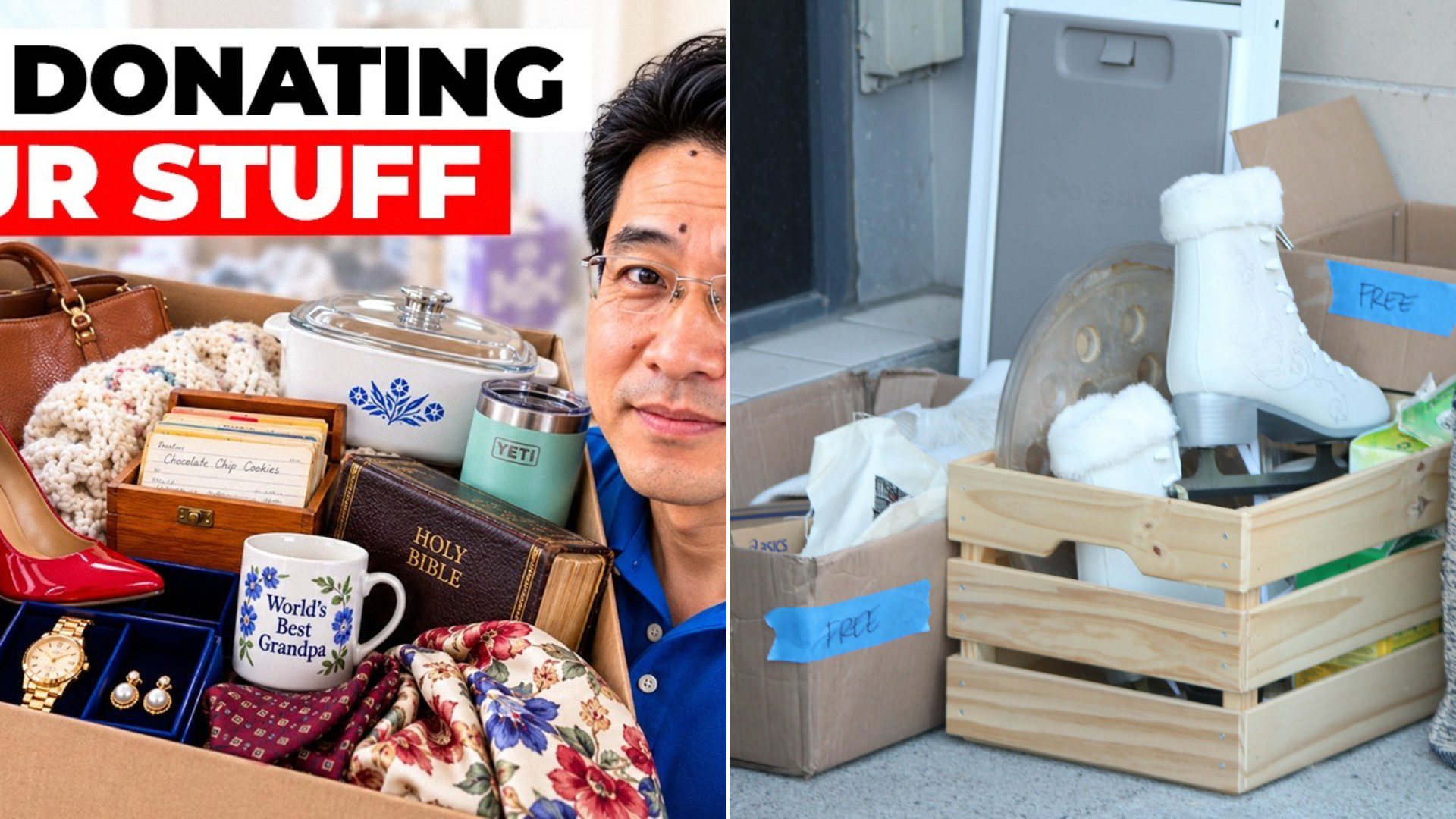
Giving is a good thing. But a home-organizing creator at Uncle Kenji asks a question most of us never think about: once the trunk is empty, where do those bags actually go?
He grew up in Japan, where he says nothing left the house without somewhere to go. He walks through what happens to a single ordinary kitchen bag, tied at the top, holding two sweaters, a winter coat, a few mugs, a lamp with a frayed cord and a pillow.

One Bag Becomes Two Piles
At the donation center, someone carries the bag to the back and sorts it. The clean sweaters, the coat and maybe the mugs head for the sales floor. The lamp with the frayed cord cannot be sold, and the pillow is the kind of item many stores cannot resell at all. So one bag has already split into two piles.
How big is the second pile? According to the creator, Goodwill has said that only about half of the clothing it receives is good enough for its regular stores and its website. The rest goes to outlet stores, and whatever is left after that is sold in bulk to buyers who sort it for resale, recycling or export.
He adds that the Salvation Army has said tons of leftovers remain even then, and that wet or soiled textiles generally have to be thrown away.
The $2 Million Bill
Then there is the cost. The creator cites a 2021 report from a Los Angeles news station on what it costs charities there to get rid of donations they cannot sell. Goodwill of Southern California, the report said, spends about $2 million a year. The Salvation Army of Southern California spends about $700,000.
That is money, he points out, that these charities would much rather spend on the people they serve. He is clear that this is not a reason to stop giving. Charities do wonderful work and are glad to get a clean, working item someone can use tomorrow.
His point is smaller. For many of us, the donation bag has quietly become the place we put decisions we did not want to make. When we cannot answer whether something is still good, he says, the bag answers for us, and a stranger at the back door makes the choice instead.
Give Every Item a Destination
His fix is a habit borrowed from Japanese trains, where each one shows where it is going. That destination is called an ekisaki, and a train with no destination does not leave the station. He suggests your house work the same way. Nothing leaves until it has an ekisaki, which means a name, not just a building. Your neighbor Linda. The library sale. The ReStore on Main Street. Bulky pickup on Tuesday morning.
Write that name on a strip of masking tape and stick it on the bag. He says that the moment you write a name, you have to decide. Then you sort by where things are going rather than what they are, and the labeled bags wait on a departure shelf in the garage or hallway. Each item gets five minutes to find a destination. If it has none, it takes the default road.
His Six Stops
He tries six stops in order. First, a person who knows you. Text a photo to two or three people and ask in a way that makes it easy to say no. Second, a buyer. Ask yourself whether you would pay a fair price for this used, and if so, list it on a Saturday. If it has not sold by the next Saturday, move on.
Third, the right receiver. Habitat for Humanity ReStore stores take sturdy furniture and building materials, though he says to call first since rules vary. Lions Clubs collect old eyeglasses, libraries often run book sales, and schools or community centers may want art and craft supplies.
Fourth, the donation counter, and he calls it a wonderful stop that is simply not stop one. Ask whether you would buy the item today in its present condition. Wash it, add fresh batteries, tie up the cords and check the charity’s list of what it accepts, since many do not take pillows. Never leave bags at the door after closing, he adds, where they sit out in the rain.
Fifth, the proper exit for broken items. In many American towns you can book a bulky item pickup, take paint and batteries to a household hazardous waste site, and use an electronics recycler. Sixth, a goodbye for sentimental items, such as a photo and a line in a notebook before you let them go.
A Plan for This Week
He recommends starting with masking tape, a marker and a shelf. On Thursday evening, spend 30 minutes texting people, calling the ReStore and library and booking the bulky pickup. On Saturday, make one loop around town with a stop for every label.
His closing words are simple. Keep donating, but do it on purpose, with a name on the tape. A bag at the donation center, he says, is not the end of an item’s life, but the beginning of someone else’s work, so make sure what you hand over is a gift and not a bill.
More Stories You May Like
- She Spotted What Looked Like A Seventy Five Thousand Dollar Ostrich Birkin On A Thrift Store Shelf And The Price Tag Twist Was Seven Dollars
- Professional Organizer With ADHD Tells Overwhelmed Moms To Set A Fifteen Minute Timer And Only Pick Up Trash Off One Living Room Floor
- Woman Who Makes at Least $1,000 at Every Garage Sale Shares Her Golden Rule, and It Means Never Putting an Individual Price Tag on Anything