You open the door to the room that has swallowed your house. There are shipping boxes, laundry baskets, bags of who-knows-what and a bed you stopped thinking of as a bed. So you grab whatever is nearest the door, maybe an old birthday card or a jacket you might wear again, and twenty minutes later you have handled six things, the pile looks the same, and you shut the door again.
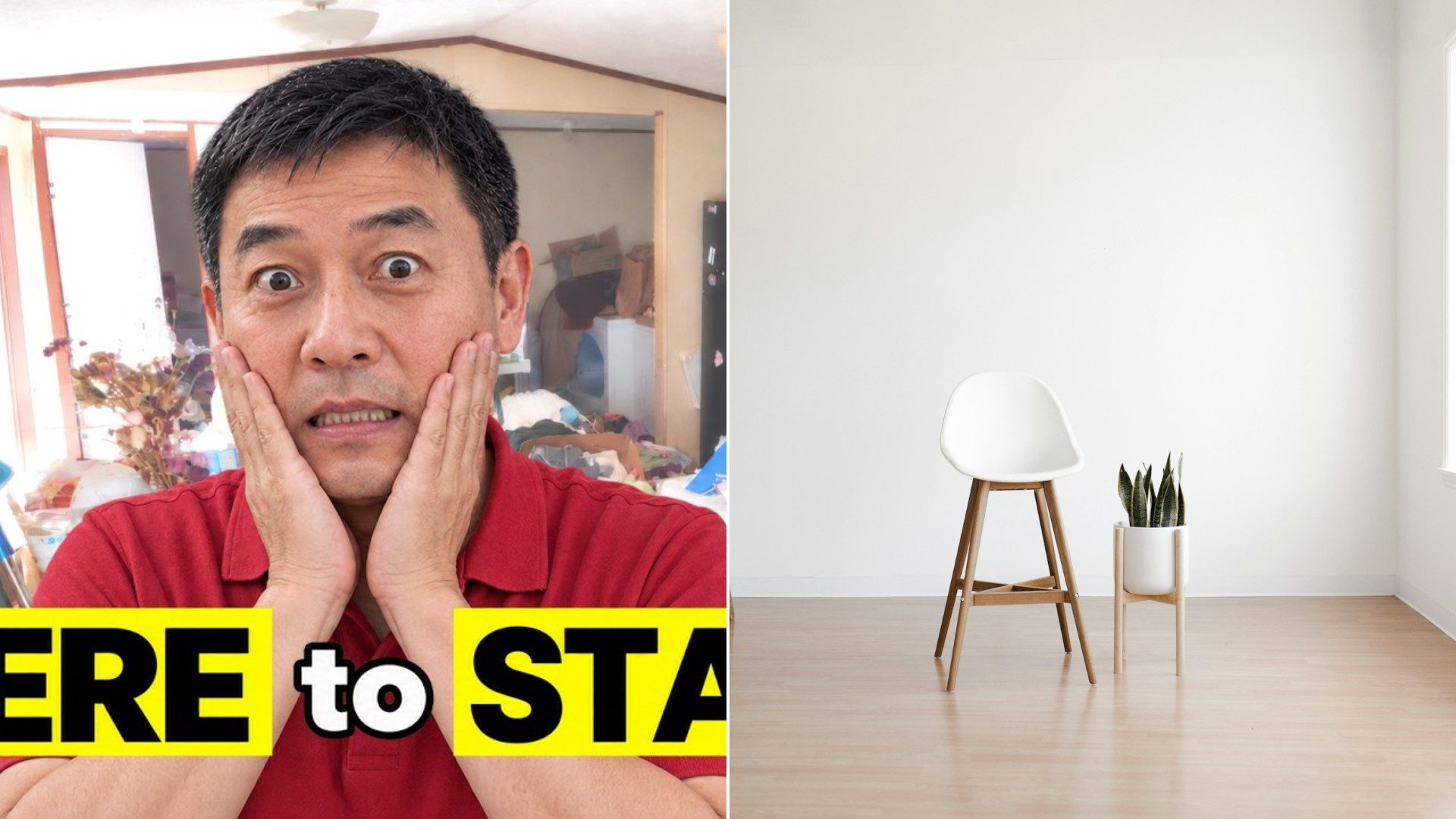
The creator behind The Japanese Method and Japanese Home Hacks says that is exactly why most people give up on a packed room. The item closest to the door is often one of the hardest decisions in the whole space, and you are trying to make it before anything in the room has changed. It does not mean you are lazy.
Her fix has five steps, and it starts with the floor, not the clutter.
Why That Sinking Feeling Is Real
She points to one small study at UCLA in which women who described their homes as cluttered tended to have stress hormone levels that did not come down the way they normally do through the day. So the sinking feeling when you open that door is a pretty normal reaction. She says many viewers write to her saying they are stuck on where to start, and she has stood in the same doorway in her own apartment in Japan, looking at boxes she did not want to touch.
Step One, Find the Floor
Before you decide on a single thing, lift everything off the floor that you can reasonably pick up and set it on the highest surface you can find. That might be the bed, a table, a desk, a dresser top or a counter. If you cannot see any surface, keep lifting from the doorway inward, because a table or bed usually turns up under the pile. If there is truly nowhere to put things, push everything toward the walls so you have a clear path and open floor in the middle.
Start at the doorway and work toward the far wall so the clear area grows from where you are standing. Do not open bags or peek in boxes. Your only job is lifting and moving, because the minute you start reading old mail you are back to deciding one item at a time.
Is this just moving the mess from the floor to the bed? She admits it is. But the room itself has changed. You can walk in, stand in the middle, and see where the window, the closet door and the outlets are. She says a room you can walk into feels like a room you can work in, while a room you cannot enter is a room you avoid. She did this in her own second room, which had filled with delivery boxes and laundry. One evening she lifted everything onto her kotatsu, a low table with a heater built into the underside, and onto her desk. The next morning it looked like a room she could use again.
Her cautions: keep stacks low and wide so they do not slide back to the floor, do not bury the only bed you need tonight, and do not try to lift heavy boxes alone. Keep the doorway clear and do not pile things against a heater or a window you may need to open. If the room has mold, pests or water damage, or is too full to move through safely, she says it is reasonable to bring in a friend, family member or professional.
Step Two, Start With the Easy Obvious
Now you have one big pile, and that pile is where most people freeze. The second step is to pull out what you can decide in seconds: trash, broken things, and anything you would instantly say no to. Bring a box of trash bags and one more bag or box for donations so you never leave the room to find them.
Her examples include empty shipping boxes and packing paper, dried-out pens, the charger for a phone you have not owned in years, old takeout menus, expired coupons, a lamp with a cracked base, and clothes with stains that survived three washes. The rule is simple: if you need more than a few seconds, put it back and keep going. When you are stressed, hard choices feel harder, and every item you pull makes the pile smaller. Take the full bags out tonight instead of letting them sit in a corner. Her grandmother kept the trash collection calendar on the fridge and never let a full bag wait.
Step Three, Make a Later Box
Sooner or later you will pick up baby shoes, a sweater your mom wore, a stack of letters. Her advice is the opposite of pushing through: if you are not ready to decide, keep it. Pick one box, label it “later,” write today’s date on it, and move on. Store it outside the room so you are not tempted to keep digging.
She says she once received a box of her grandfather’s old work notebooks after he died and could not open it for months. She left it on a closet shelf, looked through it properly the next year, kept a few notebooks and gave the rest to her uncle. Waiting does not always end in letting go, she says, and that is fine. The caution is not to let the box take everything. If you fill a second one, check whether you are dodging decisions you could make today.
Step Four, Plan for More Than One Pass
If you have a lot of stuff, you will not finish a room in one weekend, and she says that is normal. The first pass is for learning what you have: pull the easy trash and sort the rest into groups, with cables with cables and paperwork with paperwork. Final decisions come later, since you cannot judge two phone chargers until you have found the other four. Put the next pass on the calendar before you finish the first, such as “second pass on the spare room, first Saturday next month.” She cleared her deep sliding-door closet, called an oshiire, in three passes over a few months, and by the third she was deciding in seconds.
Step Five, Collect Quick Wins
A quick win is a small project that fits in 15 to 30 minutes: the cabinet under the bathroom sink, one kitchen drawer, the bag of shopping bags, the car door pockets or one coat closet shelf. Pick something with clear edges that you can finish in one sitting and that is not emotional, so photos and kids’ drawings do not count. The garage is not a quick win. She clears a drawer while her rice cooks, and keeps a short list on her phone so she does not waste ten minutes choosing.
Her bottom line: if you do only one thing this week, pick the room you have been avoiding, clear the floor, and stand in the middle of it. You do not need to decide anything about the pile yet.
More Stories You May Like
- Five Ruthless Decluttering Tricks That Go Against Everything You Have Heard Are Shared by a Woman Who Used Them to Empty Her Packed Attic
- Professional Organizer With ADHD Tells Overwhelmed Moms To Set A Fifteen Minute Timer And Only Pick Up Trash Off One Living Room Floor
- Woman Decluttering Her House Before Downsizing Draws a Number From One Bucket and a Room From Another to Decide Exactly What to Throw Away Each Day for Thirty Days