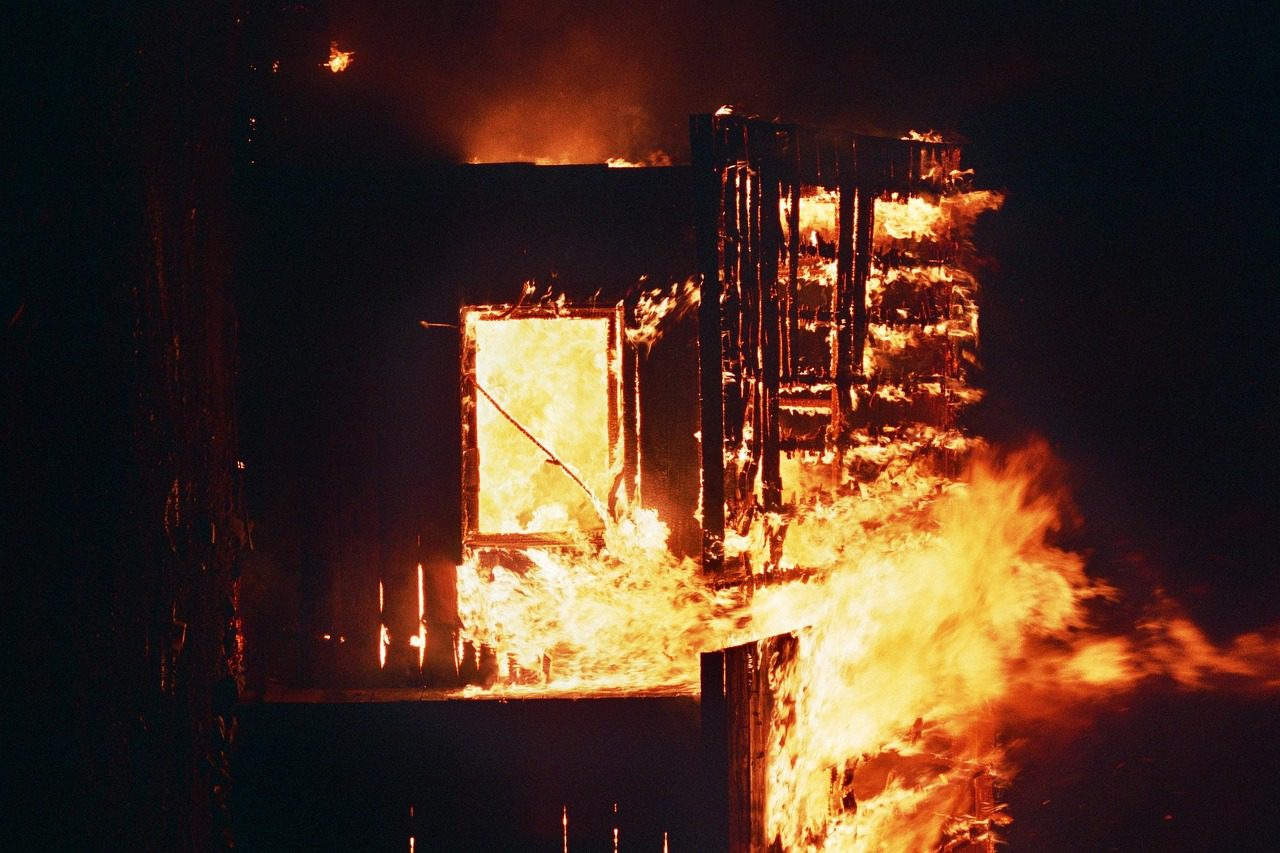
The fire that tore through a Cleveland apartment complex earlier this year left behind a trail of wreckage, grief, and a story of raw, instinctive courage. In the middle of that chaos was a stepfather who ran straight into the flames to pull his partner’s children out, suffering catastrophic burns in the process. His name was Cordale Sheffield, and the way he moved in those few terrifying minutes has stayed with everyone who watched him fight for those kids.
What unfolded inside that building was not a movie moment or a polished hero narrative, but a split-second decision that cost him almost everything. Sheffield’s injuries were so severe that his survival was never guaranteed, yet he kept going back toward the danger until the children were out. The fire eventually claimed his life, but the kids he refused to leave behind are alive because he chose to step into the worst possible place and stay there until they were safe.
The Explosion That Shattered a Summer Morning
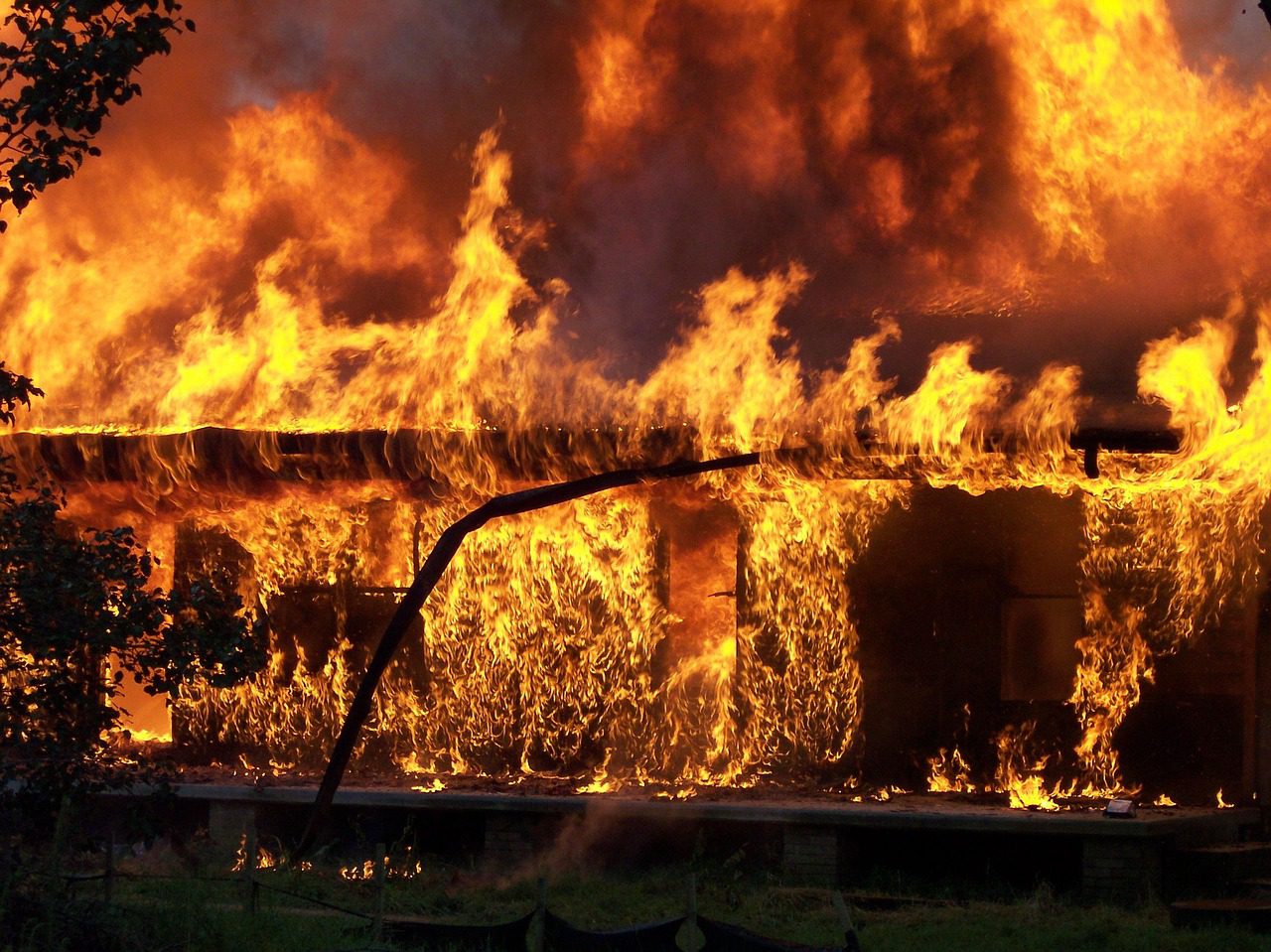
Residents in one Cleveland neighborhood woke up to the kind of sound that makes your stomach drop, an explosion ripping through an apartment complex and turning a regular morning into a disaster zone. The blast tore into the building in Garden Valley, a community in CLEVELAND where families like Sheffield’s were just trying to get through another day. In the seconds after the explosion, flames spread fast, swallowing hallways and apartments before many people even understood what had happened On June.
People poured out of the complex, some barefoot, some screaming for loved ones who were still inside. The explosion left dozens of residents displaced, and two children were trapped in the chaos of the burning building in Garden Valley. Smoke pushed out of shattered windows, alarms blared, and the air filled with the kind of heat that makes it hard to breathe. In the middle of that confusion, one man was already moving in the opposite direction of the crowd, heading straight toward the fire.
Who Cordale Sheffield Was Before the Flames
Before anyone called him a hero, Cordale Sheffield was simply a partner, a stepfather, and a neighbor trying to build a life in Cleveland. He lived at the apartment complex with his girlfriend and her two children, and people who knew him say he treated those kids as his own. Loved ones have described how Sheffield considered the children to be his family in every way that mattered, long before the fire forced him to prove it in the harshest possible way Sheffield.
Friends remember him as the kind of person who showed up, whether that meant watching the kids, helping a neighbor, or just being an “amazing friend” when someone needed support. Those details matter, because they make clear that what happened during the fire was not a random act from a stranger, but an extension of how he already lived. When the explosion hit and the building caught fire, Sheffield did what people who knew him say he always did, he put the kids first and himself second Loved.
The Split-Second Choice to Run Into the Fire
When the blast rocked the building and flames started racing through the complex, Sheffield did not have time to weigh pros and cons or think about survival odds. He knew his stepchildren were inside, and that was enough. Witnesses and relatives say he rushed into the burning apartment to reach them, pushing past the heat and smoke that were already making the place unlivable. In those first moments, his only focus was getting to the kids and getting them out alive Cordale Sheffield and.
Accounts from family members describe how he did not stop after one attempt. He went back in the fire to save her, even though he was already burnt up from the first push through the flames. That second trip is when things got even worse, when his hair caught on fire and his body took on injuries that would later be described as burns on 92% of his skin. The decision to turn around and head back into the inferno, knowing exactly how much it hurt, is the moment that turned a terrifying emergency into a story people now tell with a mix of awe and heartbreak He went back.
The Children He Refused to Leave Behind
The two children trapped in that Cleveland apartment were not just names on a report to Sheffield, they were the kids he tucked in at night and worried about during the day. When the explosion hit, they were suddenly surrounded by smoke, flames, and the kind of confusion that can paralyze even adults. Sheffield’s push into the building cut through that chaos, giving them a path out when everything around them was falling apart. He physically carried and guided them away from the worst of the fire, absorbing the heat and flames that might otherwise have reached their smaller bodies the two children.
The kids did not walk away unscathed. They suffered severe burns on much of their bodies and ended up in the hospital alongside Sheffield, all three of them fighting for their lives. Even so, the simple fact that they made it out of the building at all is tied directly to his refusal to stay outside. In the weeks since, relatives and neighbors have talked about how those children now carry both physical scars and the knowledge that someone chose to stand between them and the fire, not once but repeatedly are still fighting.
The Brutal Toll of 92% Burns
By the time firefighters and medics reached Sheffield, the damage to his body was almost beyond comprehension. Reports describe burns on 92% of his body, a level of injury that very few people survive even with the best possible care. Witnesses said he “looked like a zombie,” a blunt, haunting way of capturing just how much the flames had taken from him in those few minutes inside the building. His skin, hair, and clothing had been consumed by the fire, leaving him barely recognizable as the man who had sprinted in moments earlier 92%.
Emergency crews rushed him to the hospital, where doctors began the long, complicated work of trying to stabilize someone whose body had been pushed far past its limits. Severe burns on that scale do not just affect the skin, they strain the heart, lungs, kidneys, and every other system that has to fight infection and trauma at the same time. Sheffield was placed in critical condition, and for days his loved ones could do little more than wait, hoping that the same stubborn will that sent him into the fire would somehow pull him through the aftermath suffers critical burns.
Weeks in the Hospital and a Community on Edge
As Sheffield lay in a hospital bed, heavily bandaged and fighting for his life, the story of what he had done spread quickly through Cleveland. Neighbors, friends, and strangers followed every update, clinging to any sign of progress. The fact that he had suffered severe burns after the explosion and fire at the Cleveland apartment complex made every small improvement feel like a victory, and every setback feel like a gut punch. People who had never met him started talking about him as “the hero” who ran into the flames for his stepchildren man who suffered.
At the same time, the children were also in the hospital, dealing with their own painful recoveries. Sheffield and the two kids were all described as having severe burns on most of their bodies, a shared ordeal that kept the family in and out of surgeries, treatments, and long days of uncertainty. For the community, the hospital became a kind of emotional focal point, a place where people dropped off cards, organized support, and tried to show that this family was not facing the aftermath alone are still fighting.
The Day Cleveland Lost Its “Hero Dad”
Despite the best efforts of doctors and the hopes of everyone pulling for him, Sheffield’s body could not fully recover from the trauma of the fire. After weeks in critical condition, the man who had run into the burning building for his stepchildren died from his injuries. News of his death hit Cleveland hard, especially in Garden Valley, where people had watched the apartment complex go from home to crime scene to memorial site. The loss turned an already devastating fire into something even heavier, a reminder that even the bravest acts can come with unbearable costs has died.
In the days that followed, friends and family leaned on each other, sharing stories about who he was before anyone outside their circle knew his name. They talked about his sense of humor, his loyalty, and the way he showed up for the kids long before the fire forced him into the spotlight. Loved ones emphasized that Sheffield considered the children to be his own, and that his final act was completely in line with how he had always moved through the world. The grief was sharp, but so was the pride in what he had done when it mattered most Cleveland man dies.
Questions About the Blast and the Search for Answers
Even as people mourned Sheffield and rallied around his family, another thread of the story kept tugging at the community, what exactly caused the explosion in the first place. The blast that tore through the Cleveland apartment complex did not come with an immediate, simple explanation. Officials opened an investigation into the explosion, trying to piece together how a building in Garden Valley turned into a fireball that left residents displaced and a stepfather fatally injured. For families who lost homes and a neighborhood that lost a hero, those answers matter the explosion remains.
While investigators worked, the burned-out complex stood as a daily reminder of how quickly everything had changed. People walked past blackened walls and boarded-up windows, remembering the sound of the blast and the sight of Sheffield running into the flames. The search for a cause is not just about assigning blame or checking a box on a report, it is about making sense of a tragedy that feels, to many, both random and deeply unfair. Until there is a clear explanation, the fire sits in that uncomfortable space where grief, anger, and unanswered questions all live side by side.
How a Single Act of Courage Reshaped a City’s Memory
In the months since the fire, Cordale Sheffield’s name has become shorthand in Cleveland for a certain kind of everyday bravery. People talk about him as the “hero dad” who ran into a burning building, not because he wore a uniform or had special training, but because his stepkids were inside and that was all he needed to know. His story has been shared in community posts and local conversations, often alongside other examples of people who stepped up in moments of crisis, like the man highlighted alongside him who lost full usage of his hands after his own act of rescue Meet Zikhaya Sithole.
That kind of storytelling matters, because it shapes how a city remembers not just the fire, but the people inside it. Instead of only recalling the explosion, the smoke, and the loss, Cleveland now also carries the image of a stepfather sprinting toward danger because two kids needed him. It is a hard story, one that ends in a hospital room and a funeral, but it is also a clear, unflinching look at what love can look like when everything is on the line. Long after the investigation wraps up and the building is repaired or replaced, the memory of what Sheffield did for his stepchildren is likely to outlast the scorch marks on the walls.
More from Decluttering Mom: