One mom learned quickly that trying to comfort a 9-year-old on a bad day could backfire spectacularly. After two years in a relationship and eight months of living together, she felt ready to step in when her partner’s son was in a funk. But when she offered support, the boy shot her a look that made it clear she was not the right person for the job. It was a moment that made her question her role in the family and left her feeling unsettled.
This wasn’t just a passing incident; it reflected the complex dynamics of blending families. She’d entered the relationship aware that it would take time to navigate the step-parenting waters. Yet, her understanding didn’t ease the discomfort she felt in that moment. It was as if she was reminded that, despite her love for her partner, the child might not see her as someone to turn to for comfort—a hard truth to swallow.
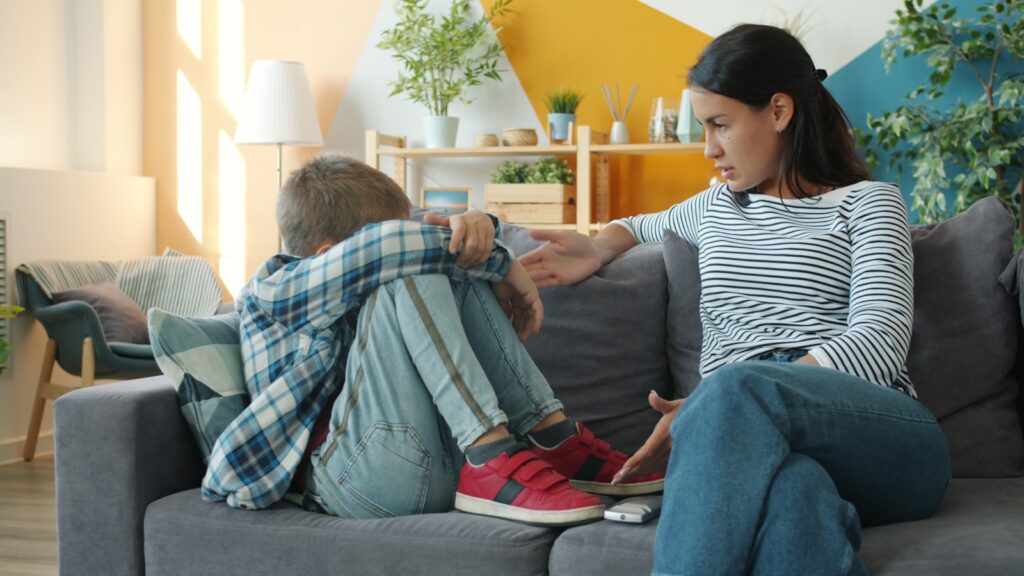
After the awkward encounter, she retreated to her room to distract herself with her phone, searching for a way to process what had just happened. The incident highlighted her uncertainty about her role in the child’s life. She had thought that being supportive and caring would make the adjustment smoother, but instead, it only amplified her feelings of being out of place. Her instincts to help collided with the harsh reality that, to the child, she might just be an outsider.
People had different reactions when she shared her experiences online. Some pointed out that it’s common for stepparents to feel lost during the adjustment period. They noted that kids often take time to warm up to new parental figures, and there’s no one-size-fits-all approach to building relationships with them. Acknowledging that the boy’s response wasn’t personal, they reminded her that children have their own way of dealing with emotions. It can be tricky for a child to accept anyone but their biological parent in moments of vulnerability.
Others expressed understanding of her position, sharing their own stories of feeling like outsiders in their blended families. They mentioned that it can take years for stepchildren to accept a stepparent, and that patience is key. The responses resonated with the mom, who was craving a sense of reassurance that she wasn’t alone in her feelings. It seemed everyone had their own tales of missteps along the way, navigating through the awkwardness of new family dynamics.
A few users offered more practical advice, suggesting that she take cues from her partner. They pointed out that it’s essential for her to lean on him during these moments, as he knows the child’s temperament best. They recommended finding ways to bond outside of tense situations, maybe through shared interests or activities that could create positive memories together. Building trust and rapport takes time, and pushing too hard might not yield the desired outcome.
Yet, amidst the shared experiences and encouragement, some voices cautioned against overthinking. They noted that while seeking connection is important, every interaction does not have to be monumental. Kids are often unpredictable, and that moment of rejection is part and parcel of parenting, especially in blended families. A single awkward moment shouldn’t be seen as a setback but rather as a step in the ongoing journey of building trust.
In the end, one mom found herself sitting with her questions. Was her discomfort a normal part of the process, or was it a sign that she needed to reassess her approach? The mixed feedback she received didn’t provide a clear answer. As she navigated her feelings in the weeks that followed, one question lingered: how does one balance the desire to connect with the reality that sometimes, stepping in could lead to being pushed away?
More from Decluttering Mom: