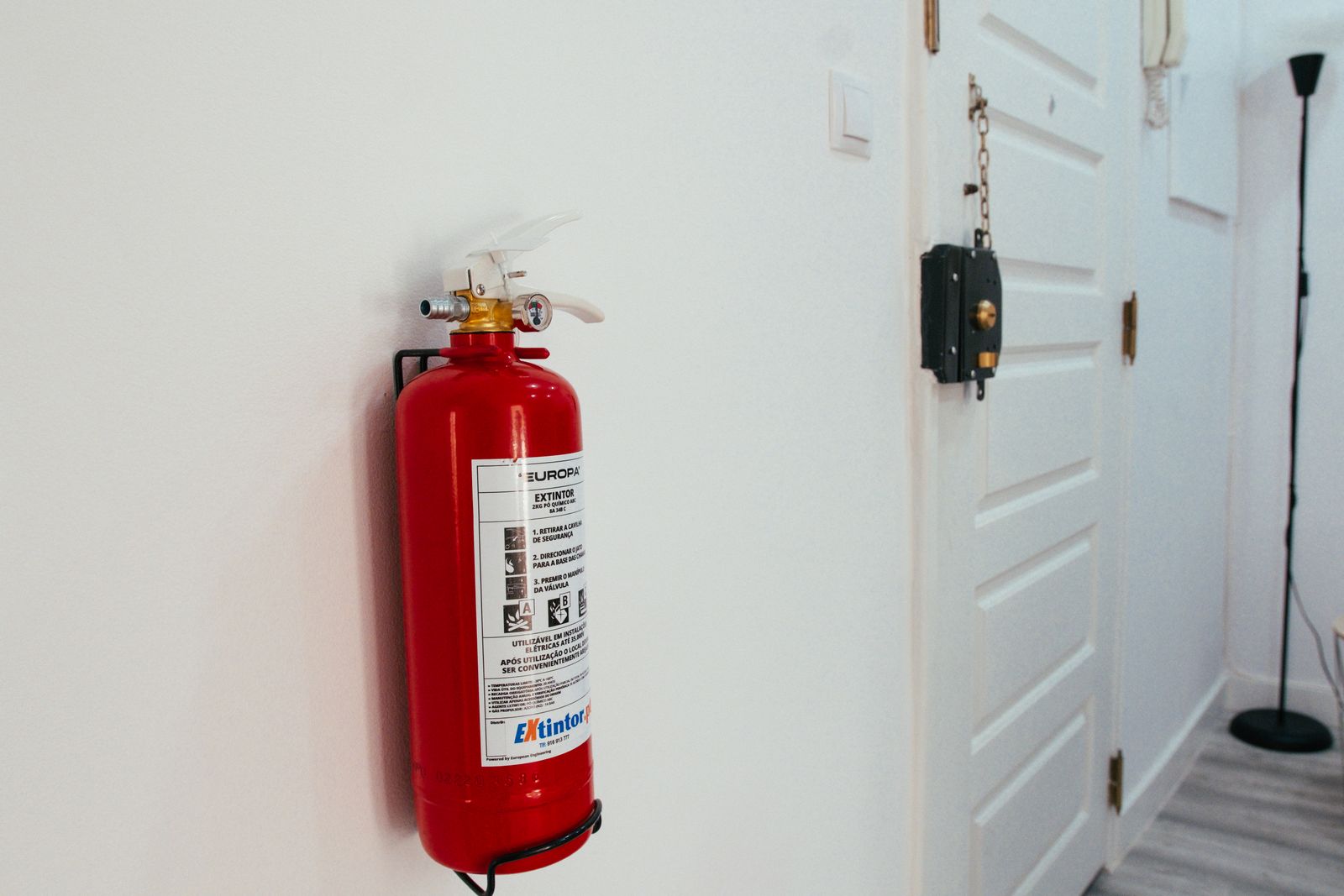
The fire extinguisher under your kitchen sink or hanging in the pantry has probably not moved since the day it was installed. It sits there year after year doing nothing, which is exactly the point, until the one moment it’s supposed to do something. Grease fires happen fast, and cooking equipment remains the number one cause of home fires and home injuries in the United States, according to the National Fire Protection Association. Most homeowners have never once checked whether the canister they’re counting on would actually work.
Pressure Doesn’t Last Forever, Even Sitting Still
A stored-pressure fire extinguisher relies on compressed gas to force the extinguishing agent out through the hose when the handle is squeezed. That seal is not permanent. Over years of temperature swings, humidity, and simple age, the O-rings and valve components degrade enough that pressure slips out gradually, sometimes without any visible sign until the gauge needle has already drifted out of the safe zone. That’s why NFPA 10, the fire code that governs extinguisher servicing nationwide, requires a monthly visual check plus professional maintenance on a fixed schedule rather than leaving it to guesswork. Industry compliance guides that walk through the standard, including one from qrfs.com, note that rechargeable models need internal maintenance roughly every six years and a hydrostatic pressure test at twelve, while disposable, non-rechargeable extinguishers, the kind sold in most hardware and big-box stores, have to be replaced entirely at the twelve-year mark because they were never built to be serviced or refilled.
Reading the Gauge Takes About Ten Seconds
Most home extinguishers have a small round gauge near the top with a needle and three colored zones. Green means the canister is properly pressurized and ready to fire. Red on either side means it’s either overcharged or, far more commonly, undercharged and unreliable. Yellow sometimes marks a caution range depending on the manufacturer. Checking it costs you nothing: pick up the extinguisher, look at the needle, and set it back down. Do that once a month and you’ll catch a slow leak long before it becomes a surprise. What the gauge can’t tell you is the internal condition of the powder inside. Dry-chemical agent can cake or clump over years of vibration and humidity exposure even when the gauge still reads green, which is part of why the fixed replacement and maintenance ages exist independent of what the needle shows on any given day.
Why an Expired One Fails at the Worst Possible Time
An extinguisher that has lost too much pressure won’t project its contents far enough, or at all, when the handle is pulled. In an actual kitchen fire, that gap between “should work” and “does work” plays out in seconds, right as flames are climbing off a pan and toward cabinets. Fire equipment inspectors describe the same scenario over and over: someone grabs the extinguisher they’ve had for a decade, squeezes the handle, and gets a weak sputter or nothing at all. There’s no second attempt in that moment. This is the entire reason commercial kitchens face mandatory annual inspections from licensed technicians while home kitchens, statistically far more likely to have an actual cooking fire in the first place, are left to voluntary habit and a canister nobody has touched since move-in day.
What to Actually Do With the One You Have
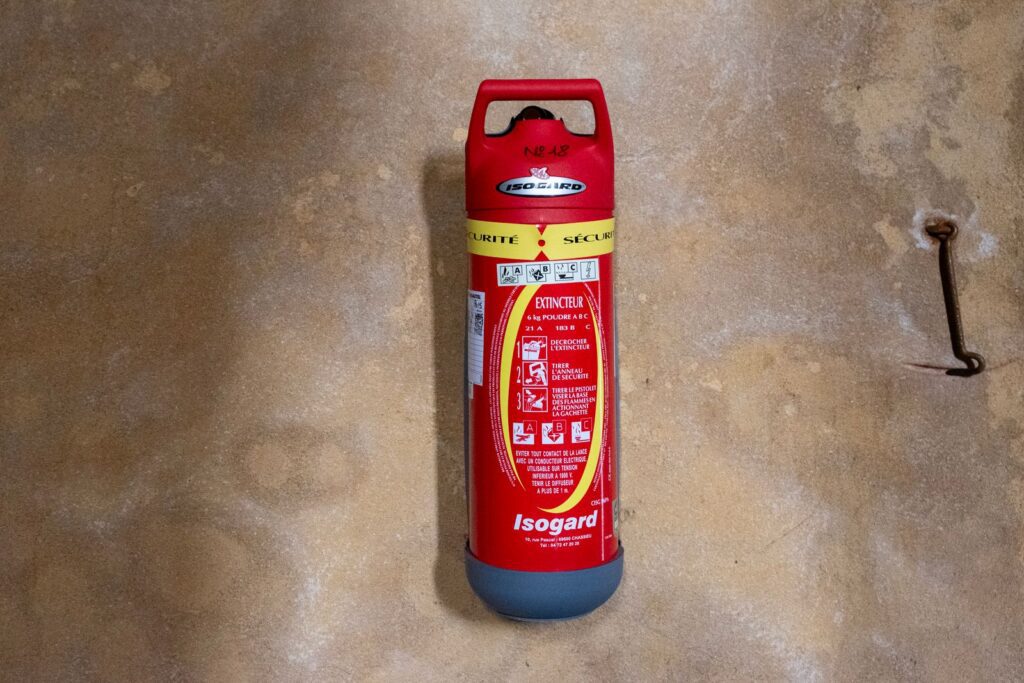
Find the manufacture date stamped on the bottom or side of the canister. If it’s a disposable model and more than ten to twelve years old, replace it outright rather than trust the gauge alone, since the powder inside can degrade even when the needle still sits in the green zone. If it’s rechargeable and old enough to be due for hydrostatic testing, a local fire equipment company can service it for a fraction of the cost of a house fire, usually somewhere in the range of what a nice dinner out would run you. Either way, mount it somewhere reachable, not buried behind cleaning supplies or wedged under the sink behind a jug of dish soap, and set a reminder on your phone to glance at the gauge every time you swap the batteries in your smoke detectors. It takes less time than boiling water, and it’s one of the only home safety checks that costs absolutely nothing to perform.
The uncomfortable part isn’t that fire extinguishers eventually stop working. It’s that they keep looking exactly the same, right up until the moment they don’t.