You want to freshen your sofa without risking color transfer, fading, or permanent stains. Follow one simple rule about cleaning cloths and solutions, and you protect upholstery from the most common, avoidable damage. Never use colored rags or cleaning tools that can bleed dye onto fabric — always test with an uncolored, absorbent cloth or a hidden spot first.
They’ll walk through what that color rule means, why dyes migrate during cleaning, and how to pick safe, gentle methods for different fabrics. Expect clear, practical steps to tackle spills and routine upkeep without guessing or causing harm.
What Is the Sofa Cleaning Color Rule?
The rule says use only white or colorfast cloths and visible-safe cleaners when treating upholstery. It prevents dye transfer from cleaning tools that can permanently stain or tint fabric.
How Dye Transfer Damages Upholstery
Dye transfer happens when dyes in colored rags or towels dissolve with water or cleaning solution and move onto the sofa fabric. Microfiber cloths, cotton towels, and other textiles made with non-colorfast dyes are common culprits because their dye isn’t fixed and will bleed under moisture or friction.
When dye migrates onto a clean fabric sofa it can alter the original color and create uneven patches that are hard to remove. Dark or vibrant rag dyes show up most on light fabrics; repeated cleaning with colored cloths increases the risk of permanent discoloration. Inspect any cloth by wetting a hidden corner and blotting a white paper towel first to check for bleeding.
Why White Microfiber Cloths Are Essential
White microfiber cloths minimize the risk of dye transfer because they contain no colored pigments to bleed. They also trap dirt and liquid better than basic cotton, so they remove stains without spreading dye back onto the upholstery. For sofa cleaning, choose tightly woven, lint-free white microfiber sized for the task—small for spot work, larger for general cleaning.
Keep separate microfiber cloths for water-only wiping, detergent application, and final drying to avoid cross-contamination. Launder them separately in hot water and avoid fabric softeners; softeners reduce absorbency. Store white microfiber in a clean, dry place so they don’t pick up stray dyes from other laundry.
Blotting vs. Rubbing: Preventing Stains and Rings
Blotting absorbs spills and lifts soluble stains without spreading them across the fabric. Use a folded white microfiber cloth and press gently, lifting the cloth frequently to a clean area. Work from the outer edge of the stain toward the center to prevent a stain ring from expanding.
Rubbing causes agitation that can push dye deeper, roughen fibers, or rub colored material from a cloth into the upholstery. If scrubbing seems necessary, test on an inconspicuous spot and use a soft-bristle brush with very light pressure. After blotting or gentle cleaning, dry the area quickly with a dry white microfiber to prevent water rings and dye migration on the fabric backing.
How to Safely Clean Your Sofa Without Ruining the Fabric
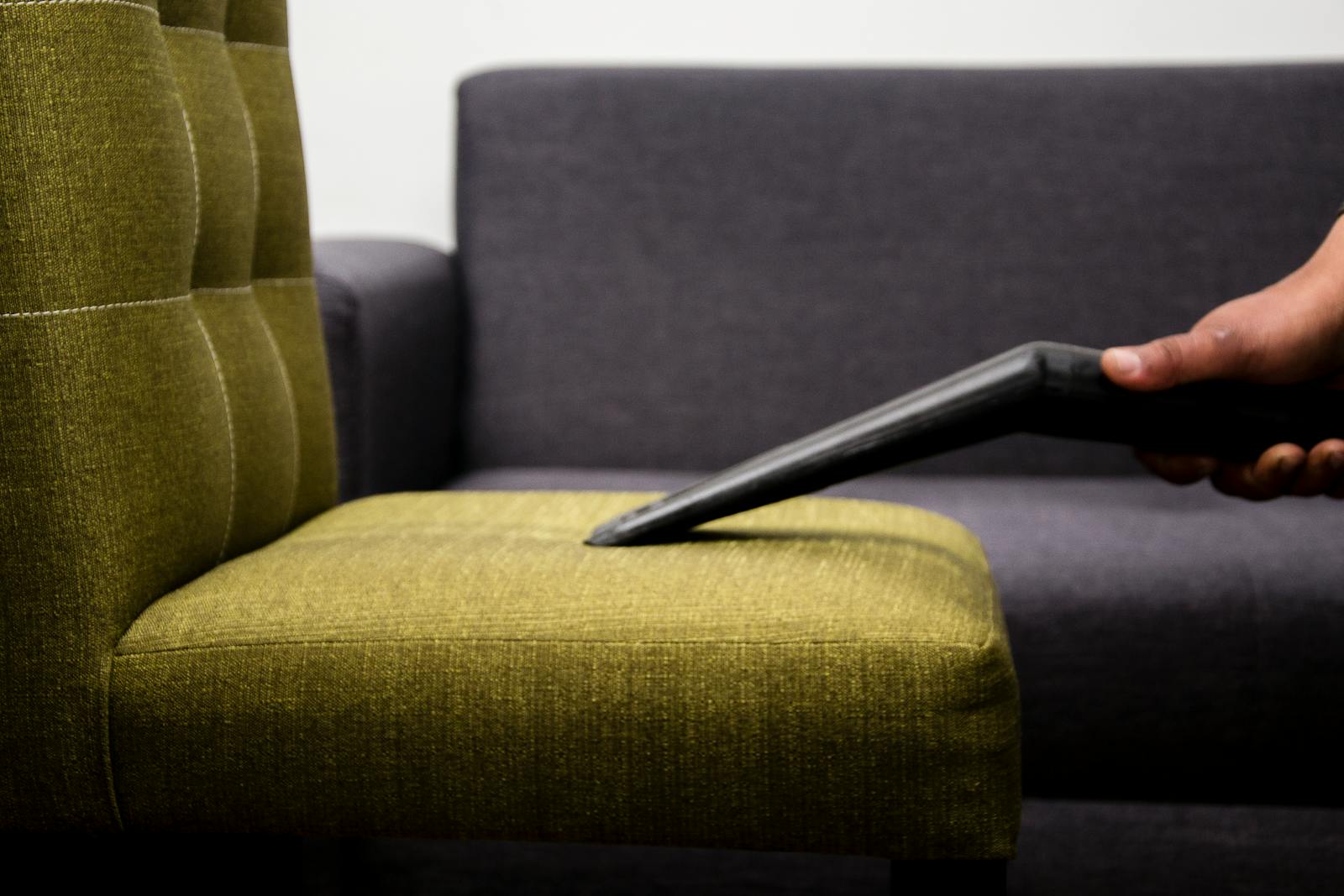
Start by checking the sofa’s cleaning tag and gathering the right tools: a vacuum with an upholstery attachment, a soft-bristle upholstery brush, microfiber cloths, and distilled water. Use the correct cleaner for the fabric code and test any solution on an inconspicuous spot before treating visible areas.
Decoding Fabric Cleaning Codes: W, S, W/S, and X
The cleaning tag gives a letter that dictates safe methods. Code W means water-based cleaners are okay; they should use a mild upholstery cleaner mixed with distilled water. Code S requires solvent-based or dry-cleaning products only; water can stain or shrink these fibers.
Code W/S (often written WS) accepts both water and solvent cleaners, so a mild fabric cleaner or a gentle solvent works. Code X means vacuum only — no liquids. For X-tagged pieces, rely on an upholstery attachment and a soft-bristle brush to lift dirt.
Always perform a spot test: apply the chosen cleaner to a hidden seam, wait to dry, then check for color loss or shrinkage. If the tag is missing or unreadable, treat the fabric as S or X to avoid damage.
DIY Cleaning Solutions and Safe Cleaning Tools
For W and WS fabrics, mix 1 teaspoon mild dish soap with 1 cup distilled water to make a gentle DIY cleaning solution. Put the solution in a spray bottle, mist a microfiber cloth (not the fabric), and blot stains. Distilled water prevents mineral spots.
For S fabrics, use a commercial solvent-based fabric cleaner labeled safe for upholstery; follow manufacturer directions. Avoid homemade solvent mixes. For all fabrics, keep only minimal moisture on the surface to prevent water rings.
Use tools that protect fibers: an upholstery attachment for vacuuming, a soft-bristle upholstery brush for working cleaners into weave, and lint rollers for pet hair. Avoid stiff brushes and household bleach. Keep a clean white cloth for blotting to avoid dye transfer.
Step-by-Step Sofa Cleaning Process
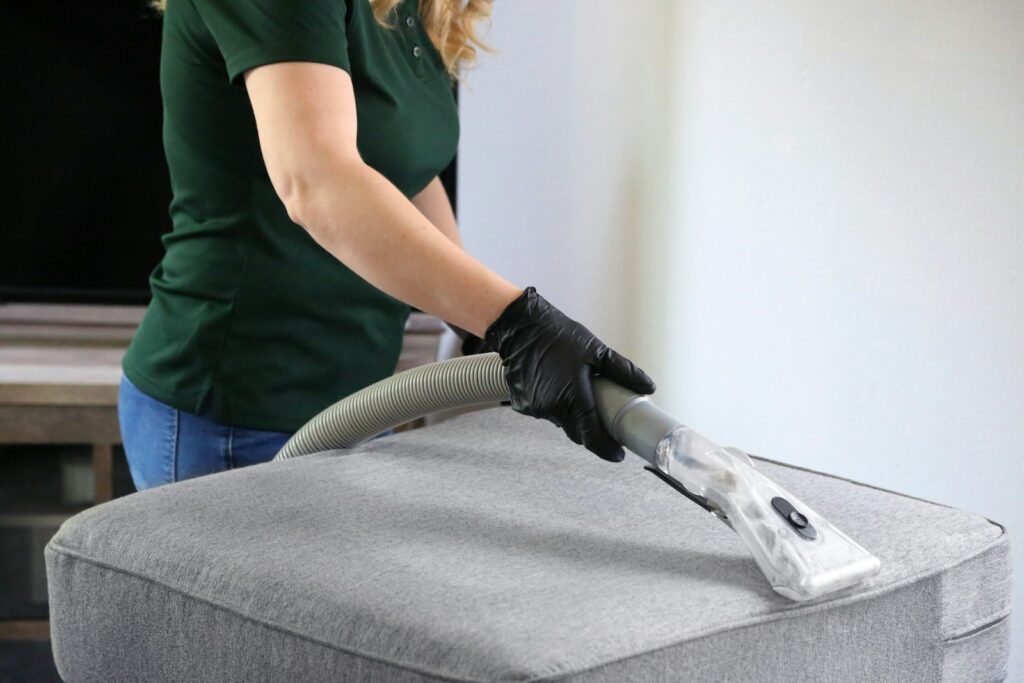
Vacuum thoroughly with the upholstery attachment, hitting seams and under cushions. This removes loose dirt and grit that can abrade fabric during spot cleaning.
Pre-treat stains by blotting — never rubbing — with a clean white cloth. For W/WS fabrics, apply the DIY cleaning solution to the cloth and dab from the stain’s edges inward. For S-coded stains, follow the solvent cleaner instructions and ventilate the room.
Use the soft-bristle upholstery brush to gently work cleaner into stubborn spots, then blot up residue with a dry microfiber cloth. Rinse lightly by dabbing with distilled water if the cleaning product requires it; remove excess moisture with dry cloths.
Air-dry naturally with fans if possible. Do not place the sofa in direct sunlight while wet. After dry, vacuum again with the upholstery attachment and fluff cushions to restore texture.
When to Call Professional Upholstery Cleaning
Call professional upholstery cleaning for large, set-in stains, unknown fabric tags, or delicate materials like silk and antique textiles. Professionals use methods and equipment that match fabric codes and can handle solvent-only (S) jobs safely.
If odors persist after DIY deodorizing or the piece has structural issues (loose seams, sagging cushions), a pro can deep-clean and assess repairs. Ask for technicians who explicitly offer professional upholstery cleaning and inquire about the methods they’ll use for W, S, WS, or X fabrics.
Get a written estimate that specifies the cleaning process and any solvents or cleaners to be used. This prevents surprises and ensures the treatment matches the sofa’s fabric code.
More from Decluttering Mom: