

Anyone who has raised a house full of kids knows that laundry never really ends. Just when the last basket is put away, another pile appears. One mom of four boys, @cassscroggins, has found a routine that she says makes it go by much faster, and it also teaches her sons to treat laundry as their own responsibility.

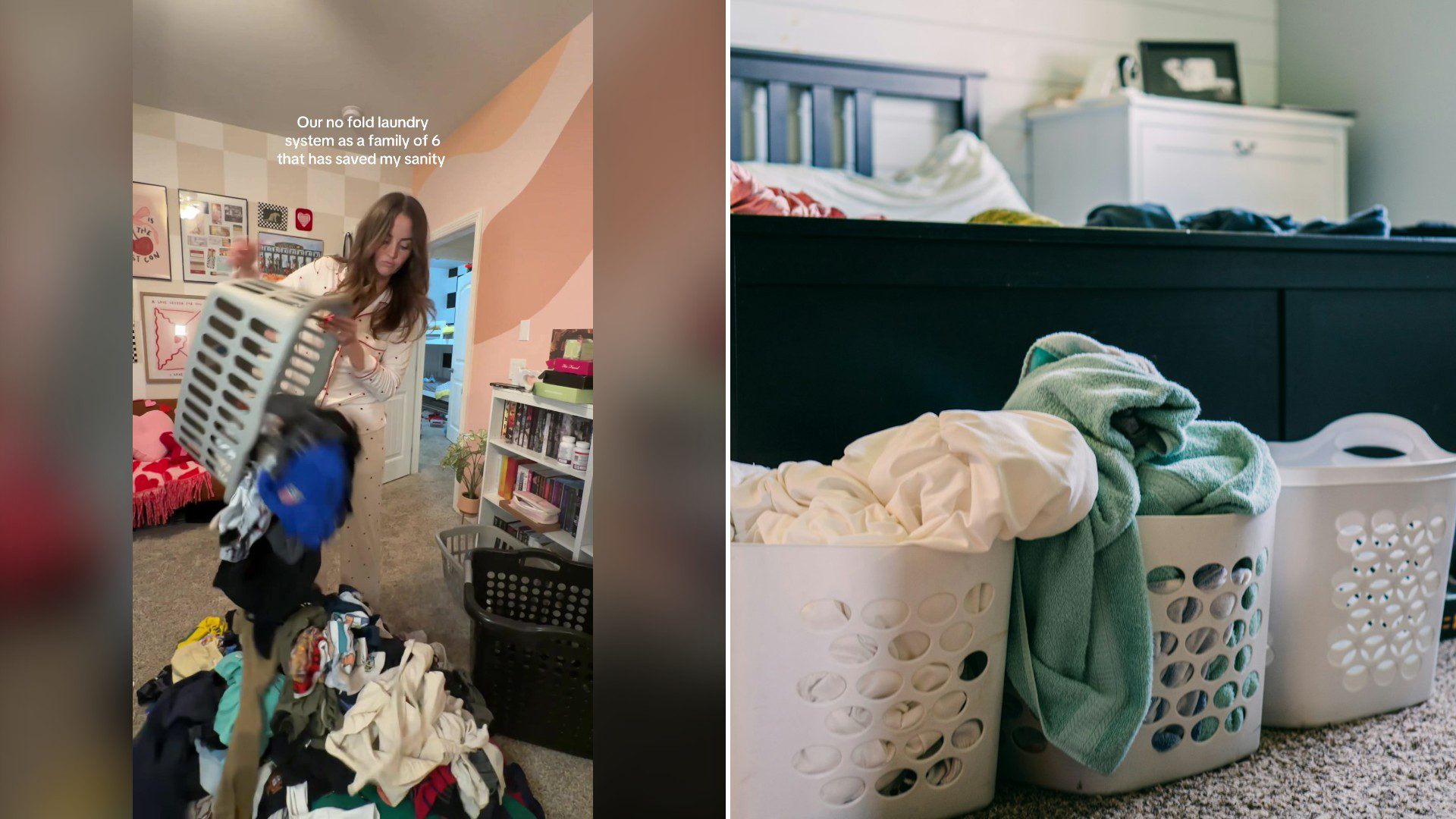
@cassscroggins
Her caption sums up the goal: no more hours and hours of laundry, and raising boys who will never think doing laundry is helping their spouses, because it is simply their own responsibility. That is a big idea packed into a simple system, and the details are worth a closer look.
Four Loads, Pajamas And An Audiobook
The post begins with four loads of laundry waiting to be done. The mom is in her pajamas, with an audiobook playing in her ear and a drink in her hand. She is listening to a romance audiobook that she is reading along with a friend. She adds that she prefers the ebook but enjoys listening while she works on laundry.
That small detail matters more than it seems. Pairing a boring chore with something enjoyable is a classic way to make the work feel lighter. Whether it is an audiobook, a podcast, a favorite playlist or a phone call with a friend, giving your mind something pleasant to do makes the time pass faster.
The System Explained
The system itself is straightforward. There is one basket for each person in the family, plus one extra basket for socks. Towels are the exception, and they get folded right away. Everything else gets sorted first into the right basket before anyone folds a thing.
From there, the older boys fold and put away their own laundry. The mom says that the little boys’ clothes are not folded at all. She explains that the clothes get messed up regardless, so they are either tossed into drawers as they are or the little ones help her hang them up. Finally, she and her husband fold and put away their own clothes.
She says that since she started doing laundry this way, it goes by much faster. She finishes by matching socks, and she finds eight loners in the pile. She puts away her own things and declares herself done, at least until the washer finishes its next load.
Why One Basket Per Person Works
Sorting by person rather than by room or by type of clothing has several advantages. Each family member knows exactly which basket is theirs, so there is no sorting at the end and no confusion about whose shirt is whose. Carrying a basket to a bedroom is a single trip, and the person who owns the clothes can put them away in the way that suits them best.
A separate sock basket is a smart addition. Socks are the item most likely to end up missing a partner, and a dedicated spot keeps them from getting lost inside other piles. Matching them in one sitting, just as the creator does, is faster than hunting through each basket separately. Eight loners is not unusual for a family of this size, and a lost sock basket gives them a place to wait until the match turns up.
Giving Kids Real Responsibility
The part of this story that many parents will notice is the way the mom assigns tasks by age. The big boys fold and put away their own clothes. The little boys help in smaller ways, or not at all. That fits what many child development experts suggest, which is that children can take on simple chores from a young age and add more as they grow.
Here are some general ideas for age appropriate laundry tasks.
Toddlers can carry a small item to the basket, drop clothes in the hamper and match simple socks. Preschoolers can help move clothes from the washer to the dryer, sort by color and put their pajamas in a drawer. Early elementary children can fold towels and washcloths and put away their own clean clothes. Older children can run a load from start to finish, including measuring detergent and setting the machine.
The key is to keep expectations realistic and to let go of perfection. If a child folds a shirt in a slightly crooked way, the shirt is still clean and put away. The goal is for the habit to take hold, and for the child to understand that clean clothes do not appear by magic.
Tips To Borrow For Your Own Home
If you want to try a version of this routine, a few simple steps can help.
Buy or set aside enough baskets for each person. They do not need to be fancy, and different colors make it easy to tell them apart. Pick one day or a rhythm that fits your schedule, even if that means one load a day instead of a big batch. Fold towels right away, since they are easy to fold and take up a lot of space if left in a pile.
Decide what level of folding your family really needs. If drawers are going to be shuffled around anyway, the little ones’ clothes may be fine unfolded. Choose what matters to you and let the rest go.
Finally, make it pleasant. Put on a favorite show, a book or music. Make a hot drink. Invite a child to sit with you and chat while you work. A routine that feels good is a routine you are more likely to keep.
A Chore That Teaches More Than Folding
The post from @cassscroggins is a gentle reminder that household work can be shared, and that children benefit from knowing how to take care of themselves. Laundry may never be anyone’s favorite chore, but a clear system, a good audiobook and a family that pitches in can make the pile feel smaller.