

Every parent has a moment where they have to keep a straight face while their child confesses to something that is both naughty and adorable. One mom shared hers, and it involves a three-year-old, a high cabinet and a jar of sprinkles.

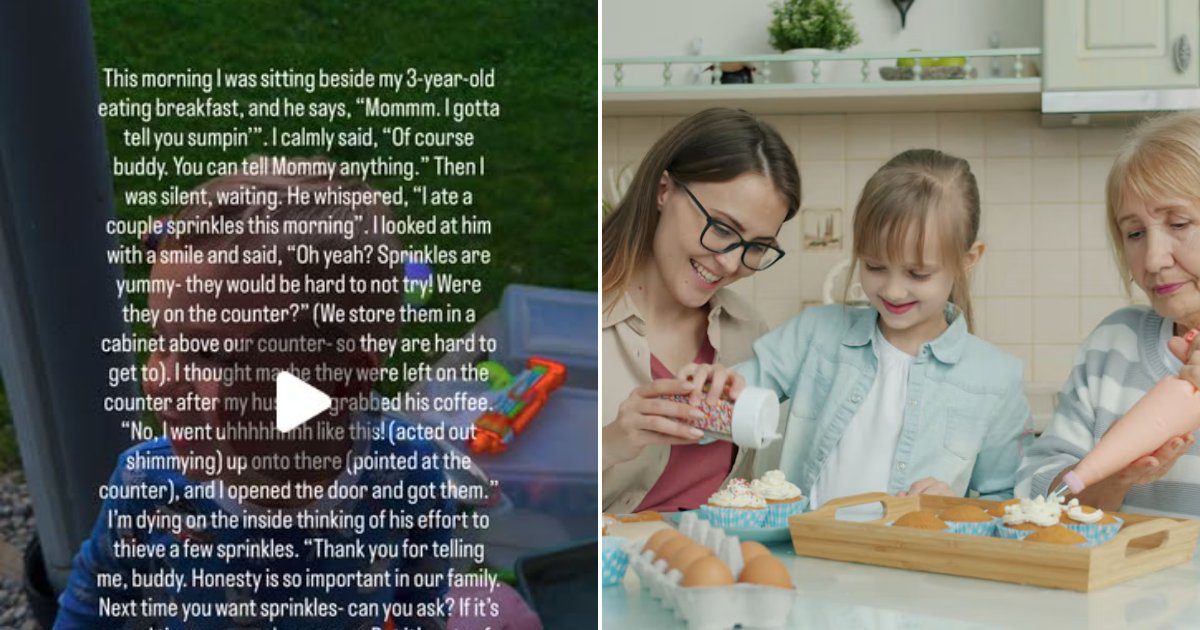
The post from @courtneyasmom is written out as text over footage of a toddler playing in the backyard. In it she tells the story of a breakfast she will not forget.
The confession
She was sitting beside her 3-year-old at breakfast when he told her he had something to tell her. She calmly said he could tell her anything. Then he whispered that he had eaten a couple of sprinkles that morning.
She smiled and told him sprinkles are yummy and would be hard not to try, then asked whether they had been on the counter. The family stores them in a cabinet above the counter, so they are hard to reach. She assumed they might have been left out after her husband grabbed his coffee.
How he really got them
He had a different answer. He told her he went “uhhhhh” like this, shimmying up onto the counter, then opened the cabinet door and got them himself. She says she was dying on the inside picturing the effort it took for him to steal a few sprinkles.
How she handled it
She kept her cool and thanked him for telling her, saying honesty is very important in their family. She told him that next time he wants sprinkles he can ask, and if it is a good time he can have some, but that climbing up there is not safe.
Then she walked into another room and, in her words, laughed a silent laugh like no other.
Why this response works
Many child development experts suggest that when a young child owns up to something, the way a parent reacts shapes whether they will do it again. A few ideas from this story fit that approach.
- Thank them for the truth. Honesty gets praised first, before the rule.
- Stay calm. A calm reaction keeps a child from feeling they should hide things next time.
- Offer an alternative. Telling him he can ask gives him a safe way to get what he wants.
- Name the safety issue clearly. Climbing on counters is the real concern, and she says so simply.
- Save the laughter for later. Her silent laugh in the next room kept the lesson intact.
Why toddlers sneak food
Sneaking a treat is a classic toddler move, and it usually comes from curiosity and a growing urge to do things independently rather than from bad behavior. Three-year-olds are discovering what they can reach, what they can open and what happens when they try. Sweet foods are simply the most tempting target.
At this age, children are also just learning how to tell the truth when it feels risky. Many have not yet figured out that a mistake can be confessed safely, which is why a warm reaction to honesty matters so much.
Common questions parents ask
Should I punish a child who sneaks food? Many parents find that calm limits work better than harsh consequences. Explain the rule, offer a way to ask next time, and keep tempting items out of reach. Punishing a child who tells the truth can teach them to hide things instead.
Is it a problem if my child wants sweets all the time? Wanting sweets is normal at this age. Offering treats now and then, in a relaxed way, can make them less of a forbidden prize.
What should I say when I want to laugh? You are allowed to find it funny. Stay calm in the moment, deliver the message, and enjoy the humor later with another adult.
Keeping a climbing toddler safe in the kitchen
The sprinkle caper had a safety angle, because counters are hard surfaces and falls from them can be serious. If you have a climber at home, a few steps go a long way.
- Keep tempting items, and anything breakable or hot, well back from the counter edge.
- Use cabinet locks or latches on cabinets that hold things your child should not reach.
- Move chairs and stools away from the counter when not in use.
- Offer a sturdy step stool and supervise closely so the child has a safe way to help.
- Teach a simple rule, such as feet on the floor unless a grown-up is right there.
Try this at home: a safe way to say yes
Instead of only saying no, give your toddler a legitimate way to get what they want. A few ideas follow.
- Pick a low shelf or a small container for foods that are always okay to ask for.
- Teach the words “May I have some, please?” and honor the request when you can.
- Let your child help with a baking project so they get to use the sprinkles with you.
- Praise asking just as warmly as you praise telling the truth.
Moments like this are small, but they shape how children learn to handle mistakes. A calm response, a clear rule and a little humor go a long way.
Credit for the original post goes to @courtneyasmom on Instagram.