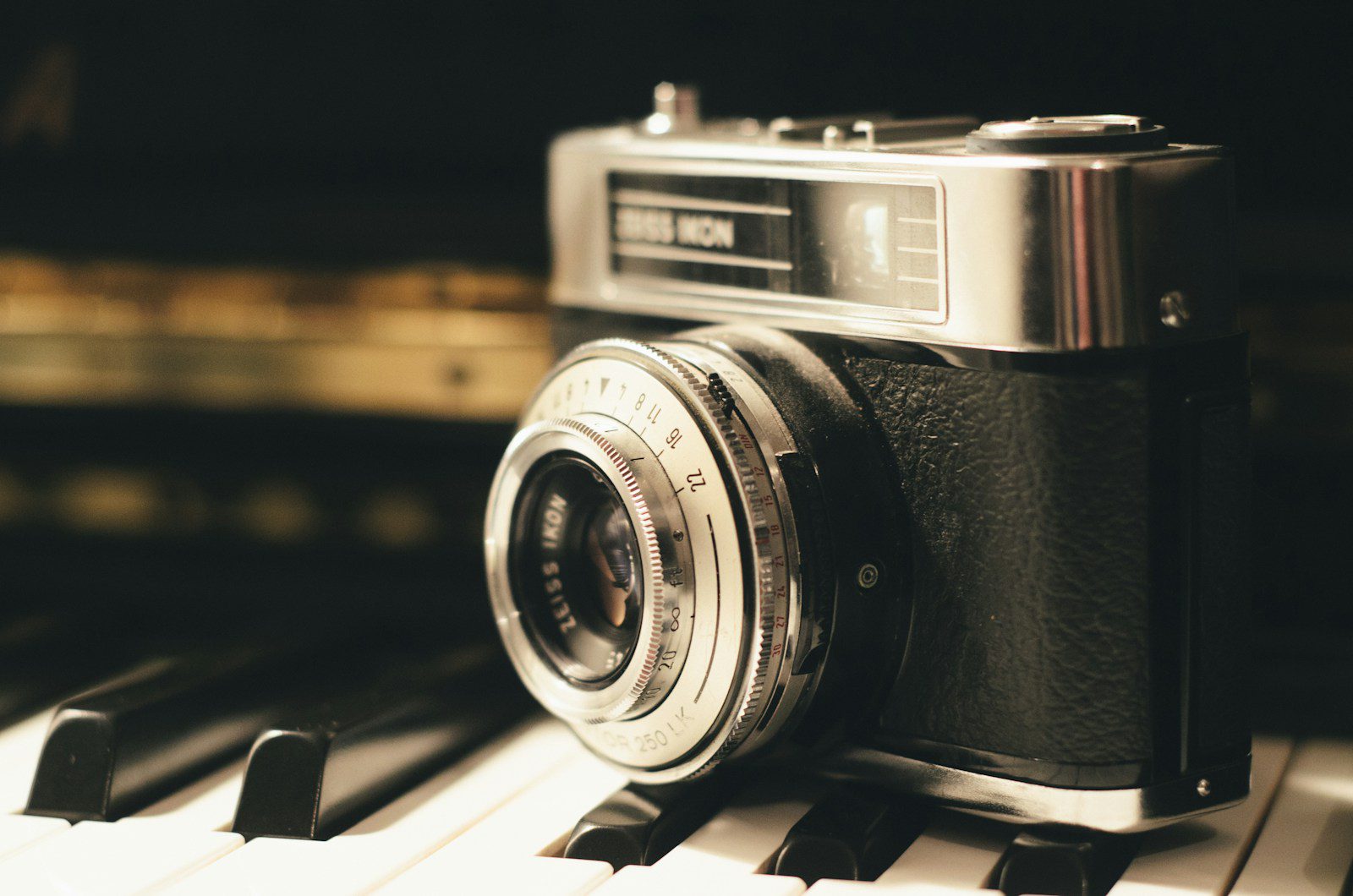
A vintage camera picked up at a thrift store in England has turned out to be a time capsule, hiding undeveloped film that appears to date back to the 1930s. Once the roll was processed, a stranger’s impulse buy suddenly became a window into another era, filled with faces and places no one alive today may recognize.
The discovery has set off a quiet, very modern kind of mystery: a mix of online sleuthing, analog craft, and collective nostalgia as people try to track down the stories behind the images. It is a reminder that in the age of cloud backups and camera phones, a small metal box loaded with forgotten film can still surprise everyone.
The thrift store find that started it all
The story begins in England, where a Man browsing a secondhand shop picked up an old camera from the 1930s and only later realized it still held a roll of exposed film. He had bought it as a curiosity, the way people grab a stack of vinyl or a rotary phone, but when he developed the negatives he was, in his own words, stunned by what came out, Bringing unseen images back to life that had been trapped in the dark for decades. Reporting on the episode describes how the Man had no idea who shot the pictures or why the film had never been processed, only that the scenes looked unmistakably prewar, with clothing, cars, and street details that pointed straight to that decade in England’s history, Unverified based on available sources.
The emotional punch of the discovery is part of what has resonated with readers. The Man did not just find a collectible, he effectively inherited someone else’s memories and then had to decide what to do with them. Coverage of the story notes that he shared the images online, inviting others to help identify the people and places, and framing the whole experience as Bringing unseen images back to life rather than simply scoring a lucky thrift-store flip. That sense of stewardship, of being a temporary caretaker for another family’s history, is what has turned a casual purchase into a small cultural moment, as detailed in a Story by Kim La that has circulated widely through lifestyle and nostalgia circles.
Inside the Salisbury Photo Centre mystery
While that English shopper was processing his surprise roll, Employees at the Salisbury Photo Centre were dealing with a similar puzzle of their own. Staff at the shop say a photographer walked in with a compact folding camera, a Zeiss Ikon Baby Ikonta, that had been bought from a local thrift store and asked them to check it over. When they opened it, they discovered there was undeveloped film inside, a tiny strip of cellulose that had somehow survived storage, humidity, and decades of neglect. The Employees decided to process the roll, treating it as carefully as any professional job, and waited to see whether anything at all would appear on the fragile emulsion.
What emerged on the negatives were a series of mysterious photos, likely from the 1930s, showing people whose names and stories are completely unknown to the modern viewers handling the prints. Staff at the Salisbury Photo Centre have described how the Zeiss Ikon Baby Ikonta, a model that was popular with serious amateurs in that era, effectively handed them a set of portraits from another lifetime, with no labels, no dates, and no obvious way to trace the subjects. The Employees have since shared some of the images in the hope that someone might recognize a face or a landscape, turning the Salisbury Photo Centre into an unlikely hub for a community-wide search for the people from the pictures.
Why old cameras keep turning up hidden histories
Stories like these are not one-offs, they are part of a pattern that has been quietly building as film photography enjoys a comeback. Earlier, Photographer Martijn van Oers of the Netherlands walked into a thrift store and came across an original Zeiss folding camera from 1929, another relic from the early days of portable photography. When he got the camera home and opened it, he discovered a roll of exposed film still inside, just as the Man in England and the Employees in Salisbury did. After carefully developing the negatives, he found images of a couple walking through the seaside town of Biarritz in Southwest France, their holiday snapshots suddenly revived almost a century later.
What connects the Zeiss Ikon Baby Ikonta at the Salisbury Photo Centre, the 1929 Zeiss that Photographer Martijn van Oers of the Netherlands found, and the English thrift-store camera is not just the brand or the era, it is the way these devices were built to last. Mechanical shutters, metal bodies, and simple optics mean that, with a little luck, a roll of film can sit for decades and still yield usable images. That durability is part of why collectors hunt down vintage gear through online marketplaces and even through generic product searches that surface everything from pristine bodies to battered lenses. Each camera is a potential time capsule, and every time someone checks the film compartment before putting it on a shelf, there is a chance of uncovering another forgotten roll.
The craft and risk of developing decades-old film
Bringing these images back to life is not as simple as dropping a roll at the nearest one-hour lab. When the Man in England decided to process the film from his 1930s camera, he was dealing with stock that had been sitting for so long that any number of things could have gone wrong, from light leaks to chemical breakdown. The same was true for the Employees at the Salisbury Photo Centre when they cracked open the Zeiss Ikon Baby Ikonta and found its hidden roll. In both cases, the people handling the film had to balance curiosity with caution, knowing that a single mistake in the darkroom could erase the only surviving record of those scenes.
Specialists who work with expired film often adjust their chemistry and timing, giving the emulsion more time in developer or compensating for the loss of sensitivity that comes with age. The Salisbury Photo Centre team treated the mystery roll as a one-shot opportunity, and their success in pulling recognizable faces and details out of it shows how much knowledge and patience goes into this kind of work. The Man who was stunned by his own results has become a kind of ambassador for that process, explaining how Bringing unseen images back to life is as much about respecting the material as it is about the thrill of discovery, a point that comes through clearly in the Story by Kim La that chronicled his reaction.
From family snapshots to widescreen epics
Part of what makes these thrift-store discoveries so compelling is the contrast between their modest origins and the grander history of film technology. The Zeiss Ikon Baby Ikonta that landed at the Salisbury Photo Centre and the 1929 Zeiss that Photographer Martijn van Oers of the Netherlands found were consumer tools, meant for vacations, birthdays, and everyday life. Yet they share a lineage with the cameras that shaped some of the most ambitious images ever put on screen. Todd Fisher has described how the musical Oklahoma! was shot with his Todd Ao 65 mm camera, a system that used a big wide angle lens to capture sweeping master shots. He recalls being told that each scene was shot twice, One with Todd Ao and then again with a Cinemascope camera, so that different versions of the film could be shown in different theaters.
More from Decluttering Mom: