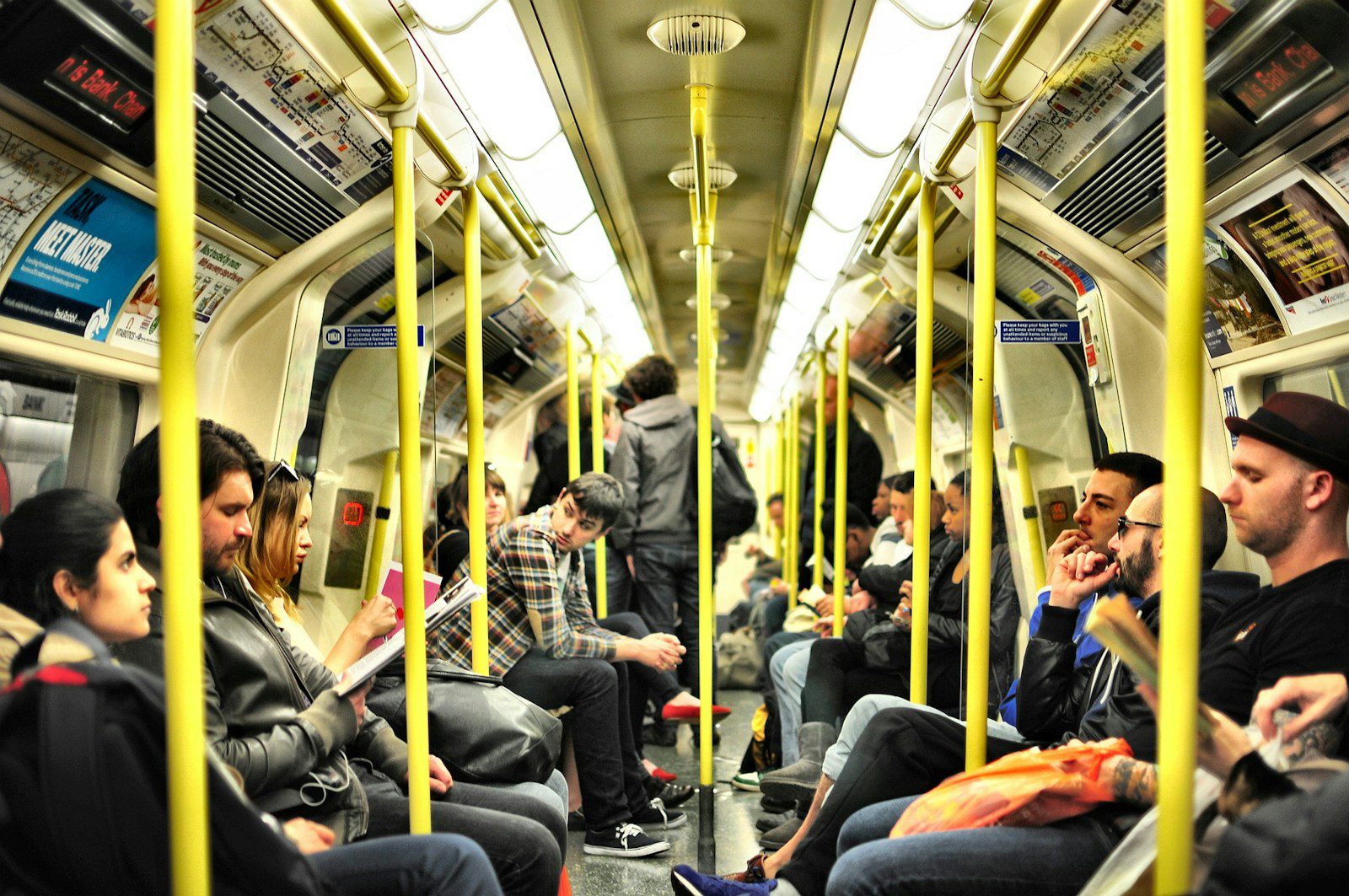
On a crowded train, the discomfort grew as people stood packed like sardines, forced to cling to overhead straps while glancing longingly at the empty seats beside other commuters. One mom couldn’t shake the sight of bags taking up space where people could easily sit. She was caught off guard by the audacity of it all. Why were those bags claiming prime real estate on a packed train, while others were left to stand?
As the train rattled along, the mom noticed a familiar pattern: bags sprawled across seats beside passengers, as if they were personal thrones. It made no sense. This wasn’t an empty bus or a cozy café; it was a busy commuter train. Instead of putting their bags on their laps or in the overhead racks, people seemed content to let them occupy space that could easily accommodate others. If they truly wanted everyone to have a comfortable ride, why not move their belongings? The question hung in the air, unanswered.
People’s reactions to this behavior varied widely. Some absolutely understood her frustration and echoed her sentiment. They remarked on how the whole situation felt unfair to those left standing. Others shrugged it off as just another quirk of commuting life—the unspoken rules that no one seemed willing to challenge. It raised an interesting point: when did stacking bags on seats become an acceptable norm?
One commenter mentioned personal space and how many commuters treat their bags like extensions of themselves. Those bags, they argued, were status symbols or even comfort items in a stressful environment. This idea struck a chord for some, who felt that a little extra comfort was worth the inconvenience of standing for those around them.
Others pointed out the potential solutions: why not just ask someone to move their bag? It seemed like a simple fix, yet many felt hesitant to speak up. The mom couldn’t help but think about the awkwardness of confrontation in such tight spaces. Would anyone really dare to say, “Excuse me, but would you mind moving your bag so I can sit down?” It sounded so simple in theory, but in reality, it could lead to an uncomfortable scene.
Among the spirited discussion, some commenters shared their own train experiences, often revealing a shared understanding of the baffling behavior they witnessed. They recounted stories of people hogging multiple seats with bags and coats, seemingly unaware or indifferent to the struggle of fellow commuters. There was an undercurrent of camaraderie as they shared the common annoyance of those who didn’t think twice about making everyone else’s day a bit more difficult.
With each story shared, the dialogue grew richer. Some shared strategies for dealing with similar annoyances. Tips ranged from finding an earlier train to avoid the crowds to simply considering alternative modes of transportation. Every shared experience painted a vivid picture of the daily grind, where personal space took on a new meaning in the context of public transit.
However, the thread didn’t come to a neat conclusion. It only deepened the questions about social norms in a shared space. The mom found herself contemplating why some feel comfortable claiming extra seating for their bags, while others would never dream of doing the same. It was a puzzling social experiment unfolding in real-time, with no clear answer in sight.
As the train approached its next stop, the mom realized that this wasn’t just about bags on seats. It was about the little negotiations and invisible rules that govern daily life in crowded places. The discomfort of standing while bags rested in seats became a larger metaphor for how people navigate shared spaces; a reflection of personal boundaries, entitlement, and the simple desire for comfort in an uncomfortable world. What happens when those boundaries clash, and whose responsibility is it to uphold a sense of common courtesy?
More from Decluttering Mom: